Following the conclusion of the SDGs Dialogue Series on 23rd March, 2019, the UNU IAS-OUIK started the ‘SDGs Café’, a new series of seminars and educational meetings on the topic of SDGs, in April 2019. As the name states, learning and discussions are done in a loose atmosphere, where snacks and beverages are provided, in order to establish a relaxed environment of interaction between speakers and participants.
In the second SDGs Café event, efforts were made to provide easy access to information on the platforms of the recent local elections’ candidates, information which is often hard to understand if readily available at all. It is hoped that these efforts may lead to citizens gaining a better understanding of regional politics and increase their willingness to participate in the electoral process.
The challenge of providing equal access to information for everyone was also discussed at this event, with a particular focus on the role of technology and its accessibility to every citizen. The overall goal of these endeavors is to facilitate the collective process of ‘IMAGINING’ a sustainable city of Kanazawa for 2030. Different IT-based tools were presented which allow access to current national political and economical matters. In the event of a disaster, for instance, accessibility to technology is not merely desirable; it is indispensable, as casualties can be dramatically reduced with access to faster and better information flow. However, providing equal access to information through technology is a challenge in its own right, as some people (such as elderly or handicapped people) may not be equally capable of integrating these new means of information acquisition. Accessibility means not only the mere availability of information, but also the provision of explicit and understandable means to concretely access it.
This report summarizes the participation of OUIK at the MISIA Satoyama Museum event, which took place within the MISIA Forest area of Ishikawa Forest Park. On the occasion of the COP10 (the 10th Meeting of the Conference of the Parties to the Convention on Biological Diversity), the Japanese singer MISIA was appointed as an ambassador for biodiversity conservation, at which point she decided to establish “MISIA Forest”, which is situated within Ishikawa Forest Park in Tsubata Town, in order to promote biodiversity awareness in the Ishikawa prefecture.
The purpose of the event was to educate people about forest conservation through artistic and musical means. More specifically, it was focused on educating people about the links between food and Ishikawa Prefecture’s Satoyama agricultural environment. The OUIK set up its own booth as well which was decorated with SDG-panels.
The event started off with an explanation of the concept of Satoyama. A mountain is called Satoyama when its ecosystem is maintained through human intervention—for instance, through the felling of trees in specific areas, which permits more light to seep into the forest, thus allowing a diversity of life forms to thrive. The raw materials obtained can also be used to satisfy a variety of human needs. However, due to the aging of the population and a lack of maintenance in recent years, the diversity of lifeforms is diminishing.
One goal of the event was to spread awareness of the fact that oftentimes a forest properly maintained through human intervention is healthier than a forest left to itself.
Additionally, a workshop on the inoculation of the Shiitake-mushroom was held, where participants could feel firsthand how the forest and its resources are directly linked to the notion of food.
Ms. Evonne Yiu, a Research Associate from OUIK, gave an online lecture at an elementary school in Suzu City on 3rd September 2020 as part of the city’s SDGs Learning Programme. She gave an introductory lesson on Sustainable Development Goal 14: Life Below Water at Shouin elementary school, where students are doing their part to advance Goal 14.
The lecture encouraged the students to think about what they can do to revitalise Noto’s Satoyama and Satoumi. Ms. Yie presented several essential facts and concerns to the students to help them understand the connection between people’s lives and the sea. For example, she explained the Satoumi’s critical function as the “cradle of the sea” that conserves the biodiversity of the marine ecosystem, and that once waste has been washed out to sea, it can continue floating there without being decomposed for hundreds of years. Finally, all the students presented what they learnt through the lesson and what they can start right now. The students became aware that there are things they can do in their own lives and on a local level to address international issues.
We are looking forward to seeing how the students’ efforts will develop as the Programme progresses.
In March 2019, a collaborative project called “IMAGINE KANAZAWA 2030” was launched by the United Nations University OUIK, Kanazawa City, and the Junior Chamber International Kanazawa to promote a sustainable Kanazawa through partnership. As part of this initiative, SDGs meetings have been held, bringing together diverse stakeholders across different positions and generations to envision the ideal future of Kanazawa and brainstorm ideas, resulting in the creation of the “Kanazawa Future Scenario.”
On June 29, 2020, to achieve the SDGs, this Promotion Meeting was established to facilitate collaboration and action among various entities through the “Kanazawa Future Scenario.” Members representing industries, education, government, finance, and civic organizations participated, exchanging opinions and building a cooperative framework.
The meeting elected Kanazawa City Mayor Yamano as chair, with Kanazawa Chamber of Commerce Chairman Tsuruya and the Director of the UNU-IAS OUIK, Watanabe, serving as vice-chairs. The auditors were selected from the Junior Chamber International Kanazawa (JCI Kanazawa), Koyanai, and the Director of the Kanazawa City Accounting Division, Tokuda.
Furthermore, reports on past efforts were presented by the JCI Kanazawa, UN University OUIK, and Code For Kanazawa。
The final part of the meeting fostered an exchange of advice and diverse ideas for future activities, creating a platform for communication that transcends positions and generations.
Details of the meeting and presentations are also available in the following YouTube video.
We are looking for partners to jointly address local challenges through the SDGs. Issues that have been difficult to resolve can potentially be tackled by bringing together people and companies from various backgrounds, each with their unique strengths, to collaborate. If you are interested, please contact the IMAGINE KANAZAWA 2030 Secretariat.
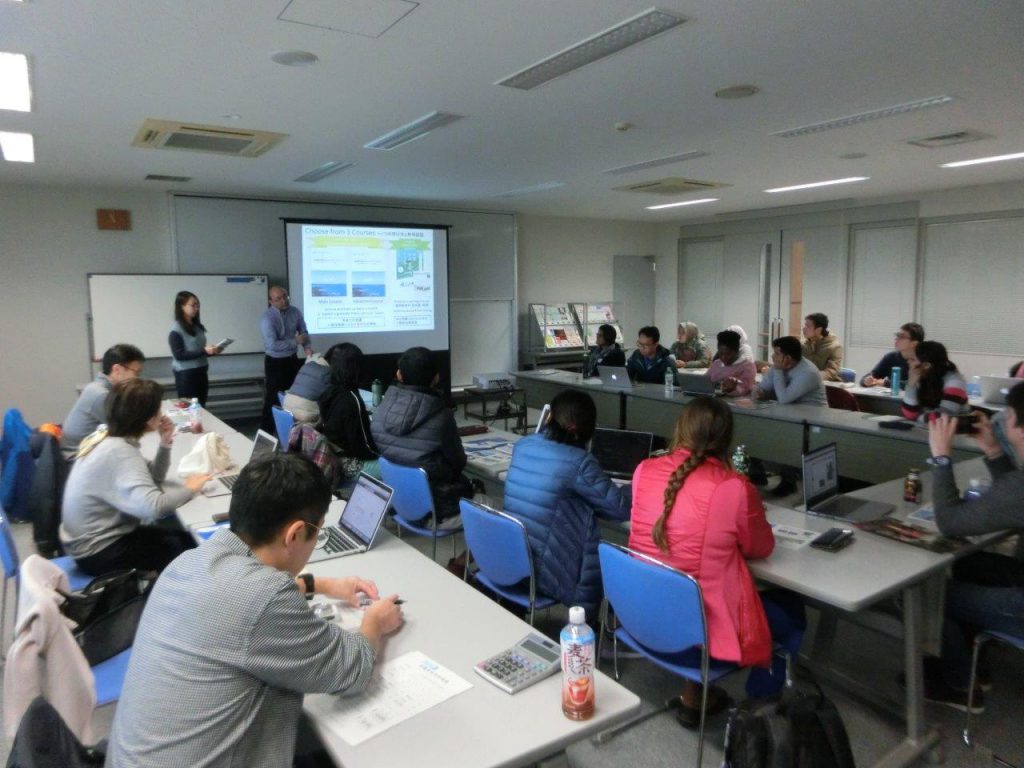
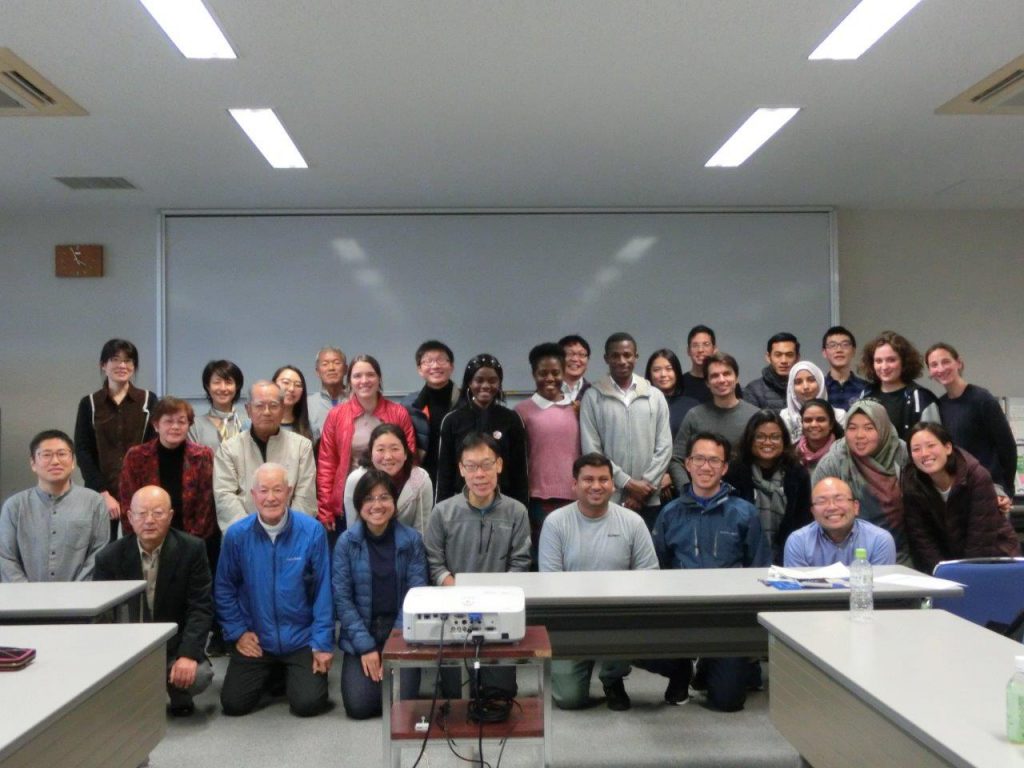
The event started off with an introduction by OUIK office manager Mikiko Naigai, explaining the purpose of the SDGs Café-Series, which started in April 2019. In this 3rd event, the documentary film “Most Likely to Succeed” was shown and then discussed among the participants. The focus of the event was education, and in this context the California-based ‘High Tech High-School”, which proposes an educational model which makes the traditional exam orientated education seem obsolete, was discussed.
These topics are particularly relevant in modern times, as existing educational models are based on a worldview of 120 years ago, when mass industrial production and fast economic growth were still a viable end-goal. Since the second half of the 90s, when rapid technological progress and fierce competition between corporations took place, the availability of jobs has continued to diminish, and traditional university graduation does not necessarily lead to stable jobs anymore. Within a rapidly changing world-economy, current schooling systems are quickly becoming obsolete, and Japan’s is no exception.
After watching the film, a general discussion was held between all participants where they shared their first impressions, their doubts about the current system, and new insights they encountered. Then, after a tea-break, the participants split into groups of 4-5 in order to take part in a workshop where 3 different key-aspects were investigated: 1) What needs to be preserved in Japan, 2) Where is the problem, 3) What needs to be tried or implemented. It also bears mentioning that the Californian model serves as an inspiration, but at the same time it cannot simply be applied to the Japanese educational system since Japan has its very own particularities, positive as well as negative. For example, many attendees considered it to be important to preserve Japanese social codes and customs of respect and politeness. On the other hand, some expressed concerns that children cannot express their uniqueness within too-rigid social structures.
Participants agreed on the importance of collective discussion rather than the mere criticism of the current system in order to make change in the future.
UNU-IAS collaboration with Kanazawa City, Japan on the Sustainable Development Goals (SDGs) contributed to the selection of the city as an “SDGs Future City 2020” and a “Municipal SDGs Model Project” in July 2020, under a scheme of the Government of Japan. The goal is to create a sustainable city where citizens and visitors can share in the beauty of the city based on biological and cultural diversity such as nature, history, and culture, while the number of tourists increases.
The UNU-IAS Operating Unit Ishikawa / Kanazawa (OUIK), located in Kanazawa City, has been working with the city to achieve the SDGs, starting with the SDGs Ishikawa–Kanazawa Dialogue Series in 2018. A joint declaration was signed in March 2019 between Kanazawa City, the Junior Chamber of Commerce of Kanazawa, and UNU-IAS OUIK, launching the Kanazawa SDGs project “IMAGINE KANAZAWA 2030”. In order to deepen understanding of the SDGs and regional issues, the “SDGs Café Series” was initiated as a forum for communication where local people can easily talk about the future of Kanazawa and regional issues, and “SDGs Meetings” held to discuss regional issues. UNU-IAS OUIK worked with various local stakeholders to create the “Kanazawa Future Scenario” by exchanging ideas.
“Environmental Model Cities” and “Environmental Future Cities” of Japan
In 2008, the Japanese Government adopted a system to select “Environmental Model Cities” and “Environmental Future Cities” with the aim of achieving a sustainable economy and society. Kanazawa City was selected as an “SDGs Future City” in addition to the “Model Cities for the Environment” and “Future City for the Environment” to propose initiatives to achieve the SDGs with the aim of further promoting regional development. Up to 30 cities each year have been selected since 2018, and in Ishikawa Prefecture, Suzu City (FY2018), Hakusan City (FY2018), Komatsu City (FY2019), and this year Kaga City, Nomi City, and Kanazawa City were newly selected. Kanazawa City is the first municipality in the prefecture to be selected as a “Municipal SDGs Model Project”. These cities were selected based on an evaluation in terms of SDG 17, and are expected to proactively develop their projects to achieve the goals.
Future Plans
OUIK will continue to collaborate with Kanazawa City and the Junior Chamber of Commerce of Kanazawa on a variety of activities such as raising awareness and publicising the SDGs and building a community of co-creation based on the cooperative framework. In particular, in developing attractive SDGs tours, which is an important element of the model project, UNU-IAS OUIK will make use of its practical experience in workshops and other activities to consider “Japanese Gardens and the Sustainability of Kanazawa” and the results of its research on the Noto’s Satoyama Satoumi GIAHS (Globaly Important Agricultural Heritage System) and Mount Hakusan Biosphere Reserve, which have been cultivated through OUIK’s research over the years. UNU-IAS OUIK will provide advice on how to make use of green infrastructure for tourism and SDGs tourism in the wider region.
In the 8th and final event, students participated in an ancient festival in Okunoto (northern part of Noto Peninsula) called Aenokoto. Every year on December 5, farmers give thanks to the year’s rice harvest by inviting the deities of the rice field into their house, where they draw a bath and offer food to give the deities a break until spring. The same ritual is performed in February 9 of the following year to send the deities out and pray for an abundant harvest. Because they had helped gather ingredients at previous events over the last year, 12 students from 4th, 5th, and 6th grades participated in the ritual of offering food.
When the festival ceremony began, the host drew the deities in from the fields, saying, “The rice field kami has come back! Let’s welcome them!” calling to members of the house and directing the deities to the hearth. After offering some warm amazake (sweet mild sake), they then guided the deities to the bath for some relaxation. The feast followed. At the table, two meals were prepared, one each for the husband and wife deities. Forked daikon, a masu box heaped with red rice, and a stew (nishime) of bracken and osmund fiddleheads, daikon, carrots, konjac, and deep-fried tofu. There was even a side dish called aimaze, with sautéed daikon, carrots and crushed soybeans (uchimame). Many generations ago when there were no refrigerators and meat and fish were harder to come by, uchimame were a valuable protein source. And a majestic sea bream—complete from head to tail—and large balls of ohagi mochi. Soup and pickles. Such an elaborate meal signifies that “rice farming is laborious and tiresome, so please eat your fill!”
Five 6th graders spoke on behalf of the group. “Kami of the rice fields, these are the salted fiddleheads we foraged in May in Maruyama. This is the agodashi we made in July in Suzu. These are the chestnuts we gathered and then dried and pounded in October in Maruyama.” After a hearty “Thank you!” from everyone, the event closed with a taiko performance. The deities of the rice field must certainly have enjoyed this year’s feast prepared by Mii Elementary School students.
Satoyama in places like Mii offers a buffet of choices for delighting in nature’s gifts and making things by hand. It’s important that adults create an environment for elementary school students and other children in the height of their receptivity to come in full-sensory contact with local nature and wisdom derived from the land.
The SDGs Mii’s Gottzo Project, launched in May 2019, has been conducting field learning programmes around Mii town, Wajima City. On the 26th of November, the 7th event in the series was a roundup of learning about international food issues, tasting food from various countries, and desalinating “Warabi no Shiozuke” (salted warabi) which were made in the spring.
First, Ms. Tomita from UNU OUIK talked about the food issues that the world is facing from the perspective of the SDGs. In response to the question “In the 17 SDGs, which one is related to food?”, students answered “There is a food mark (Zero Hunger), but what is hunger?” “Goal 14 (Life Below Water) or 15 (Life on Land)” “We eat fish so Goal 6 (Clean Water and Sanitation)” “We drink water, and use it for agriculture too” “Goal 16 (Climate Action) is also related“. Students seemed to deepen their understanding of the SDGs by linking goals and problems.
Next, we focused on the “hunger issue”, one that we don’t often hear living in Japan. We checked the UN WFP hunger map and had a discussion. Currently, there are 812 million people on the planet, and about 1 in 9 people are “undernourished”. “Eliminating Hunger,” which is Goal 2 of the SDGs, is often seen as a problem specific to developing countries. However, climate change and the economic activities of developed countries contribute to the hunger issues. We who live in developed countries should take this matter seriously. We also looked at food loss issues and future agriculture as related topics.
Next, we looked into “Hungry Planet: What the World Eats – In Pictures” by Peter Menzel and discussed what students noticed. There seem to be many foods that they had never seen before, with different types and amounts of food, as well as diverse family atmospheres depending on the country and region. Ingredients on our table may seem strange to the people living in other parts of the world.
Ms. Hagino taught us how to desalinate “Warabi no Shiozuke” in a traditional way using a bronze pot so that the vegetable’s colour stays as it is. It is interesting to find the chemistry hidden in everyday life.
At the end of the class, it was time to taste some international food. Mr. Suzuki cooked a dish called “Toh” which he often ate in Burkina Faso, OUIK’s intern Felix cooked “Rosti” from Switzerland, and Ms. Tomita prepared toast with Vegemite, which is very popular and often eaten as breakfast in the UK or Australia. They seemed to enjoy most of the food they had, except for the Vegemite toast. It was probably a bit too salty and bitter for elementary school students.
Ms. Hagino commented “The food is very diverse. In modern days, you can eat dishes from various regions wherever you are. But please don’t forget the taste of the local treats you grew up with.”
This is a report on the 2nd GIAHS Academic Programme, a 3 day academic trip to the Noto Peninsula in Ishikawa Prefecture, held from November 9th to 11th, 2019. The purpose of the trip was to allow participants to experience the Satoyama and Satoumi agricultural areas first-hand through activities focused on the sustainable use of local resources.
Sustainable land-use in these regions is being affected by social issues such as depopulation, an aging population, and low birth rates, trends which continue to endanger future development of the region. Even so, the Noto GIAHS region has the potential for sustainable community building, although it will require a sensitive strategy of revitalization. These topics and more were covered in group discussions held on the last day of the trip, where several stakeholders from the Noto region shared their views.
The trip was co-organized by UNU-IAS OUIK and the Satoyama Promotion Department of the Ishikawa Prefectural Government, and co-funded by Ishikawa Prefecture and the United Nations University. 17 international students from 13 countries –South and North America, Europe, Asia and Africa–came together to participate. Among them were 6 students from various Japanese Universities, 11 of whom came from the United Nations University, accompanied by their professor, Dr. Saito.
On the morning of the 9th, participants met at Kanazawa Station to board a chartered coach, which then headed North into the Noto Peninsula following the coastline. After picking up students from UNU-IAS at Noto Airpor, their first destination was the village of Mii in Wajima City, where a local association called Maruyama Group has been working to maintain the Satoyama ecosystem and promote awareness through educational workshops.
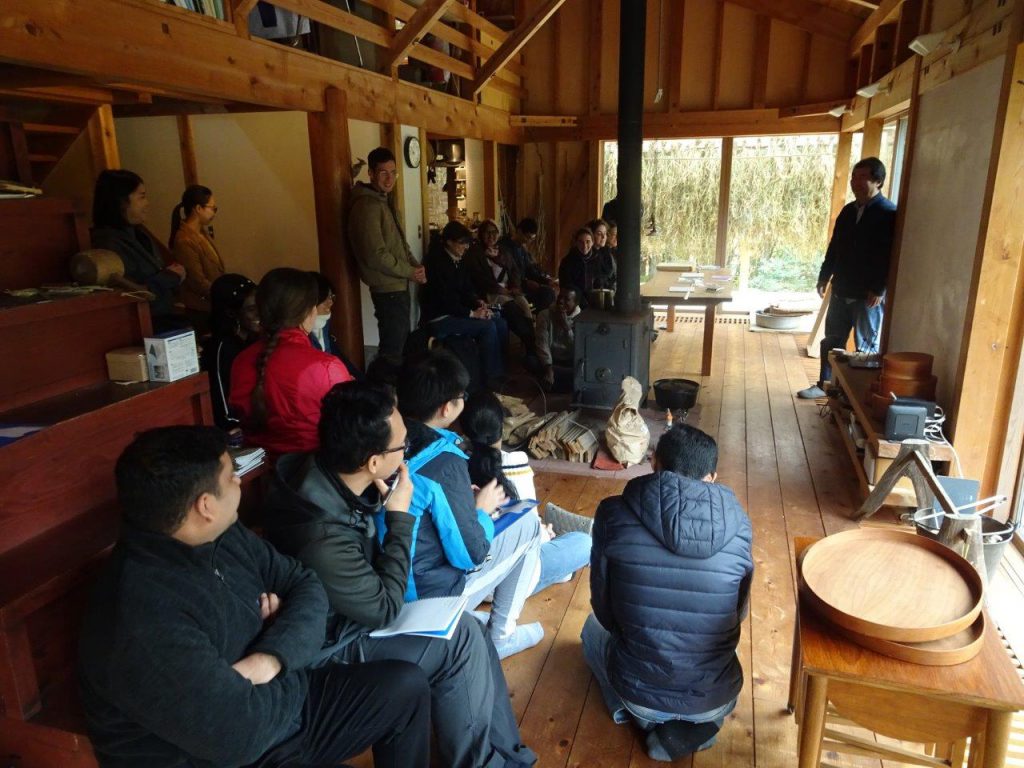
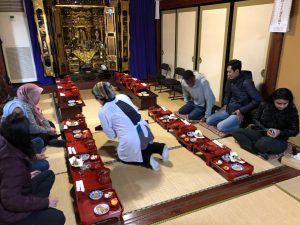
The group was welcomed by Mr. Hagino, a professor, architect, and volunteer worker deeply engaged in sustainable community and lifestyle building. Hagino was accompanied by his colleague Mr. Hosokawa, who is, among other things, a Shinto priest who performs the local agricultural ritual “Aenokoto”, in which the deity of the rice field is invited into the house to be venerated in a ritualized manner.
Mr. Hagino explained how he relocated from Tokyo to Noto, after having spent several years in the United States. His reasons were ideological in nature, as he had grown critical of industrialized consumerist society, and decided to develop a lifestyle which seamlessly fits within the cycles of nature. Team Maruyama is a project which hosts a variety of activities based on mutual learning (e.g. plant observation or cooking workshops) in and around Mister Hagino’s house and the surrounding Satoyama area. He also addressed the difficulties that accompany his activities, such as the harsh weather conditions, the aforementioned social issues, and his struggles to be accepted among the locals, many of whom continue to perceive him as a stranger.
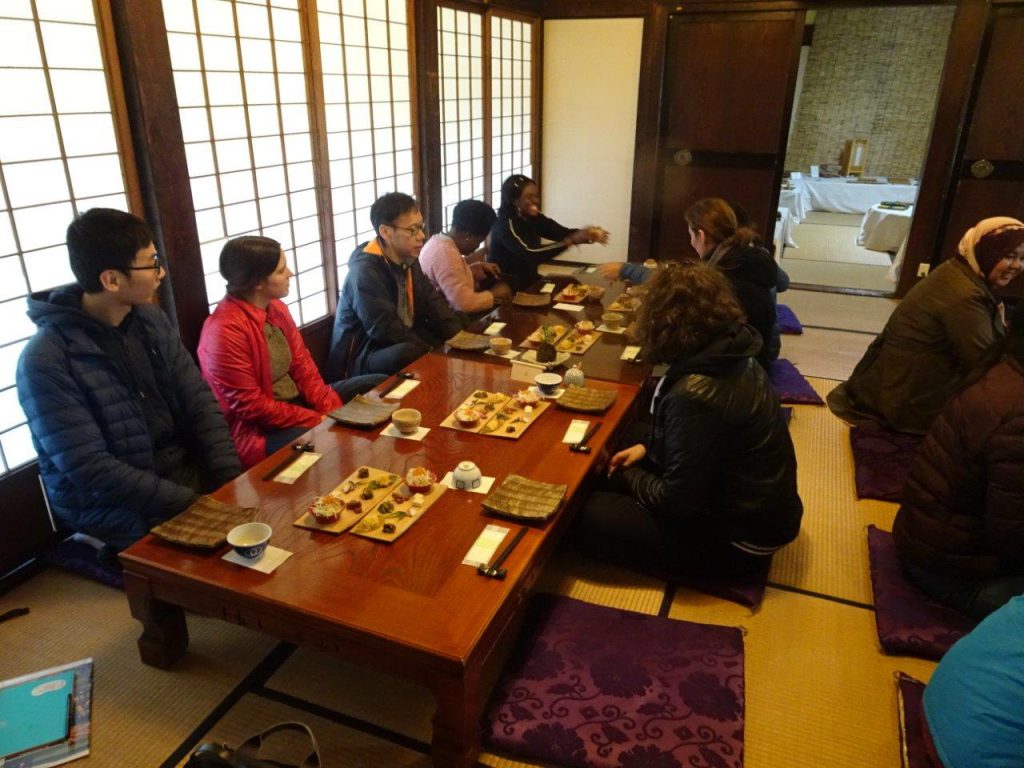
The group then moved to a nearby restaurant operating out of a restored thatched-roof farmhouse, where they enjoyed a lunch made entirely from local goods. The young owner introduced each of the delicately-prepared dishes, which were made using a variety of edible wild plants. The owner operates a variety of small businesses centered around slow-tourism in the region, such as bicycle tours and overnight stays in traditional farm-houses. Much like Mr. Hagino, he also moved from a bigger city to the Noto Peninsula a few years ago in order to pursue a more natural lifestyle.
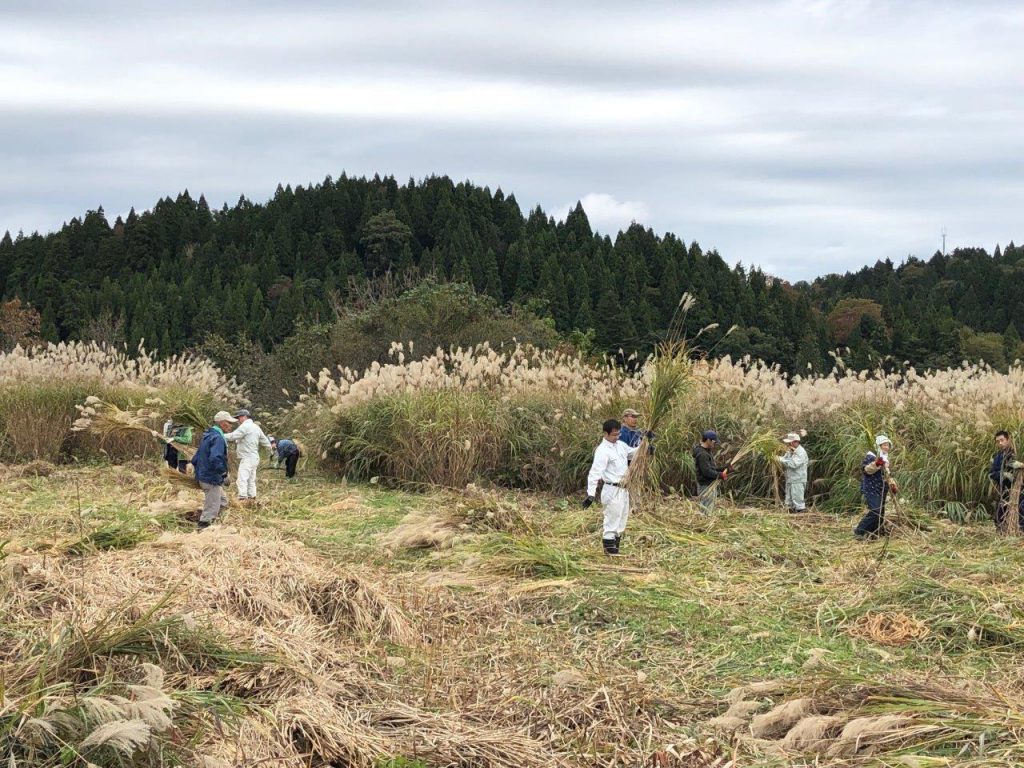
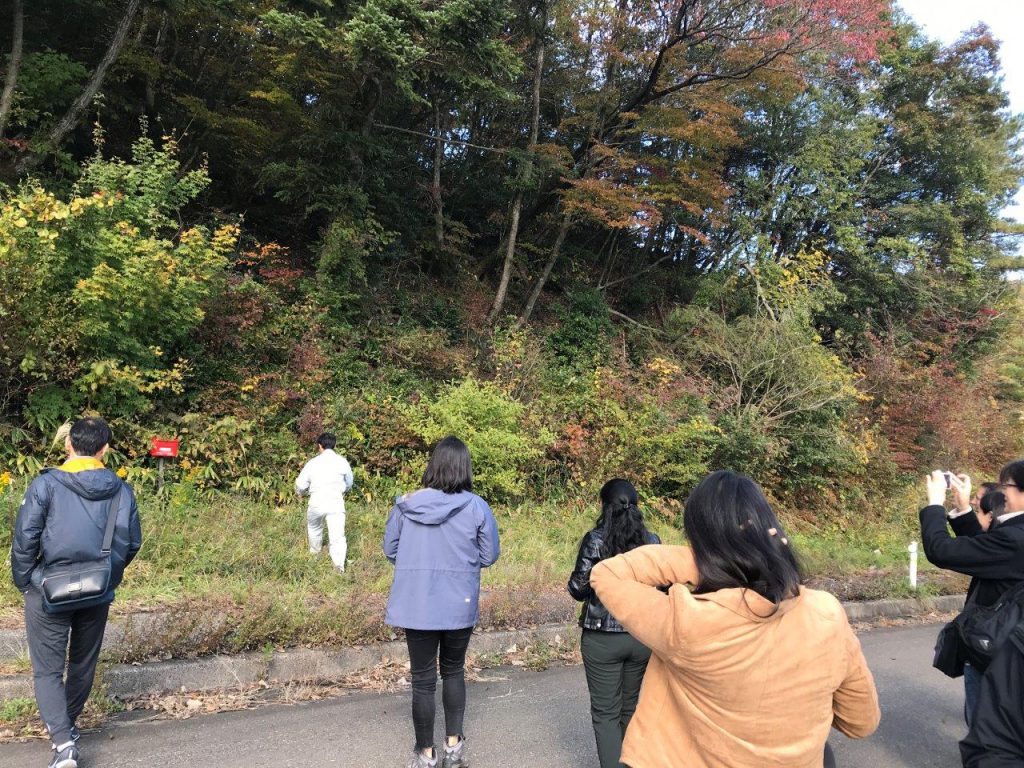
After lunch, they visited a silvergrass field nearby the restaurant, where volunteer workers were harvesting the grass to be used to repair the thatched roofs of nearby houses. Ishikawa Prefecture developed this volunteer matching system where people who need help in farming/ agriculture and people who are willing to contribute can match up. Some volunteers suggested that this kind of volunteering could advance regional revitalization by giving city people the opportunity to come out to the countryside on their days off in order to contribute in collective projects, while also being exposed to a healthy natural environment. “We are very grateful to have volunteers coming to help us. All the houses in this area had thatched roofs back in the day but there are only 2 now. We want to protect these 2 for the future generation.” said the local farmer Mr. Nishityama.
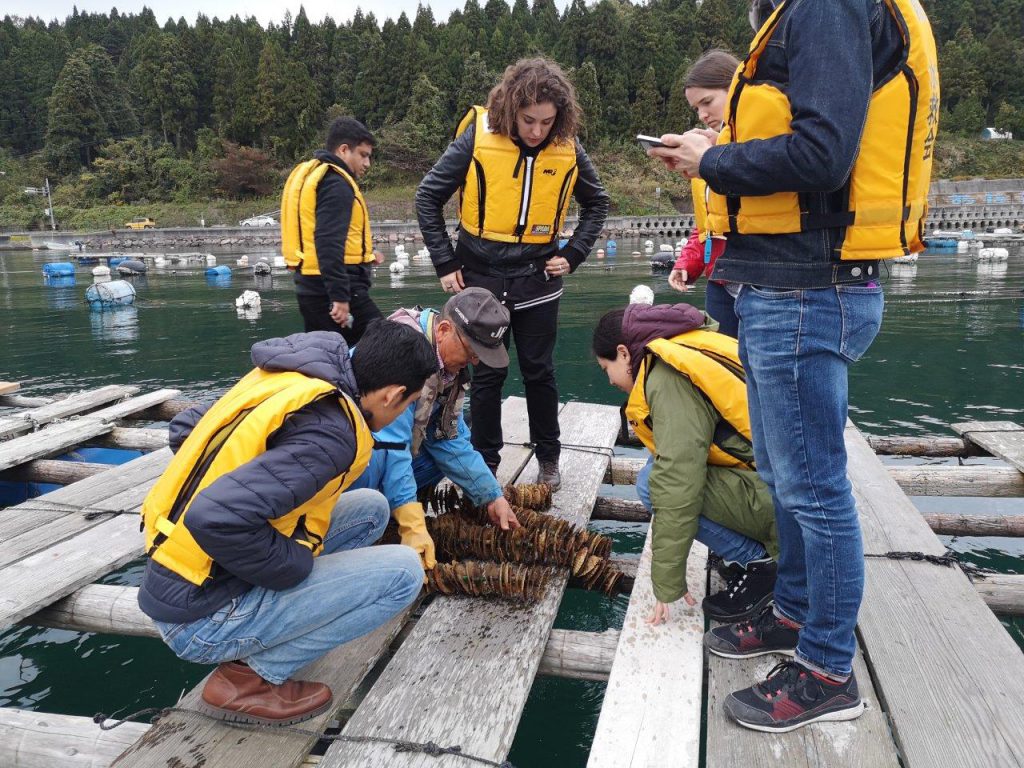
The group then set off South to visit an oyster farm in a small coastal village near the city of Anamizu, where locals explained how to harvest and prepare oysters for market. They learned that oyster farming is highly depending on the weather, and this year was a particularly hot year with little rain. They also interviewed Mr. Saito who moved to Anamizu a few years ago to become a fisherman. Now, not only he does oyster farming, but he also runs a restaurant where people can eat fresh oysters. He said “To have a stable income as a fisherman, it is important to have more than one income sources. I am very busy but also very happy to work as a fisherman which had been my dream since I was young”.
In the morning of the second day, a representative of a local currency system came to talk about his association. The system encourages repurposing leftover timber material from local forests. Once a person registers, they can bring timber material to the “timber station” in exchange for a proprietary local currency which can then be used in registered shops and restaurants. The system is subsidized by the forest and environmental tax, and it serves as an incentive for the revitalization of local economic activity, as well as for better usage of local resources.
A tour bus then took the group to the next destination Shunran no sato in Noto town, an area where currently more than 40 farm inns are located. There the group met their guide for the next 3 hours—an energetic 71 year-old man Mr. Tada who established Shunran no sato to revitalise the area in 1997.
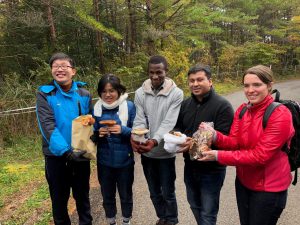
Mr. Tada led them to the nearby Satoyama forest he owned, where they gathered mushrooms to be eaten at lunchtime. They were invited to Mr. Tada’s house to taste local delicacies straight from the mountain, including vegetables, mushrooms, and river fish, as well as locally-brewed sake. Despite his vivacity and his apparent optimism, he also expressed concern about the low birthrates, depopulation, and other challenges involved in making the region flourish once again.
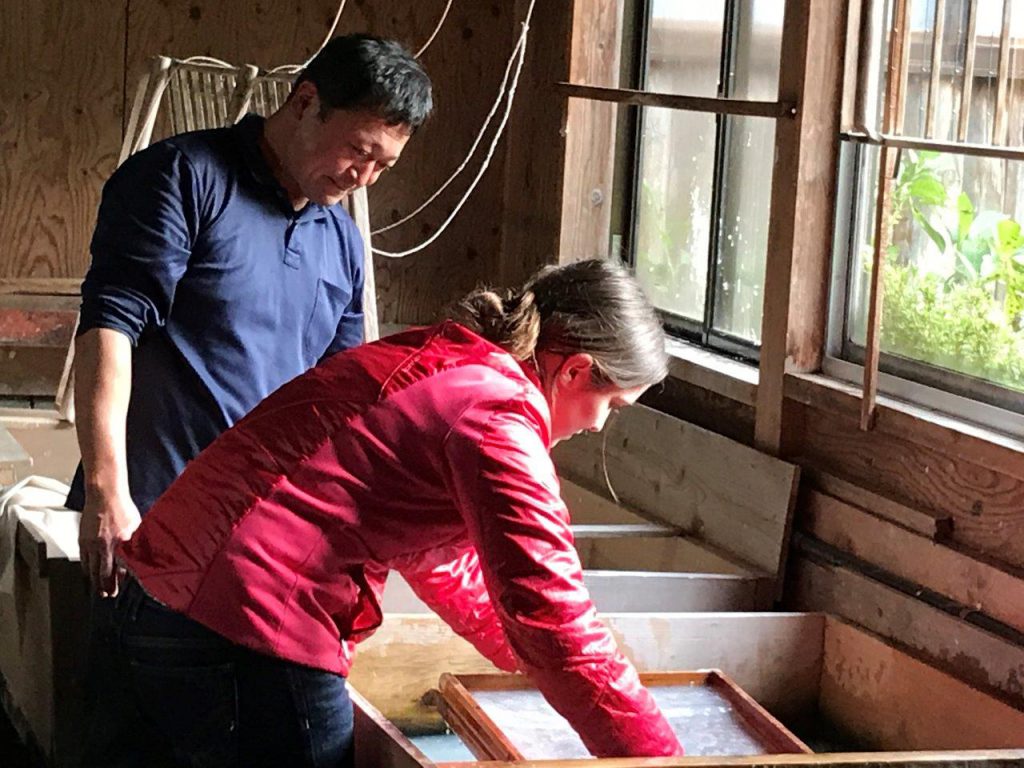
The day’s last stop was at a traditional “washi” (Japanese traditional paper) factory, run by Mr. Toumi and his mother. The plants needed for their paper came directly from their garden and the forents in surrounding area. The students tried their hand at making their own washi by evenly spreading cold water containing cooked pieces of bark in a wooden frame, a task which proved more difficult than it seemed. According to Mr. Toumi, they are offering a greater variety of Washi papers these days then before since the use of Washi as wallpapers, business cards or even Sake rabel is increasing.
The final day of the tour was dedicated to summing up the previous two days in group discussions. After a stroll in the local market of Wajima City in the morning, the group headed back to the Noto Satoyama Airport for a conference with several stakeholders of the Noto region.
Before lunchtime, Professor Ito of Kanazawa University gave an introductory presentation about an educational program called the “Noto Meister Program”, a complementary course with the goal of deepening students’ understanding of local ecosystems and promoting a knowledge-based strategy to revitalize the Satoyama-Satoumi areas of Noto.
In the afternoon, the students of the United Nations University split into 3 groups and gave presentations on their insights on the Noto Satoyama region gained over the past few days, as well as their proposed revitalization strategies to respond to the social and economic issues of the region. The local stakeholders were also invited to comment on the students’ viewpoints.
After several hours of stimulating exchanges, the meeting ended right on time for the UNU-group to board their flight. Following a collective farewell, the remaining group headed back to Kanazawa Station via tour bus.
On the 22nd of October 2019, the second volunteer cleaning activity at Shinrensha Temple Garden and the first workshop about green infrastructure were held. This time, together with Mr. Maruyama from Kanazawa Univ., Mr. Sakamura from JAIST, as well as their students, we invited Ms. Hayashi from Ryukoku Univ. as a guest speaker to talk about her research on the land use of Lake Biwa.
OUIK’s researcher Dr. Ivars, the main organizer of this event, talked about his research on Kanazawa’s biocultural diversity. As he mentioned in his book published last July, it is important for citizens to actively collaborate to conserve the nature that exists in cities. Dr. Ivars is hoping that events like this cleaning workshop become more common among locals and tourists, as it would help the owners of the gardens maintain and preserve them. Dr. Ivars conducted a survey of participants before and after the cleaning. The results showed that cleaning the gardens increased positive emotions and reduced negative emotions. This activity gives benefits not only to the garden owner, but also to the participants.
Next, Ms. Hayashi’s presentation taught us the importance of taking records on land use. If the cultural landscape and biodiversity of Japanese gardens in Kanazawa is a micro perspective, Ms. Hayashi’s story was more of a macro perspective. Ms. Hayashi’s research focuses on the natural environment and cultural landscapes of the past, and investigating changes in land use and the natural environment. Using a map showing the surrounding area of Lake Biwa in Shiga Prefecture, she explained that investigating how to use the natural environment that has existed from the past to the present time can suggest ways to connect people and nature sustainably, or industries that match the local environment.
After the lecture, we started the cleaning activities in the Shinrensha Garden.
It was a beautiful autumn day, and the participants seemed to enjoy being close to nature outside. Participants mainly picked up fallen leaves in the main garden area and the graveyard behind the garden. After one hour, the garden was finally clean, and we moved on to the discussion session.
Each group summarized their feelings and impressions of this experience in a 3-minute presentation. Some thoughts included: “What kind of gardens attract people and give easier access to people?” “Let’s make use of fallen leaves” “I was able to relax and enjoy myself” and so on.
Spending time in the garden surrounded by nature gives people living in the city opportunities to come in contact with nature and share a common purpose with other people. The participants enjoyed learning in the beautiful garden, and they seemed very satisfied.