Kanazawa:アーカイブ
2021年09月20日
IMAGINE KANAZAWA 2030 Partners is a platform for working together through partnerships based on “Kanazawa Future Visions”. As of September 10, 2021, 157 companies, organisations and individuals had joined the platform. At the meetings, short presentations were given on collaborative projects, which were then discussed in view of the realisation of the Kanazawa Future Visions. Although only two meetings were held in the last fiscal year, we will have a monthly meeting this fiscal year to promote initiatives for the realisation of the Kanazawa Future Visions.
The third meeting in fiscal 2021, which was the fifth meeting in total, was held online on September 16. At that meeting, many people from various organisations and companies, as well as individuals, participated in a lively exchange of ideas. Three organisations made short presentations; Table for Two, an incorporated non-profit organisation that has been involved in food-shortage and health issues, Noppokun Co., Ltd.,, which runs an organic / fair trade shop and presents films to raise awareness of the motivation for action and attainment of SDGs, and Kao Group, Customer Marketing Co., Ltd., which supports people’s cleanliness, beauty and health.
Table for Two is an organisation that addresses the problem of there being excessive calorie consumption, obesity and disease associated with adult lifestyle habits in developed countries, while developing countries are faced with food shortages and starvation. They have established a system according to which a donation is made to a developing country for every healthy meal that is bought from a company canteen or shop. So far, 7,390 meals have been donated to 709 organisations. Table for Two received the 2019 Japan SDGs Award.
Table for Two also established other donation systems in Kanazawa in cooperation with Hakusan Co., Ltd., Maru Stock Co., Ltd. a group company of Ishikawa Central Fish Market Co., Ltd. and Kanazawa University, involving sales of drinks via vending machines and local products. With regard to menu items to be sold in Japan, they are flexible in responding to requests from companies.
Next, Noppokun introduced the “Film Festival for the Future,” which will show five films related to SDGs at three sites in the city (NOPPOKUN, Kanazawa Port Cruise Terminal and Cinemonde) for four weeks from September 4 to October 1. The films deal with thought-provoking themes that we are familiar with but do not understand very well, such as issues related to the world and life, and give us the energy to move forward towards the attainment of SDGs. Although SDGs are abstract and difficult to understand simply through the themes, visual images enable easier understanding, since they clarify the contents and the connection between the goals and our lives, and make people think about the issues as their own problems. Noppokun has screen presentation rights for some other films in addition to the five films that will be screened at the festival. They wish to become a platform to share ideas for the attainment of the SDGs and hold study sessions for company employees.
Lastly, Kao Group Customer Marketing Co., Ltd. introduced their activities for attainment of SDGs. Kao Group devised the slogan “My Kirei Lifestyle: realisation of a spiritually rich life for customers all over the world” as their ESG strategy. They have positive communication with various communities, contribute to society from the diverse perspectives of the environment, health and hygiene, and support people in the realisation of a spiritually rich life. In particular, they have offered hand-washing classes in kindergartens and nursery schools, plastic-garbage classes in elementary schools, and skin-care classes for students looking for a job and for people in re-employment. They wish to increase the variety and frequency of the classes, and have already decided to hold makeup classes at community centres in cooperation with the Ishikawa Single Mothers Association.
At this meeting, Mr. Hashimoto, a coordinator of IMAGINE KANAZAWA 2030 Partners, presented examples of cooperative activities that had been realised through previous meetings. kanazaWAZA_Lab, which gave a short presentation at the first meeting, has linked with Partners members and launched the sustainable art project “Neglected Bamboo Bushes” in collaboration with the Kanazawa branch of Tokyo Marine & Nichido Fire Insurance Co., Ltd., Kanazawa Kiko Co., Ltd., and SYNCA DESIGN UNIT. In addition, the Ishikawa Single Mothers Association and Kao Group Customer Marketing plan to hold makeup classes as a cooperative activity through the Partners meetings. Mr. Hashimoto will be supporting cooperative projects as a coordinator in order to widen the circle of collaboration with Partners members.
2020年04月30日
The 11th SDGs cafe was planned on short notice with the theme of “Continuation Through Change? Workstyles and Remote Work in the Age of Corona.”
First, Mikiko Nagai (Office Manager at UNU-OUIK) gave an overview of the SDGs and explained the purpose of IMAGINE KANZAWA 2030. Additionally, she explained in detail two of the 17 SDGs which are directly impacted by the coronavirus pandemic, Decent Work and Economic Growth (Goal 8) and Good Health and Well-Being (Goal 3).
Our guest this time was city planning consultant Yukina Yasue, President of Research Institute of City Planning and Communication Co., Ltd., where they implemented an entirely remote work style starting from April. For this SDGs Café, Yasue collaborated with the Kanazawa IKUBOSS Company Alliance to conduct a Remote Work Emergency Survey online. Various issues with remote work were brought up, such as company structures not being compatible, work duties not being possible with remote work, and self-management being difficult. At the same time, many also expressed hope that remote work could be a catalyst for positive change in corporate culture.
Additionally, Yasue, who has had experience with creating infrastructure to allow for remote work since before corona, said that there were 5 requirements for remote work, including establishing a climate of freedom and responsibility and reconsidering what the results of one’s work mean. “It’s best to seriously think about shifting from the established norm and convention to a more ideal setup, and now is the chance to do so. It could be said that now the purpose of many organizations’ very existence is being called into question,” she continued.
Katsuya Nomizu (President’s Office Fellow, Cybozu, Inc.), originally from Kanazawa, also gave us some ideas. Cyboze, Inc. is known for being at the vanguard of workstyle reform, and they have experimented with fully remote working in the past as part of their BCP*. Starting in early March of this year, almost none of their employees were working from the office.
*What is a BCP? A BCP, or Business Continuity Plan, is a plan to minimize the harmful effects of natural disasters or other emergencies on a business in order to ensure its continued operation and recovery.
“Sustainability isn’t about protecting tradition. Things that can change and adapt are able to survive. Right now, it is necessary to make a clear decision that a decrease in operational efficiency is unavoidable, and business managers should understand that it’s impossible to perfectly replicate how things used to be,” Nomizu explained. He went on to give some more advice about remote work, suggesting that it should start being implemented with managers, that workflows and office duties need to be made clear, and that in general employees should be given the benefit of the doubt.
This was our first attempt at a webinar, and both those running the webinar and those participating felt that the webinar format had several benefits, such as it being easy to ask questions, the slides being easy to see, and being able to participate from far away.
2020年03月04日
2020 is the year of the Tokyo Olympics. As the interest in sports has increased with each passing day, this time at the SDGs café, we focused on Sports and how they relate to the SDGs.
Our first guest was Ms. Haida, Deputy General Manager of the Business Planning Department and Hometown Promotion Office of Zweigen Kanazawa Football team (J2).
The J League (Japan’s professional football league) has three philosophies, one of which is “promoting a rich sports culture and contributing to the healthy development of the mind and body of the people.” In other words, there is a strong desire to develop Japanese sports culture through football.
Zweigen Kanazawa has a club philosophy: “Challenge the tradition of this city.”
“In Kanazawa, there are many things that are said to be ‘tradition’. We are trying to make ‘challenging’ a new Kanazawa tradition,” Ms. Haida said.
J-League clubs conduct 20,000 community engagement activities a year to gain more supporters as well as the favor of the local community. Last year, Zweigen Kanazawa conducted 250 such activities, including a football training session for kindergarten kids, support for the blind football team “Zweigen Kanazawa BFC”, and football lessons to help rehabilitate patients with mental illnesses.
All 56 clubs in the J-League have performed about 20,000 community engagement activities in the year 2019. However, despite their efforts, there was still a lack of awareness of their activities in the local community. As such, two years ago on the 25th anniversary of the J-League they decided to start “Sharen” in addition to their regular activities.
“Sharen” is an abbreviation of “social cooperation activity” in Japanese. Zweigen Kanazawa has been working with companies, governments, schools, and other local groups to solve social issues in the community. Before starting Sharen, they focused on quantity, but now they are more focused on the quality of the activities.
Our second guest was the SDGs expert Mr. Cosmo Takagi, a Research Associate at UNU-IAS OUIK as well as a Research Assistant at Keio University. He also has experience learning football in Brazil, so he was a perfect speaker for this workshop.
He first explained what the SDGs are with examples and explained an important theory of the SDGs: backcasting. There are 17 goals in the SDGs, so we need to think ahead and define our goals and then work backwards to identify policies and programmes that will help us achieve those specific goals. This planning process is vital to achieving the SDGs.
”How do you use the SDGs in connection with the J-League?”
One way to use the SDGs is to organize. For example, a J3 team called “YSCC Yokohama” is sending a team of nutritionists to an impoverished area and teaching the residents how to make a nutritionally balanced meal at a low price. This activity contribute to the second goal of the SDGs: Zero hunger. However, this is very broad in terms of goals, and it seems that anything can be linked.
The SDGs have 169 targets and indicators for their progress. Looking at the targets and indicators, we can see that there is a concept of “eliminating undernourishment” and that we are contributing to it.
“When organizing our efforts in the SDGs, look at specific targets rather than the overall goals. The targets are so specific that we can organize our efforts in a meaningful way,” Mr. Takagi said.
Some further examples he gave included Kawasaki Frontale’s contribution for SDGs goal number 4, Quality Education, where the team donated maths workbooks to kids to learn basic maths by counting football game scores.
The UK’s Forest Green Rovers FC is known as the world’s most environmentally friendly club, and is certified as such by the United Nations. They attached solar panels to their stadium which supply all of the electricity the stadium requires with solar power.
During the group discussion session, participants discussed what kind of activities we can organise to promote SDGs with sports, what can lead to the achievement of Kanazawa’s SDGs using sports.
Some of the opinions of participants are as follows:
“Nobody at our table really plays any sports, so we talked about how we can individually enjoy and support sports.”
“We would love to host an event where children and football players can play together”
“It would be easier for disable people, people with illnesses, and elderly people to go to the stadium if there were more transportation options to get to the stadium and more accessible toilets.”
2021年08月23日
In order to address social challenges and boost new projects, it is important to provide management resources, including the skills and efforts of individuals and organisations, tools to provide solutions and services, and funds to support the activities of people and organisations. In addition, natural resources that support product manufacturing and service provision, and social capital such as knowledge, information, networks and relationships of trust, as well as education for the upskilling of individuals and organisations are indispensable. We can create a better society by collaborating with each other through partnerships. It is possible for us to attain SDGs in the same way.
As part of IMAGINE KANAZAWA 2030, we held a study session on the use of private resources to promote Kanazawa SDGs on August 19. We have been endeavouring to create new projects and to connect people and organisations for the future of Kanazawa through SDG meetings and our IMAGINE KANAZAWA 2030 Partners. We learned about private-sector resources such as knowhow, financing and circulation systems at this meeting, and will use them to make Kanazawa a sustainable city.
We invited a guest from Eco Village Promotion Division, Nanto City to our first study session, to give a lecture about the establishment of the “Nanto Happy Future Fund,” a public interest incorporated foundation, and its activities. After the lecture, we had a question and answer session and a discussion. The community fund was established by local residents for activities carried out within Nanto City. It finances business related to the seven community challenges through donations and dormant accounts. Although the fund has been operated with municipal support since its establishment, it will be operated independently from fiscal 2023.
People from financial institutions located all over the prefecture participated in the meeting. Case examples of financing through an intermediate support organisation and an SDG promotion organisation were introduced, and a Q&A session about topics related to non-financial support such as assistance with producing human resources was conducted. Non-financial support organisations that help with networking and upskilling were also introduced. Questions about how to collaborate with organisations and how to provide effective support for coping with social challenges were raised.
2021年08月23日
IMAGINE KANAZAWA 2030 Partners is a platform for carrying out activities through partnerships based on “Kanazawa Future Visions”. The fourth Partner meeting, held online on August 18, was the second meeting of fiscal 2021. Many people from companies and organisations, as well as individuals, participated in the meeting.
At the meeting, short presentations were given on collaborative projects, and a discussion was held in view of realising the Kanazawa Future Visions.
DREAM WORKS, a PC recycling business, and Kanazawa Rainbow Pride, an organisation that supports the LGBTQ+ community, made short presentations. DREAM WORKS reported that they have provided recycled PCs to children of families that cannot afford to buy their own. Their activities have received the approval of companies in Fukui Prefecture, and are being expanded. They proposed to expand into Kanazawa and develop children’s potential through IT education.
Kanazawa Rainbow Pride requested the cooperation of Kanazawa Pride Week, which includes the Rainbow Parade, the first such parade in the Hokuriku region, a study session for companies, an educational forum and a film screening. The presenters and participants shared ideas on ways to promote understanding of sexual minorities.
In addition to the above two presentations, a session was held to talk about any topics related to the promotion of SDGs with Ms. Nagai, the OUIK office manager.Kao Group Customer Marketing Co., Ltd. asked what we can do in Kanazawa for the promotion of SDGs and ESG. A member of the Ishikawa Single Mothers Association proposed holding makeup and hair care courses for single mothers who usually do not spend time and money on themselves. Such courses would be an opportunity to develop connections with other members.
In the group discussions, individuals and organisations shared their knowledge, experiences and ideas to boost project initiatives and resolve issues related to the SDGs. The discussions seemed to be a good opportunity for presenters and participants to gain awareness, learn, and make new connections.
2020年01月29日
At the ninth SDGs cafe we discussed the question, “how do we want transportation in Kanazawa to be in 2030?”, with particular attention to the happiness of people and the development of attractive towns.
Our first guest was the mastermind and secretary of Kanazawa’s “machinori” bicycle rental system , Masahiro Kagishi (Nihonkai Consultant Co., Ltd.), who is also familiar with domestic and international public transport systems.

We also welcomed Derk Loorbach (director of the Dutch Research Institute for Transitions and Professor of Socio-economic Transitions at the Faculty of Social Science, both at Erasmus University Rotterdam), who was visiting Japan from the Netherlands, as our special guest. Masahiro Matsuura (Professor, Graduate School of Governance, Meiji University) cooperated as an interpreter and coordinator.
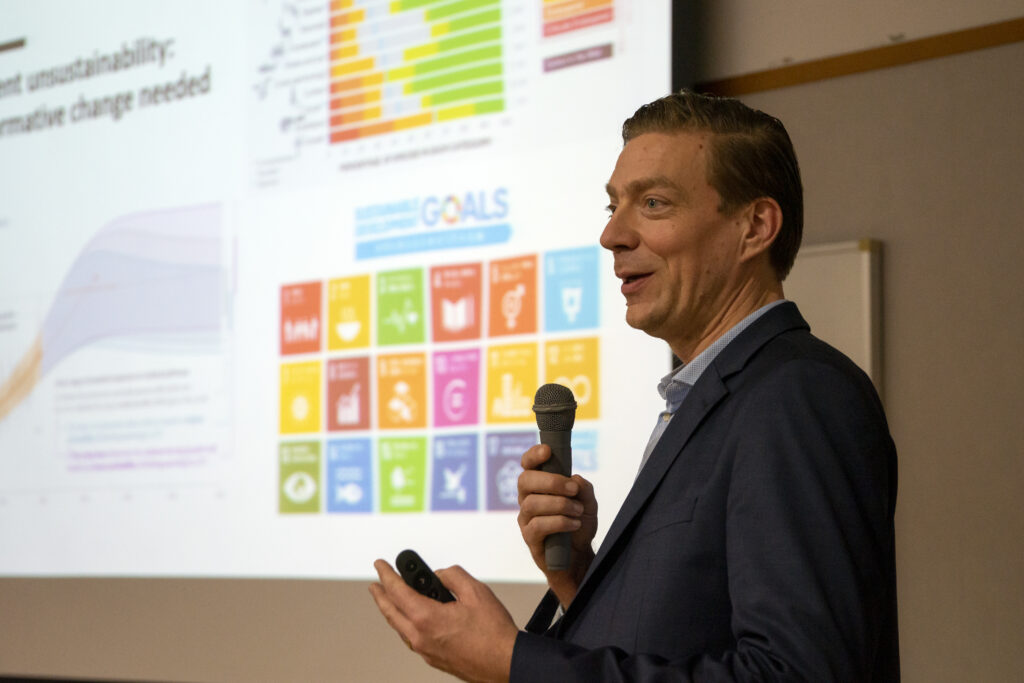
A new “machinori” will start soon
“Machinori”, the bicycle rental system created by Masahiro Katagishi, has been in operation for eight years as of January this year, with a total of 1,239,000 uses and 425,000 users. Currently, the system is being updated and the number of cycles and cycle ports will be tripled on March 1st. “I’m working hard to make it a true public transport system,” says Kagishi.
“As the global trend is transitioning from car to person and from space to place (space becomes place by adding human activities), this trend is closely related to SDGs. Before thinking about transportation, sharing the vision of how we should develop the town/city itself is important,” Mr. Katagishi said. He also introduced a service called “MaaS (Mobility as a Service),” which allows users to search, make reservations, and settle payments in an integrated manner by combining them optimally, which is getting more and more attention these days.
Three years ago, Mr. Katagishi traveled to Barcelona, Spain, where he interviewed various local transportation operators and asked, “Why is mobility necessary?”. The answer was simple but impactful for him: ”For the happiness of people. Our mission is to support people’s activities and produce a happy urban life. We will provide mobility services for that purpose. Is it different in Japan?”.
Mobility is needed for people’s happiness
Thanks to that revelation, Mr. Kagishi learned three points that support happiness:
①Accessibility: Improve the accessibility of many kinds of activity by diverse groups of people
②Multimodality: Coordination of various transportation forms in consideration of accessibility (ease of use)
③Integration: Development and transportation policies that take into account various policies such as land use, welfare, environment, and tourism (integration of various city policies is needed)
“Happiness is the emotion that you gain from various activities → movement occurs to proceed with activities → supporting people’s activities and people to access happiness” = Mobility, Mr. Kagishi said.
Then how about Kanazawa as a city and its transportation from the perspective of happiness?
Mr. Kawagoshi said that many great ideas have already been shared for transportation and community development for the future of Kanazawa City. However it is not progressing easily because stakeholders are not sharing a common vision like his idea of mobility-based happiness yet.
However, based on the environmental and social aspects of the five directions of the Kanazawa SDGs, Mr. Kawagishi hopes that there would be more opportunities where open discussions can be held in the future.
Imagine traffic in Kanazawa in 2030
”Technologies such as AI, autonomous driving, and MaaS apps are means, not goals,” Mr. Kawagishi said.
“First, enjoy yourself.” He says that it is important to think about “What are the attractions and activities of Kanazawa that you want to cherish? What is unique about Kanazawa?” Then, in order to realize happiness, consider the ideal way of mobility to support it, create a transition, and create a human-centered world in Kanazawa where citizens and tourists both can enjoy moving around.
“How to make a transition?” by the pioneer of mobility transition
So how do we rebuild mobility for future happiness? Derk Loorbach, a professional of mobility involved not only in research but also in its real-life application, made a proposal to improve the sustainability of the city.
“For example, climate change and the loss of biodiversity are recognized worldwide, but there is no real action, and that’s the problem. People are aware of it and they even know the solution but there is still no action. How can we make a big change there? That’s what we focus on,” said Mr. Derk.
Transition starts with thinking about a sustainable society, and we need to have critical thinking sometimes. The study of transition does not mean thinking about what has happened now, but rather thinking about why things aren’t changing, and how we can enact change.
“When I talk about transition, some people take a negative stance and call me an idealist or a dreamer, saying it can’t be done, and it costs money. It isn’t easy to believe in the future, but increasing the number of people who believe in change and the future is a part of the transition process.” Mr. Derk said.
At first, it might just be a few bureaucrats in a government office or employees in a large company, but the transition begins when those people successfully make friends and try various experiments and methods to begin a transition. As it grows, the shape becomes visible–in Kanazawa, for example, the number of bicycle lanes has increased considerably these past few years. In the same way,things that will be considered normalin the future but are still not common right now will gradually develop to become the norm.
“There’s a project called “place of transition” where people who can make a change come together and think about what kind of transitions are possible. The aim of this idea is for the participants to get back to their workplace or community and create opportunities for movement as an organization,” Mr. Derk said.
Mr. Derk also introduced us to a number of actions taken in cities in Europe. For example, in Ghent, which is one of Kanazawa’s sister cities, there is an initiative called “Living Street”, a project to close the streets to traffic for two months during the summer and use them as parks. Apparently it took two years to persuade the relevant departments, and in the first year it was carried out in only 2 streets where cars hardly could pass. After a few years, more streets joined the project. In another example, this time in Rotterdam, the government was undertaking a mobility transition project and they noticed that some people were being excluded. For example, poor people can’t commute, can’t move, or can’t ride a bike because they have no money. This was perceived as a social welfare issue, and free bicycles were offered.
It seems that the transition has changed the mindset of officials who did not like rapid changes until now, and they are now trying more and more experiments. Until now, the idea was “to solve problems when they occur”, but it is said that the idea has been shifted to “creating problems on purpose and providing solutions.”
There were a lot of deep questions at the question time.
Everyone seemed to be having a lot of problems and asked a lot of questions. Here are some of them.
<Questioner A>
People in Kanazawa hardly think about public transport. What should we do to change the consciousness of these people?
<Derk>
Some people may be uninterested or find it annoying, so the point is to start small. It’s also important to start by connecting with people who are already active and making it visible.
<Questioner B>
In the Netherlands, it rains a lot, but I hear that lots of people ride bicycles. On the other hand, people in Kanazawa say that bicycles cannot be used because it rains and snows here. How has the Netherlands encouraged people to use their bikes in the rain?
<Derk>
In the Netherlands, where a bicycle infrastructure is available, riding a bicycle is easier than riding a car. In Kanazawa, it may be easier to drive. Whether it is raining or snowing, it’s important to try out a bike tour or an event together, make it visible, and make it seem normal.
<Questioner C>
How did the results of the transition experiment affect the economy?
<Derk>
When talking about a case where a parking spot on the street was turned into a park as an example, we asked the shop owners or residents in front of us, “Do you want to do it?”. At first they said no because customers could not come in if they closed the street, but when they actually tried it, they realized that creating an attractive space increases the number of customers. This project gradually spread, and in Rotterdam 4,000 parking spaces have now been converted to parks. We have also calculated that zero emissions will bring various social benefits, improve health, and reduce costs. As for which sector suffers the greatest damage, the fact is that the government has a lower tax revenue, and that’s the greatest impact.
<Questioner D>
In your experience, are there any examples where tourism has become more active as a result of a transition?
<Derk>
Like Barcelona and Rotterdam, a city that is easy to walk and comfortable to live in would have more benefits in tourism. The point is not to shut down the car immediately, but to give more options to people, for example allowing only electric cars and providing other transportation methods.
<Mr. Katagishi>
It would be amazing if Kanazawa becomes a city like Zermatt where only electric cars are allowed. I feel like it would be better to change people’s mindset in that kind of direction.
<Question from Katagishi-san to Mr. Derk>
How did you make everyone agree to one person’s idea as a policy? I would like to know if you have any tips.
<Derk>
Making a plan that says “everyone agreed” and expecting it be implemented someday is just a dream or an illusion. We should focus on people’s actions, how we can all positively keep working for a better future. If you have a strong opinion of what the future should look like, you should talk and connect with individuals who are in tune with that belief, and in that case you don’t need all the stakeholders to agree with you.
More than 60 people gathered to participate in this event, likely because the theme of “transportation” was familiar and relevant to their lives. Derk said, “I would start with the little things like this cafe first. This could be the start of something big, I believe it could”.
The official website of Kanazawa SDGs IMAGINE KANAZAWA 2030 has been launched. Check out the upcoming SDGs cafe schedule as well. Https://kanazawa-sdgs.jp
2019年12月26日
On December 17th, the 2019 Hokuriku SDGs Stakeholder Meeting was held jointly with the Kanazawa Institute of Technology at the Kanazawa Theatre.
This meeting was held as a regional version of the Stakeholders Meeting for Revision of the SDGs Implementation Guidelines hosted at the United Nations University Headquarters on September 6, 2019. People from various parts of the Hokuriku region, including those from the private business sector, local governments, and citizens who had already been working on SDGs participated in this meeting and discussed the future of Hokuriku region and presented a sustainable plan for the future, looking forward to the next generation.
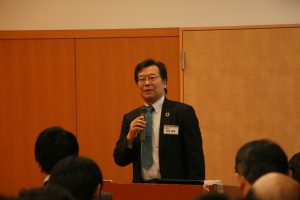
First, Mr. Kazuhiko Takemoto, a visiting professor at the United Nations University Institute for the Sustainability Advanced Studies, gave an opening speech. He talked about the importance of such a meeting being held in rural areas when the implementation guidelines for the SDGs are revised at the end of the year.
Next, Mr. Kentaro Endo, Counselor of the Cabinet Office Regional Revitalization Promotion Secretariat, gave a greeting and explained the nation’s policy towards achieving SDGs and regional revitalization.
In addition, Associate Prof. Shintaro Hiramoto, Director of the SDGs Promotion Centre at the Kanazawa Institute of Technology, shared information and explained the purpose of the meeting and how to proceed with the breakout sessions.
The meeting was divided into 5 subsequent sessions, and each group produced a specific plan for Hokuriku in 2030 in the form of a scenario.
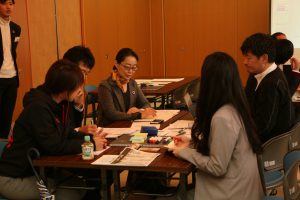
① What does it mean to be a comfortable city for everyone to live in?
Why do people, money, things, and information gather in Tokyo? How can we apply the SDGs perspective to revitalize the region and change this trend?
Facilitator: Yuki Mishima (President of Fork and Landscape Designer) Tatsuya Kitagawa (Department of Information Management, Kanazawa Institute of Technology)
②Innovation: Production in the countryside and transmission to the world: What do we produce and transmit, and how do we gain the world’s understanding? Will the SDGs be its common language, and how will it co-exist with technology?
Facilitator: Hiromi Onuma (Representative of Hiro), Kenichiro Fukushima (Representative Director of Code for Kanazawa, Representative Director of Eye Publishing Inc.)
③ Education: Careers and learning in a 100-year lifetime society:
How do you enjoy and build a career over a lifetime of 100 years?
Facilitator: Naoki Miyatani (Start SDGs Operation Manager) Shoko Maruyama (Family Business Facilitator)
④Partnership: A mechanism to bring everyone’s power together in the community
-How can various actors co-create across sectors and organizations in order to achieve the SDGs?
Facilitator: Hirofumi Taniuchi (Kanazawa City Citizens’ Activities Support Center) Naoyuki Tsukamoto (Company Inc.)
⑤ Diversity: A society where diverse people can participate in decision making
How will our lives change if we can create a society where diverse people can participate in decision-making?
Facilitator: Kenji Kitamura (Coordinator of Social Division, Noto SDGs Laboratory) Sayaka Watanabe (Representative of re: terra)
During each session, members first looked over materials such as the NRI Future Chronological Table 2020-2100 and the Ministry of Internal Affairs and Communications’ TECH Strategy for the Future. They then drew up a vision of what work styles and lifestyles might be like in 2045. Next, members created a “persona,” a hypothetical person whose life they would simulate through an example scenario, including specific details of their life story and turning points.
After the afternoon breakout sessions, the scenarios were reported to the local students, the next generation who would hold the future of Hokuriku region. Many ideas were shared, such as the systems enabled by technological advances and changes in family structure.
Thank you to all of the participants who took their work seriously to the end. We also thank the students who participated in the sharing session in the end.
2021年07月15日
IMAGINE KANAZAWA 2030 Partners is a platform for implementing the Kanazawa Future Visions action plan through partnerships. One year after its establishment, it has developed into a large platform used by 140 companies, organisations and individuals.
The third Partners Exchange Meeting was held on July 13 with as many as fifty participants. At the meetings this year, short presentations will be given on “projects to be carried out through collaboration between partners” and “topics to be discussed with partners,” and discussions based on the presentations will be held subsequently. Today, five companies and organisations gave short presentations on their activities, and participants were divided into five discussion groups.
The following five companies and organisations gave presentations today:
1) Nomura Securities Co., Ltd.: “Sustainability transformation (SX)”
2) kanazaWAZA Laboratory: “Sustain-art Project: Abandoned bamboo forests”
3) Code for Kanazawa: “Call for participation in the regional problem-solving competition”
4) Ishikawa’s Morning Catch Project Secretariat, Ishikawa Chuo Uoichi Corporation: “Promotion of sustainable seafood distribution”
5) Lotus Concept Co., Ltd.: “Hands-on promotion of barley straws”
Nomura Securities Co., Ltd.introduced ESG-based investment predicated on sympathy and support, and the ecosystem for sustainable transformation in Kanazawa. They explained their intention of teaching high school students about ESG-based investment.
kanazaWAZA Laboratory. explained how they are using art to solve the problem of abandoned bamboo forests in Kanazawa. They are planning a circulation-model art project, which involves the management of bamboo forests by felling, bamboo art production and soil improvement through the reuse of bamboo. Their work is being carried out in collaboration with various parties such as major companies, government, residents and educational institutions.
Code for Kanazawa aims to solve regional problems through IT and design. They introduced their regional problem-solving competition, the goal of which is to solve regional problems through ICT.
Ishikawa’s Morning Catch Project Secretariat, Ishikawa Chuo Uoichi Corporation explained their project for the promotion of eco labels. There are various eco-label accreditation systems such as MEL (Marine Eco Label), MSC (Marine Stewardship Council) and ASC (Aquaculture Stewardship Council). Products are accredited based on an evaluation of sustainability and environmental impact reduction associated with catching and cultivation methods. They talked about their plan to diffuse information and hold events featuring accredited products.
Lastly, Lotus Concept Co., Ltd. introduced the barley straws they manufacture and sell. They are trying to popularise barley straws in order to reduce the environmental impact caused by the production and disposal of plastic straws. Their straws, which are made of barley from Komatsu City, Ishikawa, are used at Senshu University and at hotels in Kanazawa.
Group discussions were held after the presentations. The presenters talked about their motivation and passion, and participants asked questions and made proposals. The discussions seemed to be a good opportunity to create something new through collaboration.
2019年11月28日
This SDGs Café’s topic was “partnership”. We invited Mr. Hiroishi from K.K. Empublic and Ms. Kasama from the Kanazawa City Government as guest speakers to imagine Kanazawa in 2030. The SDGs can only be realized through strong partnerships, a point made clear by the explicit inclusion of partnerships in the Goals themselves (Goal 17: Partnerships for the Goals). After Ms. Nagai from OUIK introduced the collaborative project between Kanazawa City and JC Kanazawa, Ms. Kasama commented that “My dream is that in 2030, Kanazawa will be a city where everyone can naturally work together to solve social issues.”
Mr. Hiroishi, who works on various partnership projects, introduced problem-solving processes and methods. He explained that ”complex problems” and “difficult problems” are different: difficult problems can be answered, but today’s social problems are complex, with diverse elements and complex contexts that interact and intertwine, so the main cause of the problem cannot be identified. Until now, we have solved one problem at a time. In other words, the only premise is a “problem-free situation”. “What is a problem-free situation? And is it really a good approach to solve problems one by one? At the end of the day it might be quicker and the total cost is cheaper if we try to make a situation where everyone is happy. ” Dynamic problems that are occurring in the system and those that are caused by complex factors require complex solutions. When a problem occurs, it is not something that can be solved if someone does something, rather it is necessary for the local community and society to improve so that they can either solve problems or prevent them in their early stages.
After Mr. Hiroishi’s presentation, participants had a discussion over a newly introduced SDGs action plan for Kanazawa.
2021年04月12日
On Sunday, 28th of March, a Garden Maintenance SDG Tour was carried out at the Senda Family Garden (closed to the public), which has been designated as a place of scenic beauty by Kanazawa City. Our research associate Juan Pastor Ivars has held garden maintenance workshops for residents to experience the nature and culture of Kanazawa. This tour was planned as a model tour for involving tourists in garden maintenance, as part of the fiscal 2020 Kanazawa City SDG Tourism Promotion Project.
Volunteer maintenance of Japanese-style gardens has been carried out by city officials, researchers and students, including people from the Landscape Policy Department of Kanazawa City and Kanazawa College of Art. Since first participating in the project in 2017, Juan has created a hands-on program consisting of garden maintenance, workshops on the history and maintenance of gardens, and tea ceremonies, and has worked to establish and increase public awareness of the program.
Urban green areas such as Japanese-style gardens are an effective means of combating global warming and the heat island phenomenon, and play an important role in the preservation of native urban ecosystems and biodiversity. In Kanazawa, gardens have contributed to the preservation of cultural activities such as handicraft production and the tea ceremony, as well as cultural landscapes. Spending time in nature is said to be beneficial for people’s mental and physical health. However, due to demographic changes, problems such as a shortage of maintenance workers are making it difficult to preserve the nature and cultural landscapes of the city, as well as the associated cultural activities, and hand them down to future generations.
In order to solve these problems, Juan searched for ways of raising people’s awareness of garden maintenance as “ecotourism”. This workshop was planned through collaboration with You-I Japan, which excels in international exchange activities. It served as a model tour for preserving the green areas and culture of the city through cooperation between tourists and residents. This SDG tour followed Utastuyama Temple District and Eikyu-ji Temple Tour.
Although it was drizzling on the day of the tour, eight people, including Japanese students of Kanazawa Institute of Technology and Russian students of Kanazawa University, assembled in front of the Senda Family Garden at 9:00 am. First of all, Mr. Tsuba from Kanazawa College of Art, who is involved in garden restoration, explained the garden’s design. The central location of the pond allows it to be viewed from the path, and the pond’s water flows out of and back into the nearby Onosho Canal. The trees and stones are arranged to resemble cranes and turtles, symbols of longevity, when seen beyond the pond from the guest room. The participants learned about the sophisticated artistry of Japanese-style gardens. Next, they worked in pairs to remove dirt that had accumulated at the bottom of the pond. They were so concentrated that the work was done in silence. The amount of accumulated dirt in different areas depended on the flow of the water.
After cleaning the bottom of the pond, the participants took a short break, and then the garden’s owner, Mr. Senda, explained the history of the garden. The Senda Family Garden was constructed by Senda Tobumi, who had great success in the Seinan War, which took place in the middle of the Meiji period. Mr. Senda showed photos of the gradual changes in the garden’s design that were made over time. The design of the area around the earthen-floor porch, where azalea trees are planted now, was different before. Also, there used to be a waterwheel beside the waterfall in the stone arrangement. Mr. Senda is considering opening the garden to the public, as it combines the scenic beauty created by a garden ecosystem with historical and cultural value, and creating an exhibition on the history of Senda Tobumi.
Before starting the tour, the participants surveyed the species of living things in the garden. Many species, including shrimp, dragonfly larvae, dark sleeper and sweetfish were found in the pond. It was a valuable opportunity to learn about the garden’s nature and culture.
Lastly, the participants had discussions. It seems that these days, tourists prefer to have unique experiences by exploring areas thoroughly and learning about their unique characteristics. The garden workshop has the potential to become part of a tour; however, it would be necessary to explain differences in gardening techniques, as well as local history and culture, to people from countries with different cultural backgrounds. One of the foreign participants commented on the excellence of Japanese landscape-gardening techniques.
We will continue to consider model tours that can contribute to the management of the greenery and culture of the city through collaboration between residents and tourists, and hand down the values of nature and culture to future generations.