At the 2nd Satoumi Seminar, we learned about SDG 14.2 and 14.5, individual targets of SDG 14 which concern undertaking initiatives to help recover and strengthen the resistance of marine and coastal ecosystems and contemplated how to help preserve marine biodiversity.
First, Research Associate Evonne explained the purpose of the seminar and what conservation of marine biodiversity means in the context of SDG 14. “In the Satoyama and Satoumi region, the forests, hills, rivers, and oceans are all connected, so even while living on land, if you have an awareness of your connection to the oceans you can still contribute to their preservation. If many people work together, we can continue to protect the Satoyama and Satoumi,” she explained.
Next, Mariko Kimura (Nature Conservation Bureau, Ministry of the Environment) gave a keynote lecture focusing on the three topics of “Currently Protected Marine Areas,” “The New System for Offshore Protected Areas,” and “Protected Marine Areas from Next Year Onwards.” She said that she would like everyone to think about how the protection of the oceans can be achieved through their sustainable use by maintaining the connection between people and the environment; in other words, that people interacting with the oceans can help protect them, and that it is difficult to protect them without having any interaction at all.
Next, Seiji Yanai (Professor, Ishikawa Prefectural University) gave a presentation on his activities titled “The Connection Between the Forest and the Sea Mediated by the Akategani Crab in Noto’s Tsukumo Bay.” Every year, many Akategani crabs flock to the Tsukumo Bay to lay eggs, and many kinds of fish also gather to eat those eggs. Professor Yanai suggested that the Akategani crab is an animal that represents the connection between the forest and the sea, and that it may be useful as a subject of study for environmental education. He also runs a public coastal learning exercise at Kanazawa University, in which they use abandoned rice paddies to create biotopes for Akategani crabs.
Next, Minoru Kamamura (Notojima Diving Resort) gave a presentation on his activities titled “Connecting with the Biodiversity of Noto’s Satoumi as a Diver.” Kamamura has been operating a diving shop on Notojima, located on the East side of the Noto Peninsula, since first opening it 17 years ago. On the topic of the importance of marine biodiversity he said, “There are many different varieties of seaweed, which in turn attract many different organisms. The presence of seaweed and many small fish and shellfish is what keeps the water clean. Leisure diving is reliant on that beautiful natural process.” Kamamura also cooperates with local high schools’ diving teams to do surveys of the marine environment and clean up trash.
Research Associate Evonne then moderated a panel discussion in which the panelists answered viewers’ questions and viewers shared their thoughts and opinions. One viewer said, “Once you realize that life on land is connected to life in the sea, you want to protect the sea. Today’s discussion made me feel that it’s important to think about both life on land and life in the sea at the same time.”
In his closing remarks, Tsunao Watanabe (Director of UNU-OUIK) said, “Through today’s discussions we learned about many important points of view for thinking about how to continue to preserve marine biodiversity. The Noto Satoyama Satoumi is an extremely important region that has been designated as a GIAHS. I think it would be a wonderful thing if everyone were to take part in initiatives to improve our relationship with the sea as we cherish the connection between the forest and the sea.”
The Third Meeting of the Noto GIAHS Biodiversity Working Group established within the “Noto Region GIAHS Promotion Council” organized by local governments in the Noto area, was held on March 4 for FY2022.
Members of the United Nations University supported its preparation and operation. Unfortunately, the meeting was held online once again, but 21 participants, including expert members and representatives from local governments, gathered virtually to share updates on activities and engage in discussions for the next fiscal year.
During the first half of the meeting, expert members reported that the activity team they established successfully received funding from the “Pro Natura Foundation,” a natural conservation grant, and that efforts are underway to create a biodiversity monitoring system starting in October. Multiple expert members shared information regarding this initiative.
In the second half of the meeting, updates were provided on a study session regarding the release of the Japanese crested ibis, held on February 19, hosted by Kanazawa University’s Satoyama and Satoumi SDGs Program, as well as information from the International Conference on Globally Important Agricultural Heritage Systems held in November last year. Active discussions took place concerning the relationship between the wild restoration of the crested ibis and the activities of this working group, as well as the potential for collaborative efforts with other GIAHS regions and youth.
As this is the first year since the establishment of the working group, there have been many areas where we are still finding our footing. However, we hope to continue advancing our activities step by step in the next fiscal year in collaboration with expert members and local government representatives.
The theme of the 13th SDGs Café was “All Citizens Should be Gardeners! Thinking about the Kanazawa SDGs from a Green Infrastructure* Perspective.”
*What is green infrastructure? Green infrastructure refers to land use planning with the goal of creating a sustainable society by re-evaluating nature from a multi-functional perspective.
In 1968, Kanazawa City was the first in the nation to establish a Traditional Environment Protection Law, which stipulated that green spaces and canals within the city must be protected alongside traditional samurai houses, temples, and shrines as part of Kanazawa’s historical cityscape. These preservation efforts continue to this day, and the goal of creating and utilizing green infrastructure is explicitly included in the Kanazawa Future Visions presented earlier this year.
Our guest this time was UNU-OUIK Research Associate Juan Pastor Ivars who has lived in Japan for 11 years since coming from Spain to research traditional Japanese gardens in Kyoto and Kanazawa. Juan aims to develop his research in a way that is rooted in the local region by cooperating with citizens to think about the future of Kanazawa City.
Since 2010, Kanazawa’s population has been declining, while the number of unoccupied homes continues to rise, and the amount of natural space gradually dwindles. In the Kanazawa of 2030 that Juan imagines, unoccupied homes and parking lots would be replaced with green infrastructure, and in order to continue to protect that greenery he proposes that all citizens become gardeners.
“Thanks to Kanazawa’s gardens, the city is rich in both ecological and cultural diversity. Intimate connections between people are balanced with intimate relationships with nature, and those relationships with nature in turn lead to happiness between people. Japanese gardens have all these benefits and more,” Juan explained.
The next guest to give us some ideas was green infrastructure expert, researcher, and publicist Takaaki Nishida (Associate Professor, Kyoto Sangyo University, Faculty of Life Sciences, Department of Industrial Life Sciences), who is involved in many different activities, including publishing collections of examples of a wide variety of green infrastructure projects both in Japan and overseas. First, Nishida explained the concept of green infrastructure, an idea that has yet to gain widespread recognition, as follows: “Green infrastructure is defined as a framework in which, rather than focusing solely on protecting nature, we seek to make use of its benefits to promote regional revitalization and prevent and reduce the effects of natural disasters. It’s a way of thinking in which the goal is to use nature’s inherent features to our advantage to benefit both the economy and society, which in turn results in nature becoming enriched as well.”
Next, he introduced several examples of efforts to revitalize unused land with greenery currently being undertaken around the world. He argued that there are many places in Japan where similar projects could be done, saying “For example, finding ways to utilize spaces like abandoned homes or parking lots is an important point. It is also important to engage in discussions and balance the risks and merits of these projects.”Finally, Office Manager Nagai closed the webinar, saying “I hope those who participated today will continue to promote green infrastructure going forward and cooperate with efforts to implement it in Kanazawa in the future.”
On December 18, for the fifth time in 2021, and the seventh time overall, a Partners Meeting was held in Kanazawa. Three organisations, Yaku-yaku Renkei SDGs Kanazawa, Zweigen Kanazawa and the nonprofit organisation Nitto, gave short presentations and shared their concerns. There were more than 20 participants.
Yaku-yaku Renkei SDGs Kanazawa is an organisation of pharmacists and other people involved in the field of pharmaceuticals, which is working to achieve SDGs through Yaku-yaku Renkei. Places such as pharmacies, where medications are prepared for patients, produce a lot of plastic garbage every day. A lot of that garbage is packaging made of a variety of plastics, including polyethylene and polypropylene. With plastic garbage being a problem all over the world, Yaku-yaku Renkei SDGs Kanazawa is reflecting on workplace conditions and considering what the solution could be. For example, they are wondering if the garbage could be recycled as fibers such as polyester and used to make clothing and other products. They are also wondering if the sales profits could be donated to support developing countries. With the cooperation of specialists in resource recycling, they would like to solve the problem of plastic garbage.
Zweigen Kanazawa, the city’s J-League soccer club, is strengthening collaborative activities to benefit society.For example, this year, they held food drives社in cooperation with Meiji Yasuda Life Insurance Company and Ishikawa Food Bank Network. Zweigen Kanazawa’s vision is to develop a local tradition of connecting with communities to take on challenges that will lead to many innovations.
Lastly, the nonprofit organisation Nitto shared issues related to the goal of creating a society in which people with dementia can lead worry-free lives, as well as issues faced by patients with dementia and their support organisations. Nitto provides services to support dementia patients in their daily lives. With the high rate of dementia among the elderly, if society continues to age at the same rate, it is predicted that by 2050, one in 10 people will have dementia. It is necessary to think about how to create a “sustainable” society in which people with dementia will have peace of mind, and in which people will be able to support one another.
There is a lot of misunderstanding and prejudice with regard to dementia patients; discriminatory remarks and casual comments can make the person with dementia and their friends and family lose confidence, and the fact that this makes life difficult is also an issue. Moreover, when it comes to nursing and healthcare services for these patients, because they are treated poorly and they are not valued by society, there is a shortage of people aspiring to become caregivers, especially young people.
After the short presentations, participants were divided into three discussion groups. Each organisation was asked for more details about its situation, and ideas for solving problems were shared. Many ideas were shared by each group. It would be wonderful for these discussions to lead to new forms of cooperation and collaborative projects in view of realising the goals of Kanazawa Future Visions.
IMAGINE KANAZAWA 2030 Partnersis a platform for putting into practice Kanazawa Future Visions through partnerships. On November 22nd, for the fourth time in fiscal 2021, and for the sixth time overall, a Partners Meeting was held in Kanazawa. At the Partners Meetings, the participants present projects that they would like to carry out in cooperation with partners, as well as topics that they would like to consider with all of the members. The presentations are followed by discussions.
This time, the meeting started with the Kanazawa Traffic Affairs Section providing information about the city’s public transportation. Participants were told about the plan to take advantage of public transportation in order to use the limited road spaces of Kanazawa effectively, and transform them into people-oriented spaces. They were also told about the importance of reducing environmental impact through the use of public transportation. Moreover, in order to promote good health and effective use of time, the city would like partner companies to adopt eco-commuting.
Next, two organisations gave short presentations. The general incorporated association HOLA’s presentation was about “CSV urban development based on DX” and Kanazawa City Planning and Coordination Section’s presentation was about “Indicators for measuring the success of Kanazawa Future Visions”
HOLA is an organisation that has adopted the CSV(Creating Shared Value)ideology, and is working to promote city planning in areas such as the environment, human rights and child-rearing, through the use of DX (Digital Transformation). Currently, in Kahoku City, it is supporting the management of local sports clubs from a business perspective, as they are facing difficulties due to the aging of their members and decreasing membership. Through theHOLA official LINE account,を HOLA provides information with places where citizens, businesses and local sports clubs are connected, and is promoting ideas for using the revenue earned to promote sports.
A talk was given by Kanazawa City Planning and Coordination Section, which is also the secretariat of the IMAGINE KANAZAWA 2030 project, on indicators for measuring the success of “Kanazawa Future Visions” and “Sustainable Tourism Promotion”,which are currently under consideration. So far, Kanazawa City has established “Kanazawa SDGs 5 Courses of Action” as the city’s unique policy for the promotion of SDGs, as well as its plan of action, “Kanazawa Future Visions”. Also, Kanazawa was selected as a “SDGs Future City” and a “Municipal SDGs Model Project”for fiscal year 2020, under a scheme of the Government of Japan. It drew up the “Kanazawa SDGs Future City Plan” and is promoting the model project “Promotion of sustainable tourism in harmony with citizens’ lives.” As there were no indicators for measuring the success of SDG promotion or sustainable tourism promotion, the promotion council for IMAGINE KANAZAWA 2030 started to consider ideas for indicators during the last fiscal year. However, the promotion of SDGs requires sharing the goals with a variety of organisations. At this meeting, the participants said they wanted ideas for indicators that each of them could use, and ideas about different points of view to take into account when considering Kanazawa’s future.
After the short presentations, participants were divided into two discussion groups. They asked the presenters questions and talked about how they could provide support. Then, each group shared what had been said with all of the participants.
The United Nations University Institute for the Advanced Study of Sustainability Operating Unit Ishikawa/Kanazawa(UNU-IAS OUIK) is supporting the activities of the Biodiversity Working Group established within the Noto Regional Association for GIAHS Promotion and Cooperation this year. As part of its activities, UNU-IAS OUIK worked together with the expert members of the working group and created a poster summarizing the results of its activities to date and future prospective, which was displayed at the International Conference on GIAHS 2021 held in Nanao City in November 25-27, 2021.
The poster describes the efforts of the Working Group to create a system for monitoring biodiversity with citizen participation and to obtain funding for its activities. It also mentions its desire to work in a broad partnership, including other GIHAS-designated areas to achieve its goals.
Please have a look at the poster for more details.
As part of a special project, we collaborated with high school students who run a seminar series to hold a two-week collaborative seminar series titled “SDGs and High School Students: The Future of Schools and Learning.” The first seminar’s theme was “Let’s Discuss the Future of Schools and Learning from the Ground Up.” First, event planner and facilitator Kohei Sendai (Kanazawa University Senior High School, 2nd Year) explained the idea behind the seminar, saying “In the past, a uniform style of education was sought after, but in modern times diverse and global individuals and education that develops students’ individuality are in demand. With that in mind, we planned this seminar to discuss the future of learning.”
Satoshi Kimura, a Coordinator of the Noto High School Improvement Project, provided us with topics to discuss. The Project works to connect schools with the surrounding region to address issues caused by depopulation in Noto Town through various efforts, such as: increasing the number of students advancing to high school within the town to ensure the continued existence of the high schools and promote their development; and realizing and supporting student’s desired future paths. “In order to address problems that schools can’t solve by themselves, I think it may become increasingly important in the future to involve the surrounding region and local authorities by creating a system in which a coordinator is assigned to keep things moving forward,” Kimura stated.
We then moved on to breakout sessions to do group work and discuss the ideal style of education and the kind of schools that would be able to implement it. Participants shared their opinions that education should support students’ interests, and that instead of requiring only intellectual learning schools should also help advance students’ skills in order to establish their identities.
The next week, we held the second part of the seminar with the theme of “How are Other Prefectures and Countries Thinking about Education? Let’s Examine Precedents and Discuss.” Masako Shirakami (Kurashi Create Representative and NPO Ask Net Advisor), who works as a career education coordinator to connect schools and local regions, provided us with topics of discussion. First, she taught us about the Career Bridge program, which is in high demand from high school teachers, where students can experience both a day at college and a day working at a company. She concluded by saying, “Considering the all-important SDGs pledge of ‘No One Left Behind’, it’s important that we think about what kind of education and schools are best for meeting each individual’s aspirations and life goals.”
During the group work many valuable opinions were shared. One such opinion was that rather than listing up many examples of successful attempts, it may be more productive to examine examples of failures in order to analyze what cause them to fail. Another point that was brought up by Sendai, both of our guests, and many of the participants was how important it is to have people from outside the school get involved in the school’s activities.
The Noto Peninsula in Ishikawa prefecture, Japan is a region where the traditional knowledge of cultivating and preserving local produce has been passed down for many generations. These traditional techniques are also highly efficient and leave very little to waste. This is important now more than ever with the world facing challenges around climate change and food sustainability.
This film series explores this traditional knowledge from the Noto peninsula which is designated as a Globally Important Agricultural Heritage System (GIAHS) – Noto’s Satoyama Satoumi.
We hope this video will give you insight into the traditional food knowledge and skills of the Noto Peninsula and help you think about the future of our food.
We would like to thank Mr. Takahiko Ikemori (Ishikawa Prefecture), Ms. Watae Sawatani (Satoyama Satoumi Restaurant “Henzai Mon”) and Ms. Yuki Hagino (Team Maruyama) for their cooperation in the production of this video series.
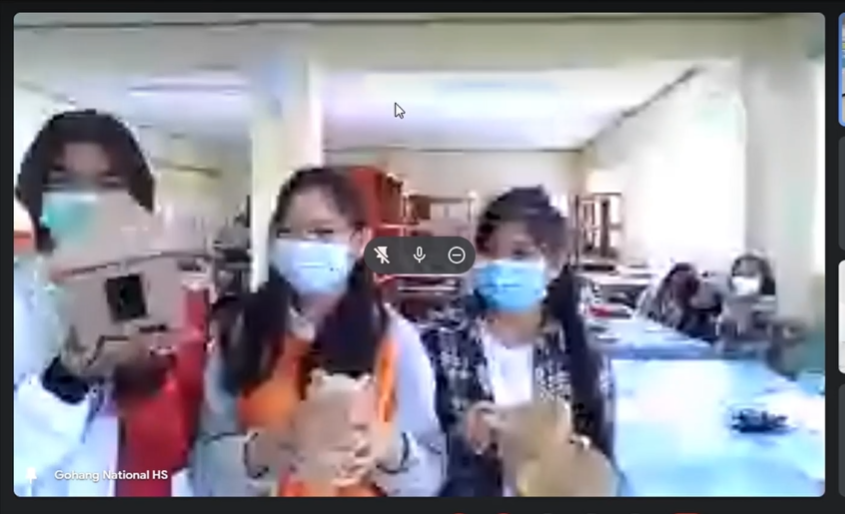
The international exchange programme between Noto and Ifugao, Philippines has been running since last year, and this time the event took place between students of Midorigaoka Junior High School in Noto and Gohang National High School in Ifugao.
Noto and Ifugao, which are certified as GIAHS, have been carrying out international exchange activities through the Satoyama Meister programme for a long time. This programme is run in cooperation with Noto SDGs Lab.
The first exchange event of this fiscal year was held on November 11. At the event, the participants introduced themselves and gave presentations on their respective regions.
Midorigaoka Junior High School students presented a slide show about their region’s festivals and industries, as well as initiatives related to SDGs and environmental problems.
Gohang National High School students introduced Ifugao’s GIAHS, crafts and the traditional knowledge of Ifugao’s ethnic groups. Midorigaoka Junior High School students seemed to be especially interested in the Ifgao carvings.
In the final session, students asked various questions such as “What kind of food do people eat in Ifugao?” and “Who are your favorite singers?”. The students seemed to be very interested in each other’s lifestyle and culture.
The next exchange event between Midorigaoka Junior High School and Gohang National High School students will be held in January 2022.
The SDGs Cafe#12 had the theme of “Thinking about Establishing ESG Investment in Kanazawa in the Age of Corona.” ESG* Investment has the potential to create solutions for a variety of societal problems involving nature, the environment, and working people’s lives while also supporting sustainable economic growth. We thought about what our region could do during this moment in history when momentum for societal reform is growing in response to the coronavirus pandemic.
*What is ESG? ESG stands for Environmental, Social, and Governance.
Our guest this time was Masakazu Shijimaya, 6th generation owner and managing director of Shijimaya Honpo, a long-established shop selling traditional fermented foods in Kanazawa. He undertakes a variety of initiatives such as running workshops that inform younger generations of the benefits of koji malt and fermented goods and collaborating with groups promoting healthy business management to extoll the benefits of fermented goods. As a result of the coronavirus pandemic, he is currently running the workshops online. Unexpectedly, it has become an opportunity to share his products with people who previously would have had little interest in his company’s flagship products like kabura sushi.
Shijimaya imagined how the ideal Kanazawa of 2030 might look and made the following 3 suggestions:
Promoting connections and cooperation both within and without the region will revitalize the city
We will be able to convey the charm of Kanazawa’s culture as it lives on in the daily lives of its citizens
People taking part in a variety of projects will be able to develop themselves sustainably
Next, Kenji Fuma, CEO of Neural, Inc., shared some of his ideas with us. According to him, ESG investment is intimately related to the SDGs, and the view that ESG initiatives are vital for sustainable business growth is spreading quickly. He stated that among the ESG points institutional investors check in publicly listed companies, while Environment is relatively simple (CO2 emissions, water problems, and waste matter), Social and Governance cover a much broader range of themes. “A wide variety of categories are all evaluated based on fixed quantities, so publicization of company information will be important for both ESG investment and the SDGs in the future,” he continued. He went on to say, “Institutional investors and banks buy many municipal bonds, thus supporting Kanazawa’s public finance. In other words, how much Kanazawa can improve with regards to ESG in the future will become an important point when issuing municipal bonds.”
Finally, he said “When Kanazawa makes an action plan for the SDGs, I would suggest setting target values. It is vital to first evaluate and gain a numerical understanding of the current situation when setting future goals.” He then continued to say, “Ideally I would like to realize a situation where the primary actors are the business leaders who are able to cooperate with governments, financial institutions, and NPOs.”