
United Nations University Institute for the Advanced Study of Sustainability Operating Unit Ishikawa/Kanazawa(UNU-IAS OUIK) hosted the Youth Empowerment Programme Ishikawa Kanazawa 2026 orientation and the first lecture was held on May 21 and 28, 2026.
This year, 10 high school students from schools in Ishikawa Prefecture are participating in the programme. The programme aims to develop the next generation of youth leaders by learning about global issues such as sustainable development, climate change, and biodiversity, while considering their connections to local challenges and engaging in inquiry-based activities and international dialogue.
At the orientation held on May 21, participants introduced themselves and received an explanation of the upcoming program and how the research would be conducted. The participants shared the social issues they are interested in and the themes they hope to work on in the future, taking their first step toward their upcoming research.
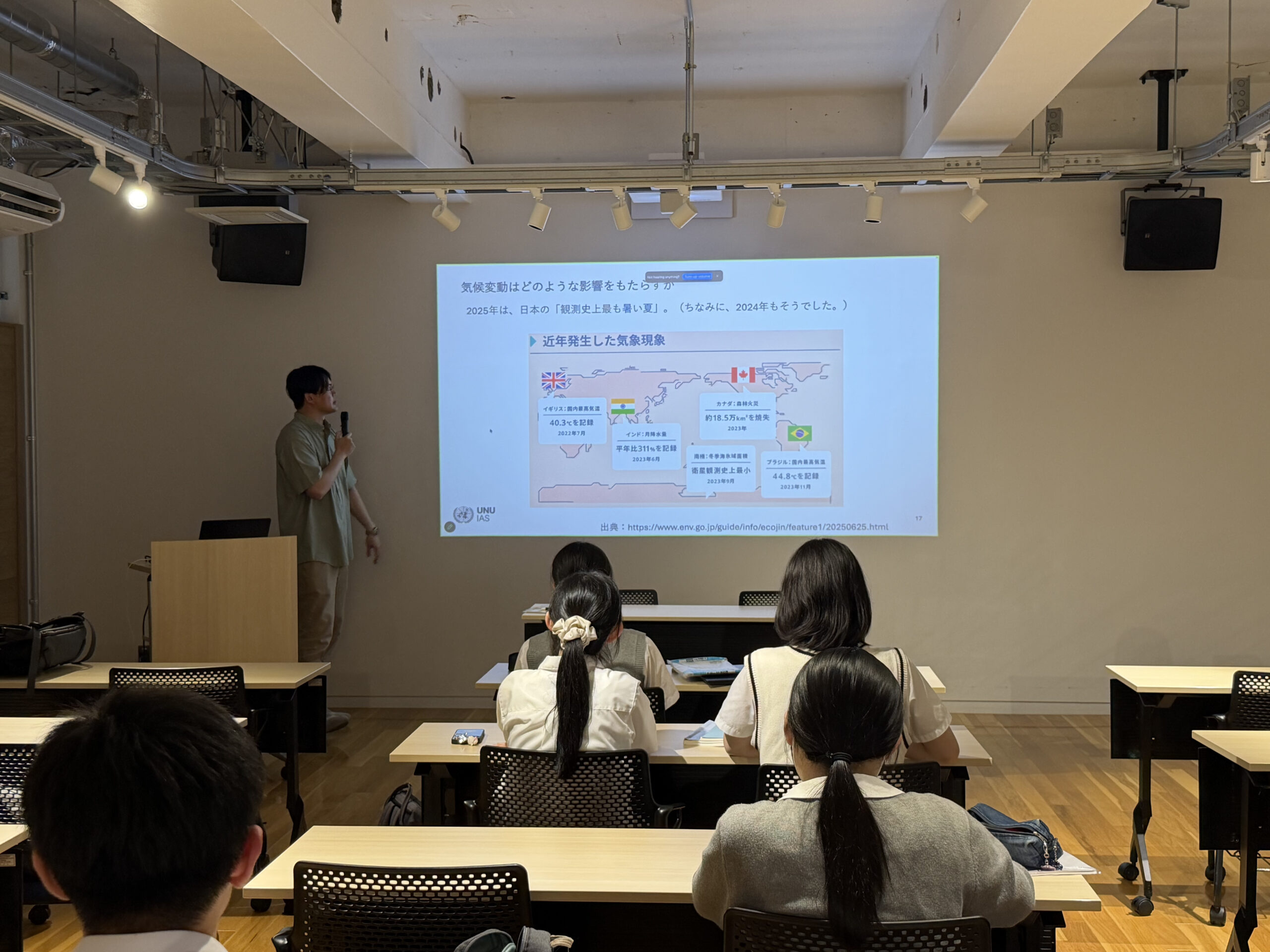
At the first lecture session held on May 28, Dr. Naoyuki Okano, Programme Officer at UNU-IAS, delivered a lecture on “SDGs and Climate Change”, followed by a lecture on “Biodiversity and Nature-Based Urban Development” by Dr. Juan Pastor, Researcher at OUIK.
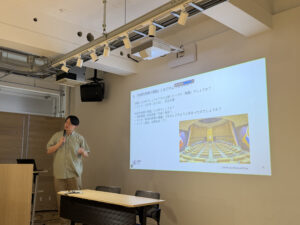
In Dr. Okano’s lecture, the discussion began with the question, “Why should we think about global issues?” It explored how topics such as the SDGs and climate change have been discussed within the international community, and how these issues can be connected to local challenges. The lecture also highlighted the importance of youth engagement in addressing climate change and building a sustainable society. Participants learned the importance of examining social issues from multiple perspectives, including asking, “For whom is this an issue?”
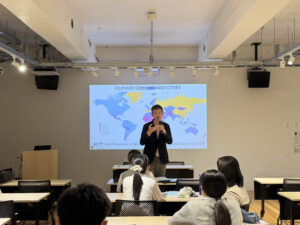
In Dr. Juan’s lecture, the relationship between biodiversity and climate change (the Biodiversity-Climate Nexus) and the concept of Nature-based Solutions were introduced. Using OUIK’s “Sustainable Urban Nature Project” as a case study—focusing on gardens, shrine and temple forests, and waterways in Kanazawa City—the lecture highlighted how urban nature contributes to biodiversity conservation, climate change mitigation, and people’s well-being. In addition, discussions were held on the relationship between local communities and nature, as well as the importance of biocultural diversity.
Throughout the sessions, participants actively exchanged opinions and deepened their understanding of the connections between global issues and their own local communities and daily lives.