
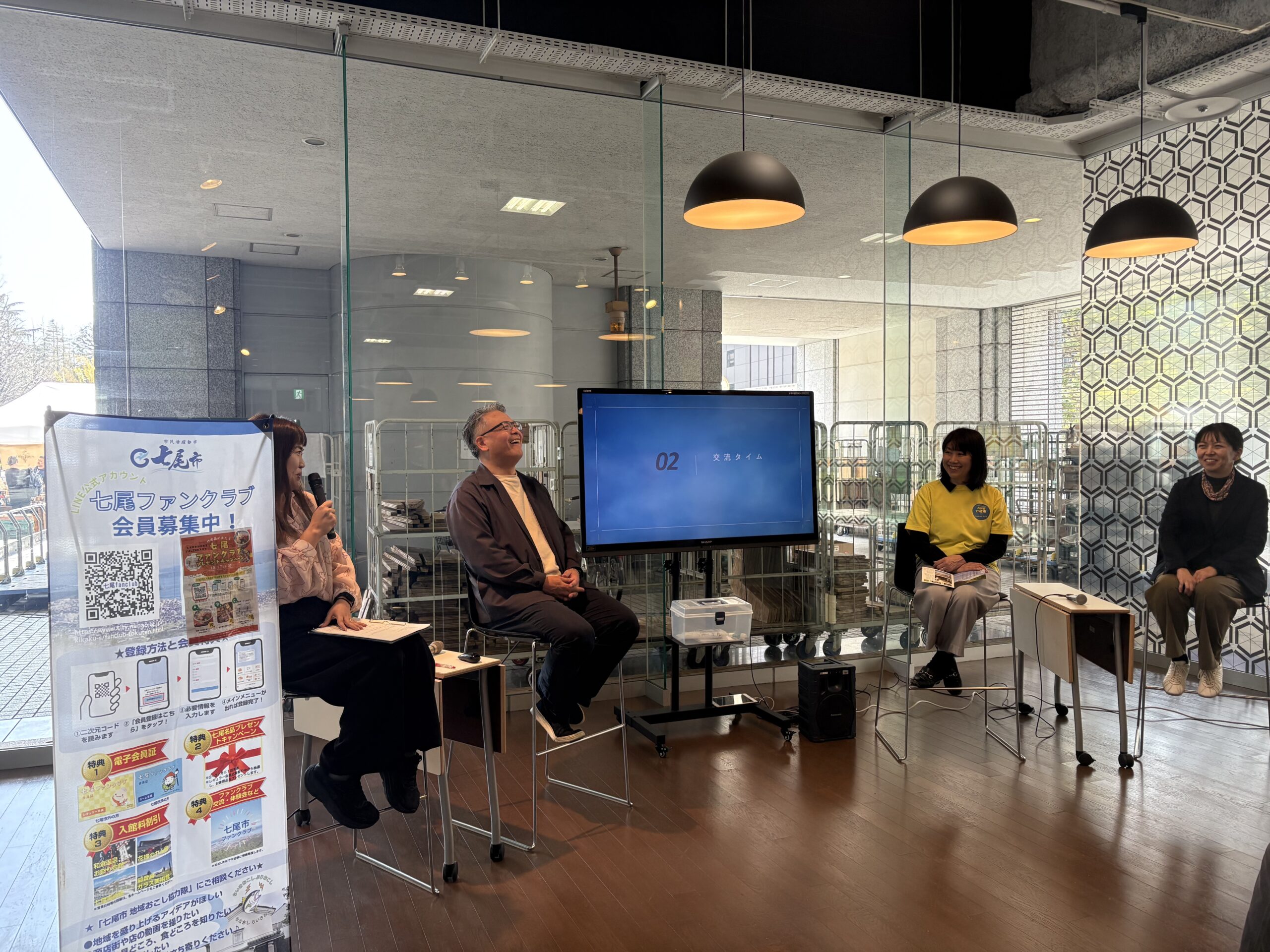
On Saturday, March 28, 2026, “Noto Satoyama Satoumi Talk 5” was held at the Annex Terrace of the United Nations University headquarters in Tokyo. For this fifth session, set on Notojima Island in Nanao City, we welcomed two individuals who have been involved—both locally and from outside the community—in local life through agriculture and festivals. We discussed the role that ‘festival culture,’ including the Fire Festival, has played in everyday life in the community.
Guest speakers: Masahiro Takahashi (Notojimamirai Co., Ltd.), Kanako Sakai (Nanao City Local Vitalization Cooperator), Sayako Koyama (Researcher, UNU-IAS OUIK)
First, Ms. Koyama provided an overview of Noto’s Satoyama and Satoumi—designated as a Globally Important Agricultural Heritage System—as well as the 2024 earthquake and heavy rainfall disaster. She also noted that on Notojima Island, culture and landscapes have historically been shaped by relationships among people, nature, and the changing seasons. However, due to population aging and decline, maintaining these connections has become increasingly difficult.
Ms. Sakai shared that the earthquake had a severe impact on the primary industries, and that as disaster victims were forced to live away from their homes, a sense of distance emerged between people and their fields and the sea. In this context, it was emphasized that continued involvement of people from outside the region is essential, and that rediscovering the strength of the area through outside perspectives can also serve as a driving force for recovery.
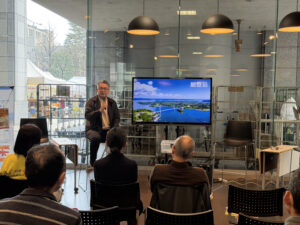
Mr. Takahashi introduced the Koda Fire Festival of Notojima Island, explaining that everyday practices once carried out by individual households—such as gathering firewood and preparing straw—have historically been incorporated into the festival. At the same time, he pointed out that the relationship between festivals and everyday life has changed, noting that straw is now prepared not for daily living needs but specifically to sustain the festival. He stated that the loss of these Satoyama and Satoumi practices could erode Notojima’s history and collective memory, and expressed a commitment to preserving and transmitting them to future generations.
In the dialogue session, it was shared that festivals are an extension of everyday life and that human engagement with the mountains and the sea has historically contributed to sustaining both local ecosystems and regional culture. At the same time, the decline in the number of people able to carry on these traditions has been identified as a key challenge, raising questions about how festivals and Satoyama practices can be passed on to future generations. Within this context, it was noted that the ways in which festivals are supported have also been changing, making it easier for people from outside the community to participate. It was also noted that festivals embody a great deal of tacit knowledge, and that carefully sharing this knowledge could help expand the number of people connected to the region.
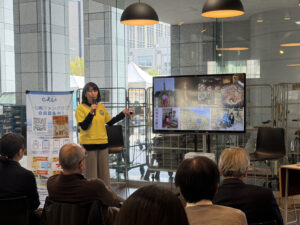
Ms. Koyama pointed out that Noto is home to a wealth of knowledge cultivated through living in close harmony with nature—such as the use of well water, foraging for wild mountain vegetables and seafood, and fermentation traditions—and suggested that strong human connections may also serve as vital support in times of disaster.
Finally, the moderator, Ms. Tomita (UNU-IAS OUIK), pointed out that festivals are deeply intertwined with the knowledge and relationships nurtured through everyday livelihoods, such as agriculture and fishing. In Ishikawa Prefecture, ways of life shaped in close relationship with nature—such as agriculture that uses snowmelt and a diverse seafood culture—have been passed down as cultural traditions. The event concluded with a shared reflection that the wisdom embedded in these everyday practices may also offer valuable insights into a sustainable society.