Kanazawa:アーカイブ
2019年10月28日
On the 22nd of October 2019, the second volunteer cleaning activity at Shinrensha Temple Garden and the first workshop about green infrastructure were held. This time, together with Mr. Maruyama from Kanazawa Univ., Mr. Sakamura from JAIST, as well as their students, we invited Ms. Hayashi from Ryukoku Univ. as a guest speaker to talk about her research on the land use of Lake Biwa.
OUIK’s researcher Dr. Ivars, the main organizer of this event, talked about his research on Kanazawa’s biocultural diversity. As he mentioned in his book published last July, it is important for citizens to actively collaborate to conserve the nature that exists in cities. Dr. Ivars is hoping that events like this cleaning workshop become more common among locals and tourists, as it would help the owners of the gardens maintain and preserve them. Dr. Ivars conducted a survey of participants before and after the cleaning. The results showed that cleaning the gardens increased positive emotions and reduced negative emotions. This activity gives benefits not only to the garden owner, but also to the participants.
Next, Ms. Hayashi’s presentation taught us the importance of taking records on land use. If the cultural landscape and biodiversity of Japanese gardens in Kanazawa is a micro perspective, Ms. Hayashi’s story was more of a macro perspective. Ms. Hayashi’s research focuses on the natural environment and cultural landscapes of the past, and investigating changes in land use and the natural environment. Using a map showing the surrounding area of Lake Biwa in Shiga Prefecture, she explained that investigating how to use the natural environment that has existed from the past to the present time can suggest ways to connect people and nature sustainably, or industries that match the local environment.
After the lecture, we started the cleaning activities in the Shinrensha Garden.
It was a beautiful autumn day, and the participants seemed to enjoy being close to nature outside. Participants mainly picked up fallen leaves in the main garden area and the graveyard behind the garden. After one hour, the garden was finally clean, and we moved on to the discussion session.
Each group summarized their feelings and impressions of this experience in a 3-minute presentation. Some thoughts included: “What kind of gardens attract people and give easier access to people?” “Let’s make use of fallen leaves” “I was able to relax and enjoy myself” and so on.
Spending time in the garden surrounded by nature gives people living in the city opportunities to come in contact with nature and share a common purpose with other people. The participants enjoyed learning in the beautiful garden, and they seemed very satisfied.
2019年07月18日
On July 4, 2019, a garden cleaning workshop was held at Shinrensha Temple. This event was organised by Dr. Ivars (Researcher at OUIK), Dr. Mamadowa (Associate Professor, International Organization of Kanazawa University) and Dr. Iida (Collaborative Research Center for Environmental Research in the Sea of Japan, Kanazawa University).
This time, 14 exchange students from Kazan Federal University, Russia participated to learn about Kanazawa’s culture and history while strolling through the Higashi Chaya district and cleaning the garden. At the end of the event, a tea ceremony was held in front of the garden which they had just cleaned.
One of the students commented “While cleaning the garden, I was able to take a closer look at it, which made me admire it even more”.
2019年04月15日
During the first week of April, 13 researchers from around the world met in East London, South Africa to publish a book on urban biocultural diversity.
The workshop was organized and sponsored by the professors of the University of Rhodes in South Africa. The book is composed of different chapters, where the thirteen collaborators prepared each of the individual chapters prior to the workshop.
OUIK Research Associate Dr. Juan Pastor Ivars is one of the collaborators of the book and his chapter is about the biocultural diversity of Japanese cities. To do this, he evaluates the figure of the Japanese garden, its ontology, aesthetics, ecology and focuses on the gardens of Kanazawa. In particular, he presents examples of how to rebuild the relationship between people and nature through Japanese gardens.
The program of the workshop included the individualized reading of each of the chapters, their subsequent discussion and excursions to the area. In one of the excursions, the workshop team visited the Xhosa ethnic group and their representatives explained the deep relationships they have with the nature of their surroundings through rituals. In another visit was the museum of Steve Biko, anti-apartheid activist leader of the black consciousness movement.
This workshop demonstrated the importance of interpersonal links at a global level in order to promote the concept of biocultural diversity, as well as create an academic body for its implementation and governance. The book is scheduled to be published early next year — details of the book and participants below.
Book Outline: (from organizers)
The primary aim of the book is to display and celebrate the diversity of biocultural ways in which urban residents view, interact, engage and give meaning to urban nature. By offering alternative views, visions uses of and relationships with urban nature that offers a wider perspective and balance to the global world.
Participants
Africa
•Michelle Cocks. Professor. Rhodes University (South Africa); Charlie Shackleton. Professor. Rhodes University (South Africa); Lindsey Walsh, Duncan Haynes: Researchers Rhodes University (South Africa)
•Natasha Louise Constant. Chair on Biodiversity Value and Change. University of Venda(South Africa)
•Joseph Adedeji. Senior Lecturer. Akure Federal University of Technology (Nigeria)
America
•Lorien Nesbitt. Assistant Professor. University of British Columbia – Vancouver (Canada)
•Heather McMilen. State of Hawaiʿi Division of Forestry & Wildlife (USA)
•Juliana Merçon. Researcher. University of Veracruz (Mexico)
•Zachary Garcia. Graduate Teaching Fellow. Yale University (USA)
•Brazil- Guilherme Crus de Mendonca. Researcher. Federal Institute of Education, Science and Technology of Rio de Janeiro (Brazil)
Asia
•Juan Pastor. Research Associate. UNU-IAS OUIK. (Japan)
Europe
•Birgit Elands. Assistant Professor. Wageningen University. (Netherlands)
•Katie Vierikko. Researcher. Environmental Policy Centre, Finnish Environment Institute (SYKE). (Finland)
•Viveca Mellegård. GRAID Researcher. Stockholm Resilience Centre University of Stockholm( Sweden)
2019年04月05日
2019/3/31
Maintaining a garden is laborious work. In particular, gardens such as Senda Family Garden, which has a large pond that draws water from canals, require regular pond cleaning in addition to the usual weeding and caring of trees. This entails difficult and heavy manual labor. Half a year had passed since the last cleaning workshop, and mud had accumulated once more at the bottom of the pond.
Around 15 people, including local residents, students, local government officials and tourists from other countries, participated in the workshop. They went inside the drained pond and shoveled out the buildup of mud at the bottom.
After cleaning, they had tea in the house and learned about the history and construction of the garden from the owners, Noriko Senda and Nobuhiro Ishino. The garden is a type of Japanese garden with a central pond and strolling paths around it, and was made in 1894 by former Kaga Domain retainer, Norifumi Senda. They said that the level of techniques of gardeners used throughout the garden would be hard to find these days. All the participants were absorbed in listening to the extraordinary talk.
This kind of volunteer cleanup work was originally carried out mainly by the Landscape Policy Division staff of Kanazawa City. Juan Pastor-Evars, an OUIK researcher, joined from 2017 and promoted a practical immersion program that includes Japanese traditional tea ceremonies and workshops for learning about the garden history and management after the cleanup, with the aim of developing the work into an ecotourism activity. This can potentially be used more extensively as a new garden management system as well, that benefits owners by redistributing the heavy labor.
2019年03月30日
2019/03/23, Kanazawa
On March 23rd (Saturday), OUIK, the Kanazawa City, and the Kanazawa Junior Chamber of Commerce held a study session together and made a joint declaration regarding the promotion of SDGs in Kanazawa City. During the declaration ceremony, Kanazawa City Mayor Yoshiyoshi Yamano explained the key areas of Kanazawa’s SDGs initiative, branded as “IMAGINE KANAZAWA.” Following this, Kazuyoshi Nakaizumi, the president of the Junior Chamber International Kanazawa (JCI), spoke about the initiatives of the organization, including the outcomes of the JCI Kanazawa Conference.
Watanabe, the director of OUIK, introduced the concepts of “biodiversity” and “green infrastructure,” which have been advocated by OUIK and discussed in the 5th Dialogue, highlighting their strong alignment with the integrated approach of SDGs concerning environment, economy, and society.
Following the declaration ceremony, a comprehensive symposium on SDGs Ishikawa/Kanazawa took place, featuring a panel session where Toshihiro Takasaki, the Planning and Coordination Division Chief of the Urban Policy Bureau, provided insights on the future direction for advancing SDGs in Kanazawa City. The comprehensive symposium also received numerous positive suggestions from participants. Moving forward, the three parties, along with all citizens of Kanazawa, hope to advance the IMAGINE KANAZAWA initiative envisioning Kanazawa in 2030.
2018年12月26日
In April 2018, OUIK hosted Biocultural walking workshop proposed by Stockholm Resilience Center and IR3S, the University of Tokyo. Prominent international researchers from different continents joined the workshop to experience how biocultural resources could be understood, elaborated and promoted under the current changes occurring urban and rural areas in Japan.
Here is observation by Viveca Mellegård, Stockholm Resilience Center. 「Reinvigorating creative solutions to save people and planet: A walking workshop through biocultural landscapes in western Japan」
2018年07月08日
6th workshop on Japanese garden and eco-system services has been organized at Shinrensha temple, Kanazawa city. The workshop report is available.
2018年07月08日
On 24th June, a workshop of ‘Spiritual Road Walking and Garden Cleaning at Shinrensha Temple’ was held within Utatsuyama Temple Area in Kanazawa City, which was proposed by Dr. Juan Pastor Ivars, a research associate of the OUIK. (Hosted by: UNU-IAS OUIK, and supported by: Shinrensha Temple and Kanazawa City)
The series of workshops started last year and this sixth workshop was a big success with nearly 30 people taking part, well over the initial quota of 20 people.
There are increasing number of untended Japanese gardens
Japanese gardens can be found in urban areas and they produce biodiversity and provide numbers of ecosystem services including relaxation to the residents. This workshop is a part of a project to build a system where the Japanese gardens in Kanazawa City, which still exist in large numbers, can be maintained and managed for a long time to come. Primarily, gardens are supposed to be managed by their owners. However, due to aging of the owners, more and more gardens are becoming untended every year. Cleaning is important not only to restore the beauty of the gardens and urban landscape but also to conserve ecosystems and maintain biodiversity.
In order to conserve Japanese gardens that are designated as cultural properties by Kanazawa City, Dr. Juan holds this workshop where overseas students, foreign tourists, and local residents help cleaning the gardens and in return, they get the opportunity to attend a tea ceremony with a beautiful view of the garden or to study about gardens from various experts. In repetition, the number of participants is increasing and making a tangible impact as a new system of garden management in the city.
Precious opportunity of tending the gardens
On the day of the workshop, participants gathered at Utasu Shrine near Higashi Chaya District and walked along the Spiritual Road that winds through Utatsuyama Temple Area. As they made their way to Shinrensha Temple, they observed hollowing out of city center, i.e. vacant houses and land, and the impact of rapid tourism expansion.
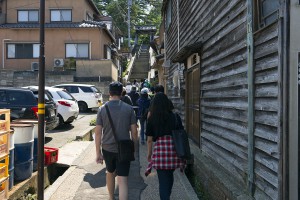
take a walk along the spiritual road
The garden of Shinrensha Temple was created in early Edo period. It is a Tsukiyama Chisen-style shoin garden having a pond at the center and small artificial hills at the back. The garden also makes use of the landscape created by surrounding trees that are preserved by Kanazawa City.
First, the chief priest of the temple explained the history of the garden and a specialist of landscape architecture gave a lecture on garden management. Then, the cleaning activity started. Participants were divided into three groups to clean up different areas: artificial hills, pond, and moss area in front of the pond. Although the garden looked clean at first sight, a large amount of fallen leaves had piled up at the bottom of the pond and was turning into sludge. Taking out fallen leaves from a pond is hard work and require a lot of manpower. Young university students and overseas students showed excellent work here. Cleaning the artificial hills and the grave yard behind them was also a hard task as they were extensive. However, because we had a large number of participants this time, we divide the roles and cleaned them up quickly.
Several species of moss, such as haircap moss, grow thickly in front of the pond and show very beautiful atmosphere. However, when some parts of the moss were carefully taken off, exquisite paving stones of Tomuro-ishi appeared. In a former workshop, garden path of cobblestones called ‘ararekoboshi’ was restored in the same way. This kind of work require caution and cannot be thoughtlessly carried out without the knowledge of landscape architecture. For this workshop, we did not have to worry about this as we had several notable landscape architects. It is a valuable experience to touch Japanese gardens while learning various things from garden specialists.
After the cleaning activity, everyone relaxed with Japanese sweets and drinks gazing at the garden, experienced Japanese tea ceremony, and took a look back over the day.
Management of Japanese gardens in an enjoyable and sustainable way
Participants included students from universities within Ishikawa prefecture, overseas residents within the prefecture, and people from Kanazawa City Office. Participants had different motivation for joining the workshop. Some liked Japanese gardens, some wanted to walk the Spiritual Road, and some were moved by the sight of Dr. Juan, a Spanish man, taking care of Japanese gardens. One participant said that he got interest because he would be able to touch a precious garden. He says he feels a stronger bond with the garden after taking part in the workshop. It was also a first time for Dr. Juan to step into a garden pond this time. He says the excitement he felt at that moment is unforgettable. On the other hand, by having so many participants to a workshop like this, owners of the gardens recognize the value of their garden once again.
Dr. Juan is hoping to develop this workshop as ‘ecotourism’ in which tourists and disabled people can take part and gradually take root as a new garden management system.Being linked with SDGs goals 11 ‘Sustainable Cities and Communities’, 15 ‘Life on Land’, and 17 ‘Partnership for the Goals’, this activity will continue to be expanded as a model of sustainable cooperative management of gardens in the city.
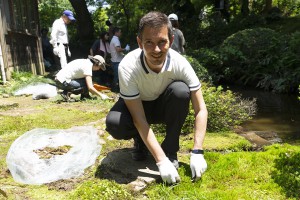
Dr. Juan Pastor Ivars
In August, this workshop is going to be held at Honsenji Temple in Futamata-machi, Kanazawa City. Please take part in the workshop.
2017年10月09日
On 30 August 2017, OUIK and several organizations, including Junior Chamber Kanazawa (JC Kanazawa), Kanazawa Institute of Technology (KIT), and Hokuriku Branch Office of Japan International Cooperation Agency (JICA Hokuriku), signed a memorandum of understanding to set up a framework to support private sector contributions towards achieving Sustainable Development Goals (SDGs).
At the signing ceremony, the parties to the agreement spoke enthusiastically about creating further opportunities to achieve SDGs through collaboration. Mr. Tsunao Watanabe, the OUIK director, stated that he expects this agreement to be a driving force that will move the world towards sustainability via a new SDGs-themed public-private-academic partnership.
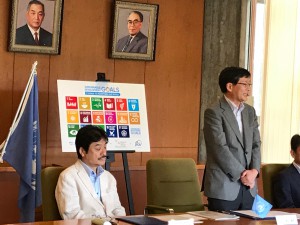
Mr. Watanabe said “OUIK will contribute in order to build local platform for the dialogue among different sectors
OUIK, along with JC Kanazawa, KIT, and JICA Hokuriku, will begin to utilize this new public-private-academic partnership to eventually lead to the promotion of sustainable businesses on a national and worldwide scale.
Related link:
Kanazawa Institute of Technology
Junior Chamber Kanazawa
Japan International Cooperation Agency
2017年05月29日
Operating Unit Ishikawa/Kanazawa (OUIK) is assessing the urban impact of depopulation on the cultural landscape of Utatsu-Sanroku and Higashiyama-Higashi, preserved districts in Kanazawa. To that end we are conducting collaborative research with Kanazawa City. Initial findings corroborate visual inspection that there has been a gradual increase of empty houses, plots, and parking lots in the area.
Our purpose is to work together with local stakeholders in order to find an ecological and sustainable solution for strengthening the resilience of this area. Ultimately, we wish to preserve its history, daily cultural exchanges, temples, traditional quarters, inward gardens, and water canals in order to re-establish a harmonious balance among buildings, vacant plots, and greenery in the city of Kanazawa for the future.
On May 7th, OUIK members visited Higashiyama 1-Chome with members of the Japanese Institute of Landscape Architecture (JILA) Ishikawa branch. During this visit we were able to directly appreciate the cultural landscape and natural beauty of the principal areas, as well as the degraded parts of the district that need to be reconsidered from an ecological point of view. Testimonies from neighbors about the history of this district revealed their current concerns, especially those related to the increasing number of tourists, the loss of neighborhood identity, and the dominance of empty houses and plots in the area.
OUIK will continue to work on this issue with stakeholders.
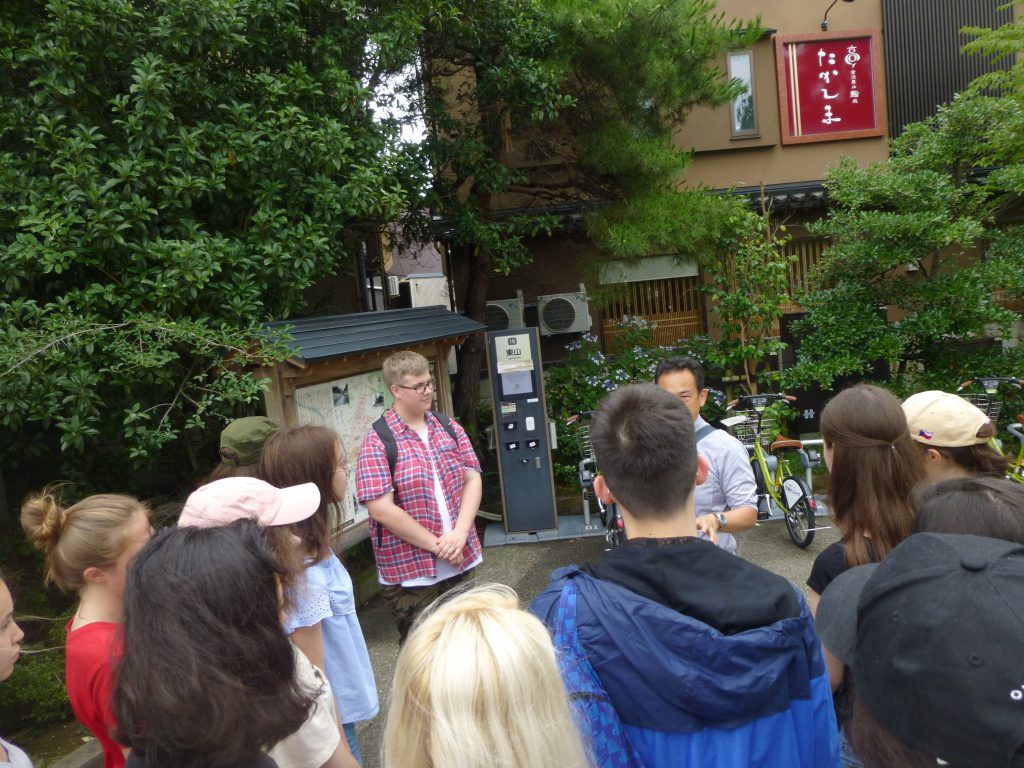
OUIK-ISHIKAWA JILA Visit on May 7th (Image by: Juan Pastor Ivars, OUIK Research Associate)