
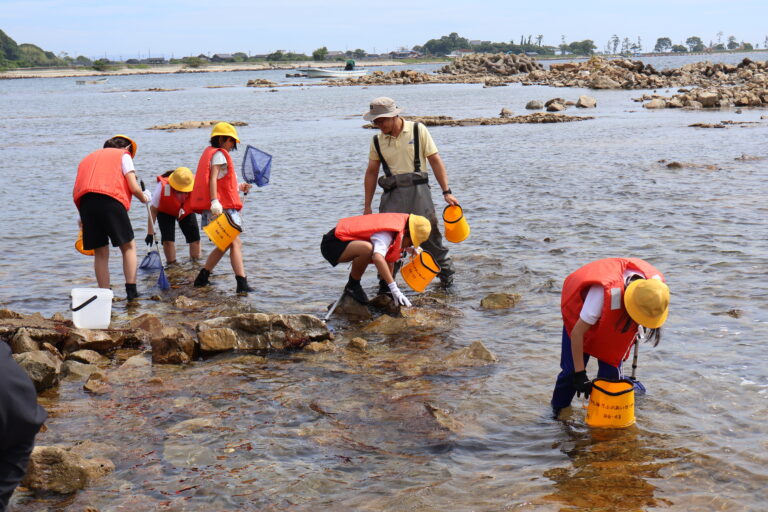
On June 25, 2026, 13 fifth-grade students from Notojima Elementary School participated in marine life survey on a rocky shore in Nagasaki-machi, Notojima Island.
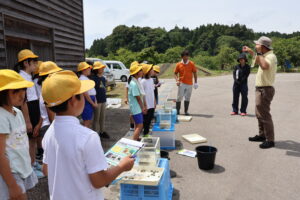
The activity was organized by Nanao City, with support from the Noto GIAHS Biodiversity Working Group. Dr. Hiroaki Arakawa of the Noto Marine Center, a member of the Noto GIAHS Biodiversity Working Group, served as the instructor, with on-site support from Yoshihiro Kimori of Notojima Aquarium, Nobuhide Gennai of Notojima Shizen-no-Sato Nagasaki, and Sayako Koyama of UNU-IAS OUIK. The activity began with an explanation of the day’s schedule by a representative of Nanao City. Dr. Arakawa then introduced the children to the local Satoumi environment and explained the safety precautions and other important points for conducting the survey.
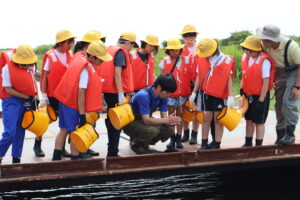
Wearing life jackets and marine boots and carrying underwater viewing boxes and buckets, the children eagerly made their way to the shore. Even along the way, they stopped to peer into a stream beside the path, looking for aquatic life and showing their curiosity from the very beginning.
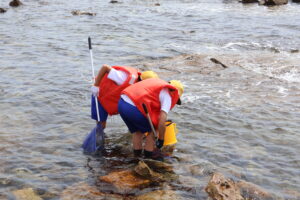
In the shallow waters along the rocky shore, the children observed large numbers of small marine snails, including ishidadamigai and sugai, as well as small fish such as dorome gobies. Wading waist-deep into the water, they became completely absorbed in searching for marine life.
When the observation session ended, the children called out enthusiastically, “I want to do it again!” and “Next time, I’m definitely going to catch a fish!” Their reactions showed how much they had enjoyed interacting with the natural environment of Notojima.
After collecting the organisms, the children worked in groups to identify them and learn about their characteristics. They closely observed a wide variety of marine life, including shore crabs, kinubari gobies and purple sea urchins.
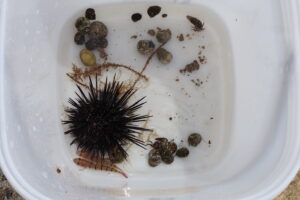
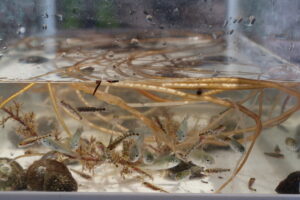
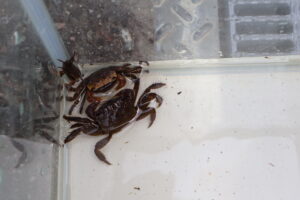
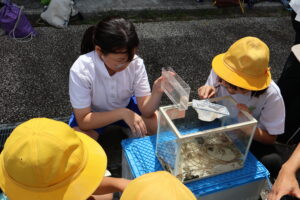
During Q&A session with Dr. Arakawa, the children asked a wide range of questions. Some reflected their interest in local food culture, such as “What is the best way to eat limpets?”. Other focused on marine ecology and safety, including “How large do Dorome gobies grow?” —to which the answer was approximately 10 centimetres—and “How large do kinubari gobies become?” They also asked how often people are injured by sea urchins. Their lively questions demonstrated their strong interest in the marine environment and helped deepen their learning.
Following the 2024 Noto Peninsula Earthquake, slight land subsidence has been observed in parts of Nanao Bay, alongside other changes to the coastal environment. Against this backdrop, it was especially meaningful for the children to have an opportunity to enter the sea and learn through direct interaction with their local natural environment. It is hoped that this survey will help the children gain a deeper appreciation for the rich marine environment of their hometown, Notojima, and encourage them to conserve and pass it on to future generations.