
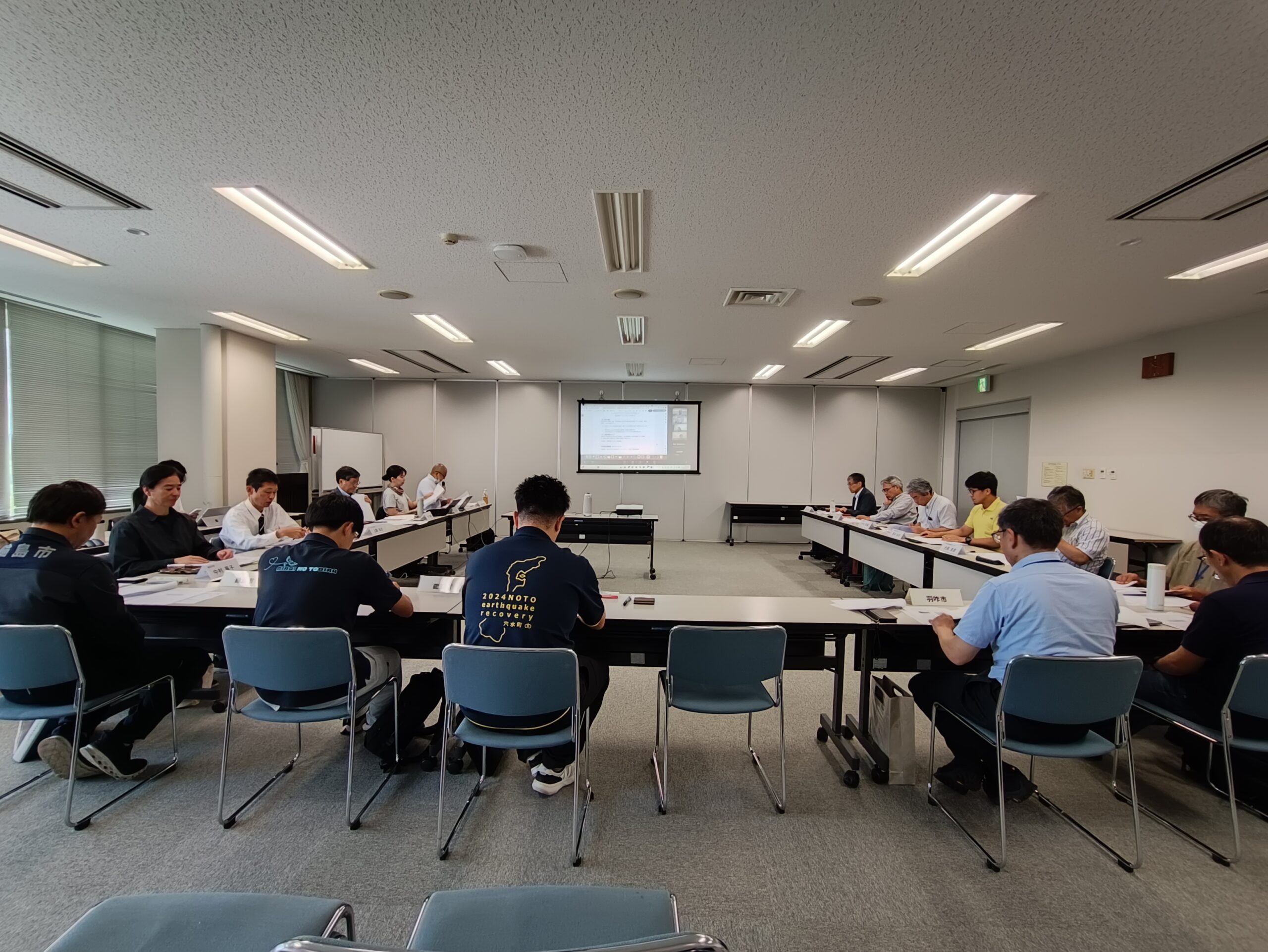
On July 3, 2026, the Noto GIAHS Biodiversity Working Group (WG) plenary meeting for fiscal year 2026 was held in the conference room at Noto Airport. A total of 26 participants joined, including local government representatives and experts, both in person and online. The United Nations University Institute for the Advanced Study of Sustainability Operating Unit Ishikawa/Kanazawa (UNU-IAS OUIK) supported the secretariat.
During the meeting, the secretariat shared the schedule for the monitoring survey that is conducted once every five years in GIAHS-designated regions and is scheduled to take place this autumn. Based on the survey results, the Fourth Noto GIAHS Conservation Plan will be developed within the fiscal year. The participants discussed how the WG can contribute to this process. It was confirmed that the WG will support the preparation of materials for the monitoring survey. In addition, participants discussed how changes in the natural environment following the Noto Peninsula Earthquake should be reflected in the conservation plan. It was agreed that, rather than focusing solely on engineering-based restoration, consideration should be given to distinguishing between areas where natural recovery should be allowed to proceed and areas where active restoration and rehabilitation are required. It was also confirmed that biodiversity-related considerations should be incorporated into the plan. Furthermore, a proposal was introduced to designate key areas as “model sites” for continuous monitoring of ecological recovery and other biodiversity-related changes over the next five years.
The meeting also included a report on the outcomes of activities that have continued since the previous fiscal year and plans for the current year. In May, the WG co-organized an event titled “Thinking about Noto’s Recovery and Forest Restoration” in commemoration of the International Day for Biological Diversity. The WG also contributed to panel exhibitions at the Ishikawa Prefectural Library and the Ishikawa Museum of Natural History, promoting the appeal of Noto GIAHS (Noto’s Satoyama and Satoumi) in connection with the release of the Japanese crested ibis.
Participants also discussed ways to expand activities from individual initiatives to broader, area-wide efforts through stronger collaboration with existing school networks and community organizations. The significance of simultaneously fostering future leaders and extending activities throughout the Noto region was highlighted. Examples included organizing wildlife observation events in collaboration with high school environmental DNA (eDNA) projects and developing educational materials for observation programs focused on local river systems (Satokawa). In addition, members shared the possibility of organizing a tree-planting event planned by expert members this autumn with the support of the WG.
Considering the impacts of the earthquake and heavy rainfall, participants also recognized the need to review and reorganize the WG’s activities and future direction in conjunction with the revision of the conservation plan. The WG will continue to bring together expertise and work closely with local communities and educational institutions to promote initiatives that contribute to biodiversity conservation and the creative reconstruction of the Noto region.