
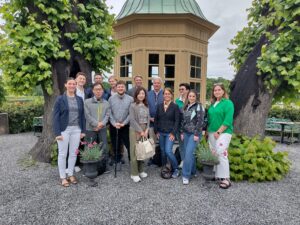
Dr. Juan Pastor-Ivars (UNU-IAS OUIK) was invited by the University of Tokyo to participate in the international workshop Enhancing Urban Resilience to Disasters and Conflicts through Nature-Based Infrastructure (Resilient Urban NBI) held on 11-12 June 2026. The meeting is co-organized by The University of Tokyo, the University of Lodz, and the Stockholm Resilience Centre. The workshop forms part of the Driving Urban Transitions (DUT) initiative, a Horizon Europe-funded programme supporting research and innovation for sustainable and resilient cities.
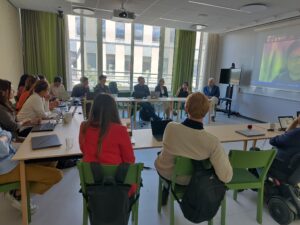
The event brought together researchers working on resilience, sustainability transitions, nature-based solutions, and disaster recovery. Discussions focused on how green spaces, community gardens, and other forms of nature-based infrastructure can support communities facing disasters and conflicts. Participants explored resilience as a process involving coping, adapting, and transforming.
Several international case studies were presented. Dr. Marine Elbakidze (Lviv University, University of Tokyo) shared experiences of community and victory gardens supporting food production, social cohesion, and emotional healing during conflict. Dr. Sioen Giles Bruno(University of Tokyo Graduate School of Frontier Sciences) introduced the experiences from Ishinomaki after the Great East Japan Earthquake and Tsunami highlighting the long-term role of community engagement and green spaces in recovery.
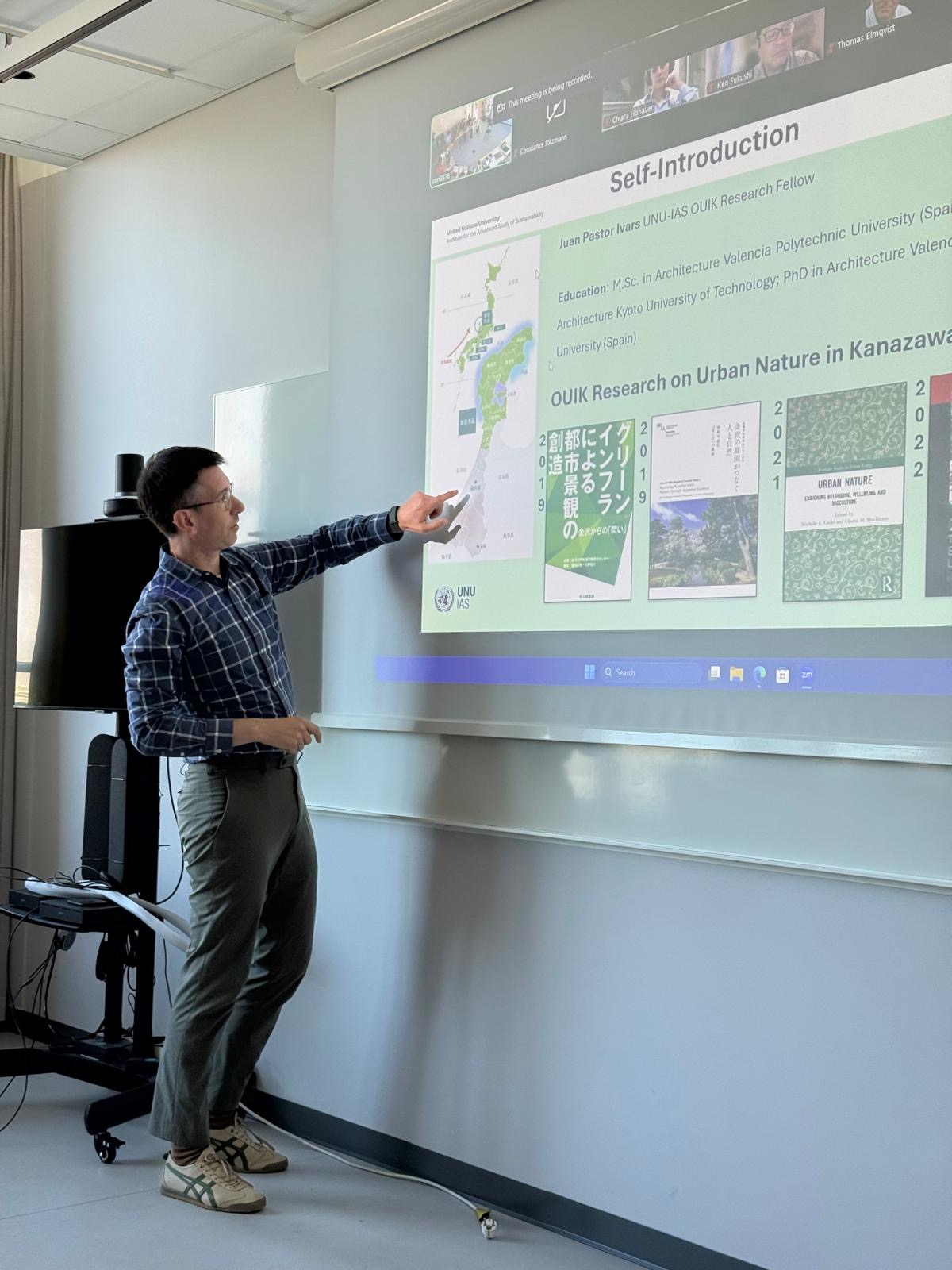
Dr. Pastor-Ivars delivered the invited presentation “Noto Post-Earthquake Recovery through City Gardens and Green Spaces.” The presentation introduced the Sustainable Urban Nature (SUN) Project in Kanazawa, which combines scientific research on urban nature benefits with participatory action research and community stewardship activities.
Particular attention was given to how these experiences have been extended to the Noto Peninsula following the 2024 earthquake. Through initiatives such as Hatake Talks, communities have used gardens and green spaces as places for conversation, emotional recovery, social cohesion, and reconnection with local landscapes. The presentation emphasized that recovery involves not only rebuilding infrastructure but also restoring relationships between people, communities, and nature.
The workshop generated strong interest in comparative research on socioecological restoration and nature-based recovery approaches, and discussions explored the possibility of including Noto as a future case study within the Resilient Urban Nature Based Infrastructure project.
(All photos provided by the organizer.)