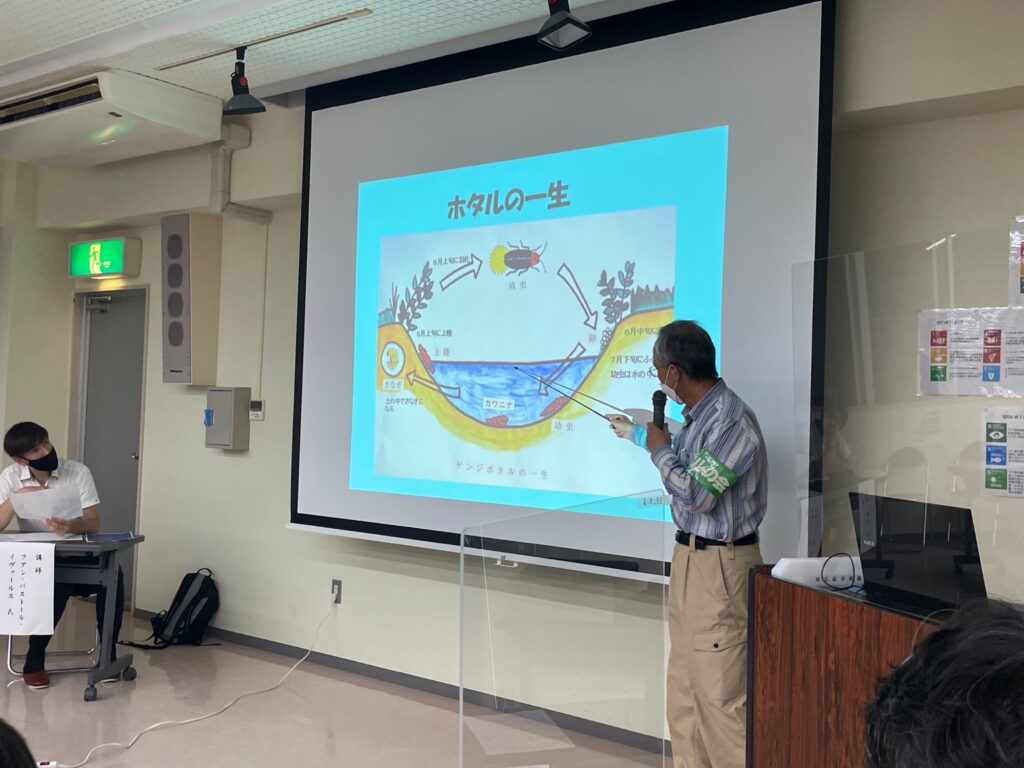
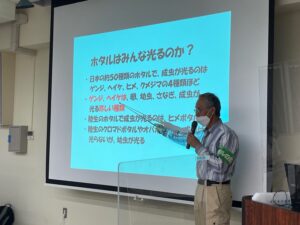
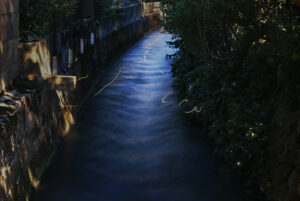
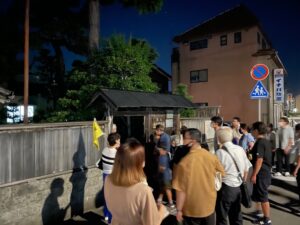
The central area of Kanazawa City, Ishikawa, still retains firefly habitats. In Kanazawa, the number of fireflies had once decreased due to urbanisation and the increase of housing land since the Showa period; however, fireflies are returning to the city due to improvements in canal water quality thanks to sewerage development. Citizen organisations in Kanazawa have conducted surveys on firefly inhabitation for over 30 years. They are working actively to preserve the local nature and its living things, to hand them down to future generations.
On July 2 (Fri), as part of the Sustainable Urban Nature Project (SUN Project) of the United Nations University’s Institute for the Advanced Study of Sustainability, Ishikawa Kanazawa Operating Unit (UNU-IAS OUIK), research associate Juan Pastor Ivars implemented a study tour for citizens to participate in the survey of firefly habitats in Saiwai-cho and Kikugawa. They walked around the areas and examined the banks along the Kuratsuki canal (constructed in the Edo period) and nearby gardens. The tour was aimed at examining firefly biology, while letting participants enjoy the sound of the stream at night and urban nature.
About 15 people, including residents of Saiwai-cho and Kikugawa, participated. During the tour, they were taught about the biology of fireflies by Mitsuhide Shinmura, Vice President of the Kanazawa Firefly Society and Chief of the Ishikawa Firefly Society Secretariat, and Koji Nakamura, Director of Ishikawa Prefectural Museum of Natural History.
Although there are about 2,000 species of fireflies living in the world, we often hear of the Genji firefly and Heike firefly in Japan. These two species have been found in Kanazawa City as well. The participants examined the number of each species living along the canal, based on their size and flashing pattern, which are different for each species.
It is difficult to find flying fireflies on rainy days, since they hide behind the leaves of waterside plants. It was raining a little on the day and the participants could not find fireflies at first. However, by carefully checking over 10 observation points, they were able to find dozens of Genji and Heike fireflies. Also, thanks to the kindness of a participant, they were able to examine the Japanese-style garden of a machiya house in the area. The participants learnt how Japanese-style gardens contribute to the biodiversity and ecosystems of cities, while enjoying the fantastic view of fireflies flying in the garden.
Fireflies have different preferences for food and habitats according to the species. We need to consider various elements in their waterfront living environments: the food such as freshwater snails and river snails, the dirt for making cocoons, and the moss for laying eggs on. Many Kanazawa citizens participate continuously in grass-roots firefly surveys such as this study tour. We hope to continue considering fireflies’ living environments together with citizens while enjoying urban nature next year.
Please read the 30-year Kanazawa Firefly Survey for details on firefly biology and the history of firefly surveys in Kanazawa City.
In commemoration of the UN World Oceans Day on June 8th, UNU-IAS OUIK organized the webinar “The Coastal Seascapes We Want! – Voices of Women Scientists in Ocean Research”. For the first time, this webinar brought together a full lineup of women speakers, who are scientists and ocean activists of different nationalities and whose work is based in Japan.
The ocean is our life source, supporting all life on earth and also humanity’s sustenance. The theme for World Oceans Day 2021 is “The ocean: our life and livelihoods”. The year 2021 also marks the UN Decade of Ocean Science for Sustainable Development (2021 to 2030). In this ocean decade, the world is expected to come together to build a new cooperative framework to ensure that global ocean science provides greater benefits for ocean ecosystems and wider society. Thus, the webinar also called for diverse expertise and a holistic understanding of the ocean, including greater emphasis on social sciences and focus on coastal seascapes, to address the UN Ocean Decade of Ocean Science’s call for “The Science We Need For The Ocean We Want”.
Moderated by Ms Mikiko Mikiko, Liaison Coordinator (UNU-IAS OUIK), the webinar started with brief presentations from four speakers on their passion for the ocean and experiences working on ocean-related research, particularly conserving coastal seascapes, their biodiversity, and related livelihoods.
Dr Evonne Yiu, Research Consultant (UNU-IAS OUIK), introduced “the UN Decade of Ocean Science for Sustainable Development and Conserving coastal seascapes and livelihoods through the Noto Satoumi Movement in Ishikawa, Japan”. Dr Yiu gave an overview of the challenges faced by the oceans and explained the need for more ocean science to better inform, understand and take urgent actions to save our oceans. However, she pointed out that the current ocean science is very much focused on natural sciences. Still, social sciences and humanities disciplines are also crucial for the holistic understanding of the root causes and drivers of ocean issues. Social sciences need also be integrated into ocean studies for a holistic, robust knowledge of ocean issues and devising an inclusive approach to ocean conservation.
She highlighted that as billions of people depend on the ocean for their livelihoods, understanding the human factor involved and ensuring the sustainability of these livelihoods goes hand in hand with keeping a healthy ocean. She also introduced the UNU-IAS OUIK Noto Satoumi Movement, a research and outreach effort since 2015 to promote the understanding of the Satoumi (coastal seascapes) concept and raise ocean livelihoods’ visibility Satoumi, and bridge traditional and local knowledge with science and policy.
Dr Piera Biondi, a researcher of the University of the Ryukyus and training manager of the OCEANCY MTU, shared her research on reef restoration and coastal construction in Okinawa, Japan. Currently residing in her hometown in Italy, Dr Biondi conducted her PhD research in Okinawa from 2017 to 2020 on the effect of restoration on coral cover and cryptofauna biodiversity conducted by the Okinawa Prefecture Office since 2011. Her study found no significant impact in increasing biodiversity or coral cover, suggesting that the coral reef still needs to be protected. She also shared other research on Okinawa coastal marine biodiversity, which found that artificial sites characterized by reduced abundance (total) and diversity of mobile cryptofauna (Masucci et al. 2021) and that less than 40% of Okinawa’s coastline remain in a natural status (Masucci & Reimer 2020). Dr Biondi stressed that conserving coastal seascapes is critically important as coastal ecosystems such a seagrass meadow, coral reefs, wetlands, mangroves only exists in shallow areas of which the main part is the coastline. These same areas also represent nurseries of species that will move in pelagic waters as adults. Conserving and restoring coral reefs and coastal environment is critical for the quality of livelihoods of people.
Dr Junko Toyoshima, Researcher, Ocean Policy Research Institute, shared on three case studies that depicted how Japan’s Satoumi-type integrated coastal management can be effective for biodiversity conservation. In Shiretoko, Hokkaido Prefecture, the national government, local governments, businesses, fishery operators work together to comprehensively manage the World Heritage areas. Some success is found with the government-led management of Steller’s sea lions, as well as increased spawning beds of salmons observed upstream at spots where river structures were improved. In Shima city, Mie Prefecture, the number of species and population of organisms increased at both the artificial tidal flat creation site and the tidal flat restoration site under the Ago Bay Project, where industry, government, academia and the private sector worked together to develop the technique for tidal flat restoration and a monitoring system to monitor water quality for restoring the ecosystems of Ago Bay. In Bizen City, Okayama Prefecture, eelgrass bed restoration activities (collecting and sowing eelgrass seeds) by local fishers since 1985 have seen significant improvement of eelgrass beds and better outcomes for biodiversity and fisheries. In summary, Dr Toyoshima stressed that the involvement of many stakeholders, especially fishers and the private sector, and identifying the key person/agency to lead the efforts are key to success for Satoumi conservation.
Ms Alana Bonzi, Co-founder and Director, SEGO Initiative and Adjunct Lecturer, Keio University, shared experiences of SEGO Initiative to promote citizen science in coastal seascapes conservation in Fujisawa, Japan. Originally from Trinidad and Tobago and Canadian in nationality, Ms Bonzi and her husband Michel co-founded the SEGO Initiative, a not-for-profit association, to do something for the oceans they both love. The SEGO initiative grew out of their Satoumi focused Fujisawa Beach Cleaning Project they started in 2009. The Project includes volunteering with local residents, families, and corporate employees to promote corporate social responsibility and has since expanded to public education events to encourage reconnection with the oceans through sailing and artistic expressions. Such outreach efforts also include Expo Mer Fujisawa, an art and sustainability series sparking the imagination needed to recreate an ocean without plastic and an educational webinar series to learn about oceans issues with the participation and support from domestic and overseas experts, artists, and participants. In recent years, the initiative has launched the Satoyama focused Organic Farming Project to enhance awareness of the land and sea connection. Through these activities, she hopes people can feel closer to the sea, as well as experience the beauty and fragility of the marine ecosystem so that we can reimagine our future with oceans.
At the panel discussion facilitated by Dr Yiu, the speakers first talked about their experiences of being women scientists and activists in the oceans. All speakers did not really encounter challenges as a woman in ocean research but instead felt that women have more freedom in career choices, more vocal, more adventurous, more curious and probe for more information, and attentive to women’s role and plight in ocean communities. In their course of work, the speakers have also met many outstanding women ocean scientists and conservationists, as well as many knowelgeable and skillful women working as fishers and in other professions that support ocean livelihoods. Ocean livelihoods undoubtedly have an even gender mix, but we need to make women’s roles more visible and encourage more women working behind the scenes to stand out and voice out for the oceans. Participants also actively gave questions and comments; some include the land and sea connection, protecting coastlines, ocean outreach efforts, and the balance between tourism and ocean conservation, etc. These discussions reinforced our understanding of the importance and urgent need to conserve our coastal marine ecosystems, address land-based pollutants and drivers on marine biodiversity, and engage widely to bring the people closer to the oceans. Concluding, all speakers looked forward to seeing more integration of natural sciences and social sciences for the oceans, more attention given to the conservation of coastal ecosystems, and more people, women, men and others, joining us to take ocean actions in the UN Decade of Ocean Science.
Some comments from the participants received during and after the webinar are as below:
“Great presentation…women make the world the beautiful place for life through keeping ocean life.”
“It is a powerful webinar indeed. In the global south, ocean life is most threatened due to poor life style which threatens ocean life. I am interested in undergoing research in this field bringing the global south perspective in this field of ocean Life.”
“An amazing dialogue featuring voices of women scientists and women in action. Very inspiring to hear first hand stories.”
“47% of Japan’s coastline is full of concrete. It’s time to wake up and live with nature and not treat it like an enemy.”
“I’d like to say “thank you very much” for this opportunity. It was a wonderful webinar! I’m interested in the topics “Land and Sea connection” but more interested in the roll of female researcher/activist in this topics.”
Please also check the recorded video of this webinar on our YouTube channel for the details.
The theme of the first SDGs café in 2021 was “green bonds”, a cashflow mechanism based on a new concept. Money is an important factor in the realisation of a sustainable society. This mechanism can not only solve environmental problems but also promote economic growth, and it might also contribute to the resolving of other issues.
Most large-scale green projects are implemented by large enterprises; therefore, money and jobs created by the projects often flow out of the relevant regions. However, a revolutionary project was born through collaboration between Kanazawa City, local financial institutions and other local companies. Bonds were issued to invest in the switching of city gymnasium lights to LED lights, in order to create monetary circulation in the regional economy. In this seminar, we learnt about the mechanism and possibilities of green bonds through this project.
Overview of green bonds and the project
We would like to explain the relevant technical terms first.
◆What are green bonds?
Green bonds are bonds issued to fund green projects (global warming countermeasures, recyclable energy projects, etc.) by companies or local governments. They are also called social bonds or SDGs bonds. The proceeds from their issuance are to be used for the specified types of projects.
◆What is the project to switch city gymnasiums’ lights to LED lights?
At present, about 3,000 mercury lights, which are controlled by the Minamata Convention on Mercury of the United Nations, are used in the 81 gymnasiums of elementary and junior high schools in Kanazawa City. This project intends to switch all the mercury lights to LED lights, thus reducing electricity usage, CO2 emissions and electricity expenses by two-thirds.
◆What are ESCO projects?
In these projects, energy service companies (ESCO) help reduce utility costs paid by clients (a local government in this case) and receive rewards for surpluses due to the reduced costs.
How can public-private partnerships based on private funds change Kanazawa by 2030?
President Hiroshi Sawada of Hokuriku Green Bond Co., Ltd. (the name changed to LGP Lab) talked about the establishment processes of his company and its tasks, and gave his thoughts about a society where public-private partnerships based on private funds prosper. (The following is a summary of his presentation.)
Despite the energy saving trend in companies, promoted by the Ministry of Economy, Trade and Industry, energy saving in local governments has not progressed well. Therefore, in June 2017, the ministry began to discuss PPP (public-private partnership) project models aiming for the improvement of the environments in local governments. However, local small and medium-sized companies were not proficient at comprehensive environmental management in spite of their advantages in specialised fields, which worked in the favor of large companies, causing money to flow out of regional communities. As a matter of fact, this has been one of the major reasons for the weakening of regional bodies following the period of Japan’s economic growth.
We visited the Ministry of the Environment to ask for advice regarding measures to make the most use of regional resources (people, products and funds). They recommended we construct a project scheme (a plan with a framework) and apply to become a green bond issuance model project. Thus, we established Hokuriku Green Bond Co., Ltd. in March 2018. In our system, a special purpose corporation (SPC), which connects local companies, governments and financial institutions, has been established for each project in order to issue bonds, obtain funds and implement the project.
For the first project, we decided on the task of switching lights in public buildings to LED lights, since the public sector was behind the private sector in this regard. This project was adopted as a green bond issuance model project by the Ministry of the Environment.
Then, we held a seminar for municipalities of the three prefectures in Hokuriku, and many of them attended the seminar. We found that the project had a market worth dozens of billions of yen. However, when it came to the point of negotiations with the municipalities, they would start saying “we don’t have enough money to do that” or “we don’t have to do that in a hurry”. In the end they always said “it is unprecedented”, and our negotiations ended.
However, in fiscal 2020, Kanazawa City advertised publicly for an ESCO project to switch gymnasium lights to LED lights. We applied for the project in consultation with local construction companies and a financial institution (Hokkoku Bank) and entered into a contract in September. Since all the parties involved are related to Kanazawa, this project was highly evaluated as an excellent example of a Regional Recreation SDGs Public-Private Partnership Platform by the Cabinet Office.
Local governments have many projects to implement, such as countermeasures for deteriorated facilities and natural disasters, as well as earthquake-resistance reinforcement, even though these public projects produce no profits. I think green bonds can be a solution to funding these projects.
Support for a regional PPP project from a financial institution
Yuki Bessho from the Solution Group of Hokkoku Bank talked about how they could realise this scheme.
Local governments are faced with difficulties in implementing countermeasures for deteriorating facilities constructed during the bubble economy period. Due to a decreasing number of employees, municipalities are unable to construct sustainable cities alone. We participated in the project of switching gymnasium lights to LED lights in response to consultation for funding from Hokuriku Green Bond. The reasons why we accepted their application were, firstly, the project was implemented through firm collaboration between public and private sectors, and secondly, it was led by local companies. The project cost was borne by the city, and the money became revenue for the participating local companies, providing stimulus. If the local economy is activated, it will result in an increase in taxation and a gain for local governments. This project is an excellent model for monetary circulation in communities and sustainable economic activation. I think local financial institutions should be actively involved in this kind of project.
Municipalities in the Hokuriku Region have their individual challenges. I hope that municipalities will share their troubles with local people and that local companies will speak out about what they can do to help. Then, this kind of partnership will increase, leading to sustainable city planning.
This seminar focused on SDG Target 14.3: Reduce ocean acidification, one of the 10 targets of SDG14: Life below Water. This target aims for the alleviation of ocean warming due to global warming as well as ocean acidification.
What SDG14.3 aims for
Although there are many topics regarding environmental issues, such as climate change and biodiversity, one of the important fields is the ocean. SDG14.3 aims to confront and minimise ocean acidification through the promotion of scientific collaboration at all levels. Ocean warming and acidification are two sides of the one coin; however, SDG14.3 focuses on ocean acidification, since SDG13 deals with climate change and global warming.
Keynote lecture: Ocean warming and its impact on living things
The science journalist Tomoyuki Yamamoto gave the keynote lecture on the present condition of the ocean and what it means to us.
A crisis in the coral reef ecosystem
As a result of the 2018 survey of Yabiji, a collection of large coral reef communities near Miyako Island, Okinawa, the living coral area was found to have decreased by 70% in the last decade due to bleaching. Coral reefs are treasure troves of biodiversity, where many living things congregate, and they also function as natural breakwaters to protect the islands from big waves. The IPPC Special Report named Global Warming of 1.5˚C estimates that if the average global temperature rises by 1.5˚C or 2˚C from the pre-industrial level, 70-90% or more than 99% of living coral areas will disappear, respectively.
Rise in air temperature and sea water temperature due to global warming
In the same way as the rise in average global temperature, the global sea-surface temperature has been rising by 0.55˚C per 100 years. In Japan, the sea-surface temperature has risen by 1.14˚C in the last 100 years; thus ocean warming is progressing at a higher pace than the global average. In next 100 years, ocean warming is expected to progress three times faster than before. Oceanic creatures are heavily influenced by sea water temperature rises of 1˚C. If it rises by 3˚C or 4˚C, the biota (ecology) will experience a great change.
Global warming and adaptation measures
Temperature rise also has an influence on fruit. Apple cultivation areas have moved northward and the cultivation of tropical fruit such as passionfruit is increasing on Honshu Island. In farming, adaptation measures for environmental change such as global warming are divided into three categories: improvement in cultivation technology, changing to heat-resistant breeds and changing product types; passionfruit being one example.
Tokushima Prefecture is famous for the cultivation of the brand-name product, Naruto brown seaweed; however, the prefecture is located at the southernmost position among brown seaweed production sites, so it is easily influenced by global warming and its seaweed production is decreasing. Thus, by means of advanced technology the prefecture developed a new breed that is resistant to high water temperature. About 20% of the cultivated brown seaweed in Tokushima has been replaced by the new breed.
Another CO2 problem – ocean acidification
CO2 acts as an acid when dissolved in water. The ocean absorbs a quarter of the CO2 emitted through human activities; therefore, it was believed to help slow global warming. However, the chemical properties of the ocean have changed due to CO2 absorption. If the ocean is acidified, creatures with calcium carbonate shells and skeletons such as sea urchin, shellfish, and coral cannot create them. Ocean acidification is predicted to progress further; according to the worst scenario, its pH level is estimated to drop to 7.8 by the end of this century.
Measures we can take to solve the problem
If CO2 emissions continue at the present pace, global warming and ocean acidification will progress without doubt. At the national level, the government ought to promote the introduction of renewable energy. There is also something consumers can do: introduce new foods into their diets. For instance, we can start eating rabbitfish, since its habitat is spreading northward due to a rise in sea water temperature. Rabbitfish eat large seaweeds such as ecklonia caba (a species of brown alga), causing concern in regards to rocky-shore denudation. If people in more regions start eating rabbitfish, it will contribute not only to the sustainable management of fishery resources but also to the preservation of seaweed beds along the coastlines; we can kill two birds with one stone.
Initiatives for the reduction of CO2 emissions are indispensable for solving the problems of ocean warming and acidification. At the same time, we need to develop measures to survive in an environment where global warming has progressed.
Initiative 1: Warming of satoumi and satoyama from the perspective of fish research
Yusuke Arakawa has been studying lamprey for seven years at Ishikawa Prefectural University Graduate School. He talked about the status of living creatures in the ocean due to influences such as ocean warming, with a focus on the sea around Ishikawa.
If snowfall on Mt. Haku decreases due to global warming, it exerts various influences on nearby satoyama areas: animal damage increases and spring water decreases, affecting living things dependent on spring water, such as pungitis.
There are traditional fishery methods in Noto Peninsula such as mullet towers, fixed net fishing and lethenteron (a species of lamprey) fishing, and they have provided the local people with regional ecological knowledge. The knowledge is useful for bio-resource management; it can be utilised for biodiversity preservation, the sustainable use of bio-resources and evaluation of the impacts of ocean warming and environmental change on fishery resources.
Lethenteron are a sea-run, migratory type of lamprey. In Noto Peninsula, lamprey fishing in spring used to be very popular. They caught lamprey using a tool called the kanko. In those days, a fisherman could catch a drum of lamprey in one day; however, now we can catch one lamprey a day at most. Lamprey are assumed to have decreased, since their distribution area moved northward due to global warming and the construction of dams and banks hindered them from going upstream.
Initiative 2: Action for the future – What we can do to prevent global warming
Next, the environmental counselor Sanae Nakamura talked about the activities in Ishikawa to prevent and counter global warming, and promote education about it.
The IPCC Special Report named Global Warming of 1.5˚C states that for global warming to be limited to 1.5˚C, global CO2 emissions would need to fall by 45% by 2030, reaching net zero around 2050. Japan declared its intention to realise a decarbonised society by 2050, and more and more Japanese companies are joining the RE100 project, which aims for the complete replacement of energy for business operation by renewable energy.
According to Ishikawa Prefecture’s data on CO2 emissions by category, emissions from homes are more than the national average. Emissions from cars and heating devices account for large percentages, and electricity charges are also high. In addition, Japan has a higher food mileage than other industrialised countries, since a large amount of its food is imported and transferred a long distance. One of the reasons for this is the decrease in Japan’s food self-sufficiency rate. Local food production and consumption can be an effective solution to global warming.
We have already affected the environment through our living activities; however, we can change our future by changing our daily activities. Let’s take action now.
Next, a panel discussion was held on the theme of “what we can do to attain the goal for ocean warming and acidisation “. The issues of ocean acidification and the erosion of Chirihama Beach were discussed. These problems are often caused by activities on land. The participants concluded that they would like many people to keep their interest in oceanic environments, enjoy the sea and share its problems, and that they would continue their studies to help achieve that.”
Lastly, Tsunao Watanabe, Director of UNU-IAS OUIK, concluded the seminar by saying, “I hope various initiatives will start in many places in order to realise the targets of SDG14: Life below water.”
The recording of the seminar is available on OUIK’s Youtube channel :
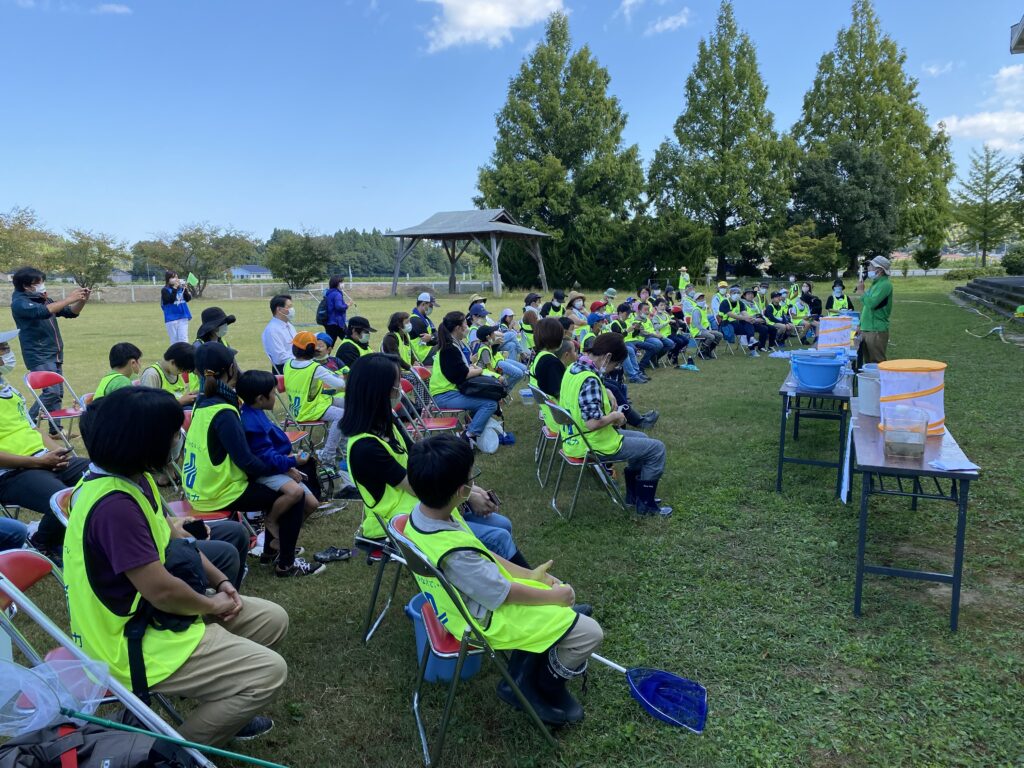
On October 1, 2022, a wildlife survey using the smartphone app “Biome” took place in Nanao City, organized by Nanao SDGs Switch! This event was co-hosted by Hokuriku Electric Power Co., Biome Inc., the Noto GIAHS Promotion Council, and the Nanao Takashina District Revitalization Council. The United Nations University also supports the activities of the Noto GIAHS Promotion Council, and members of the Noto GIAHS Biodiversity Working Group assisted from the planning stages. On the day of the event, expert member Shinya Nomura, an instructor from the Ishikawa Nature School, served as the lecturer, joined by other working group members and researchers from the UN University, including Akiko Koyama, Yasuko Kinoshita, and Tomoya Kishioka from Kanazawa University.
The weather was good, with clear blue skies, and 80 participants along with 30 stakeholders gathered. After greetings from the organizers and representatives of the community, researcher Koyama explained how to use the app and the process for the wildlife survey, which included a quest to find ten species of creatures in the Noto area by the end of October.
Next, Nomura provided explanations about the types of creatures they might encounter that day, some to watch out for, and how to handle certain situations. There were quiz-style questions where adults also had to think critically about what to do when they encountered bees or snakes, highlighting the importance of basic outdoor knowledge.
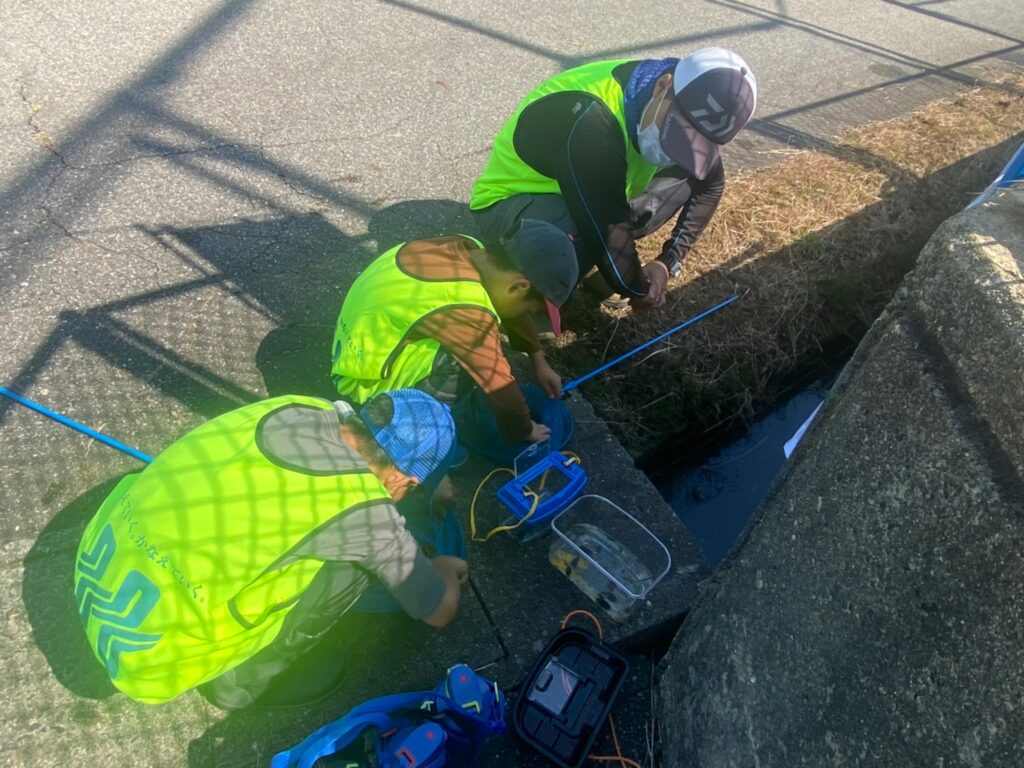
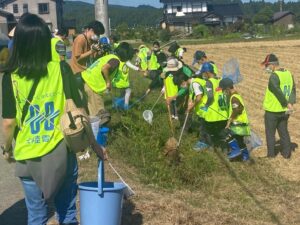
Participants then divided into two groups to start collecting wildlife. One group searched around the water channel next to the playground, while the other explored a waterway next to rice fields in the settlement.
Is there something there?
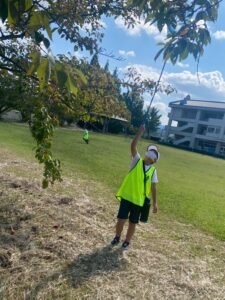
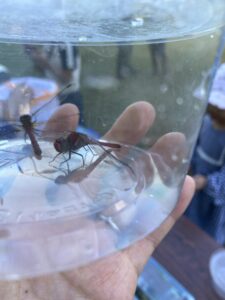
Get ready to catch a dragonfly!
Are there any rare creatures around?
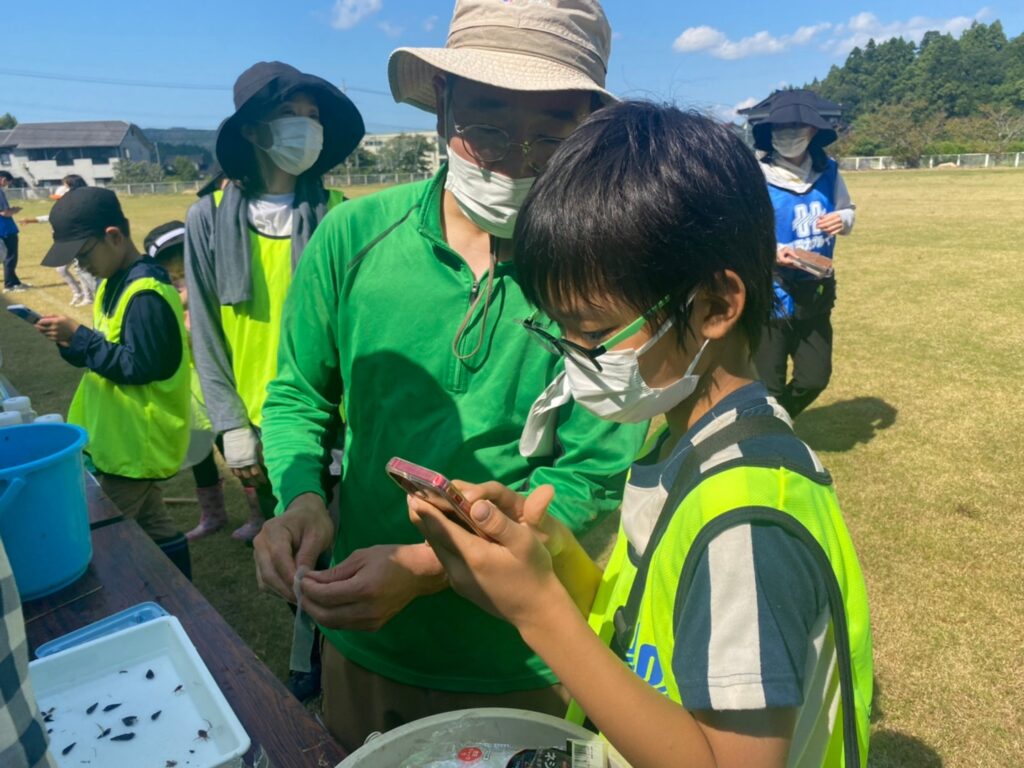
After swapping locations between the two groups, they returned to the playground to classify the collected creatures by type. Despite some initial confusion with the fast-moving animals, the children gradually got the hang of it and managed to sort everything well. Once ready, they quickly posted their findings using the app, hoping their submissions were correctly identified by AI.
アプリで投稿してみよう!
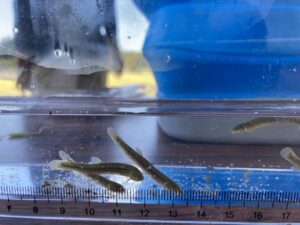
Finally, Nomura provided explanations about the creatures discovered. They found various animals in the waterways, including medaka (small fish), loaches, shrimp, frogs, aquatic insects, and shellfish, as well as insects like dragonflies and grasshoppers. The discussion highlighted that while the rice field environment has been changing over time, it was encouraging to see such a diverse range of creatures still present in the area.
Explanation of captured living creatures
Red dragonfly
The japalura (a type of skink) that shed its skin inside the case
Loach
As a special thank-you, participants received a handout introducing important species that represent Noto’s Satoyama and Satoumi, chosen by the Biodiversity Working Group. They were encouraged to report these specific creatures on the Biome app by the end of October.
Most importantly, it was striking to see both the children and their parents genuinely enjoying the experience of searching for and observing wildlife. It would be wonderful if this event sparked an interest in nature for even a few more children and adults. The quest period continues throughout October, so we hope everyone will contribute wildlife information. For educational materials from the Biodiversity Working Group, please check the group’s website as well!
According to the principle of “realising a city where people can enjoy working and living”, we need to “construct a city that is friendly for the visually-disabled” and “support people who want to work in adequate jobs”. To what extent have these objectives been satisfied? Yumiko Hayashi, President of “AUWA for Visually Disabled People’s Working” and who also has a vision disability, talked about her experience.
She had been working for an IT company as a system engineer for 20 years. She became partially sighted 14 years ago; when she consulted her boss, she was advised to leave the company for personal reasons. She was a single parent at the time, so she could not resign. She refused to leave and acquired a physical disability certificate. She was transferred to a different section. Having difficulties in doing an unfamiliar job without any support, her health and eye condition became worse, and she took a leave of absence.
She consulted Ishikawa Polytechnic School for the Disabled to find an appropriate job, but she could not find any jobs for visually disabled people. Therefore, she decided to enter Ishikawa Prefectural School for the Blind to obtain a national license as a masseur (for acupuncture, moxibustion and massage). She worried about life during her three years of school attendance, but she could not find any options other than going to the school. When she attended a school meeting for parents of blind people, she was shocked to know that system engineer is one of the jobs recommended for blind people. She felt very regretful, thinking that she would not have left her job if she had known the fact. This feeling has become the driving force for her current activities.
Although she graduated from the school and acquired the license, she could not find employment. Therefore, she studied as a clinical trainee in order to open a clinic. In 2012, she opened Ladies’ Acupuncture and Moxibustion Clinic OLIVE. After that, it took three years to become able to live and work independently. Nine years passed from the time she lost partial vision to finally becoming independent.
While working at the clinic, she established “AUWA for Visually Disabled People’s Working” in 2017 in order to help build a society where all people, including disabled people, can enjoy working actively.
What are visually disabled people? What kind of jobs can they do?
The Law on Welfare for People with Physical Disabilities prescribes that visually impaired people are divided into two categories: people with visual strength defects and people with visual field defects. There are about 300,000 visually impaired people in Japan. The number of people with acquired visual impairment grows larger in accordance with age. The number of people with low vision who are not provided with a physical disability certificate is said to be three times those with a certificate. These people are not receiving sufficient welfare service, which is a serious problem.
Jobs recommended for visually impaired people other than acupuncture, moxibustion and massage therapists include health workers for companies, teachers, civil servants, musicians and IT workers; however, there are few visually impaired people who are engaged in these jobs in Ishikawa.
Working conditions of visually impaired people in Japan
We would like to focus on the problems specific to Kanazawa City and Ishikawa Prefecture among the many problems in working conditions of visually impaired people.
A lack of supporters who understand appropriate jobs for visually impaired people
A lack of places for vocational training other than schools for the blind, resulting in difficulties in making contact with companies
A lack of support for people with low vision, including visual rehabilitation
A significant shortage in ophthalmic clinics for people with low vision
There are large regional differences in approaches to these problems. We need to create an environment that supports the employment of visually impaired people in our region.
There was a great change in the circumstances in January 2021. The Vocational Development Center for the Blind and Low Vision in Japan Inc. in Yotsuya, Tokyo, commenced online vocation training for visually impaired people in Japan. I immediately applied for the training and became the first student of the OA basic course (PC training using audio reading software). Being able to receive different types of vocational training such as this, which is not possible in Ishikawa, represented great progress.
I hope that all people become able to live comfortably in society whether they have disabilities or not. The number of people who start to suffer from visual impairment increases with age; therefore, it is said that there will be more people with serious short-sighted visual disabilities in the future. I hope that all of you will regard the problem as your own and endeavor to build a society where visually impaired people can live comfortably.
Supporting people who cannot work even though they want to
Next, Junichi Okuyama talked about his experience starting a business, and the present condition of the employment of disabled people.
I joined a recruitment company and started working for the Kanazawa branch. Then, I realised that there were very few offers of employment and recruiting agencies for disabled people. Thus, in 2012, I established Visst Inc. to help realise the wish of disabled people to work. We started providing employment support in Ishikawa, and then expanded the service into Toyama and Kanagawa. We are now expanding our business into various fields, such as after-school care involving early career education for elementary, junior high and high school students, and development support projects for preschool children. In our group, we also have companies for supporting the employment of people who experience difficulties working.
Working might become easier if you make some changes in your environment or ways of thinking, and if you come to feel comfortable in working, there will be no barrier. Barriers for working are divided into “individual models”, which should be overcome by individuals, and “social models”, which need to be solved by society. For instance, people in wheelchairs become able to move easily if steps and gaps are eliminated. There are many things in our environment that society can change to eliminate barriers.
Solving accumulated problems
Next, UNU-IAS OUIK office manager Ms. Nagai participated and the three people had a talk session, answering questions from the audience and Ms. Nagai. Many concrete ideas were presented to solve problems, such as a project for matching social welfare offices and companies in the Kanazawa SDGs platform in order to raise the employment rate of disabled people.
The seminar recording is available on OUIK’s Youtube channel:
Research Associate Evonne Yiu from UNU-IAS OUIK gave a lecture on SGD Target 14.4: Sustainable fishing, and Target 14.4: End subsidies contributing to overfishing.
The two targets were agreed upon to introduce sustainable systems for confronting the tense situation of fishery resources. It is important to create sustainable management mechanisms for fishery resources that are unique to Japan.
94% of global fishery resources are either overfished or used to their maximum; only 6% of them still have room for use.
As for the global output of capture fishery and farming fishery, since the 1990s the former has remained at the same level and the latter has been increasing. The consumption of fishery resources has increased annually at a faster pace compared to the increase in population.
When we think about fishery resource management, we tend to consider mainly resource preservation and management in the sea; however, fishing and sales methods are also important for the preservation and sustainable use of fishery resources. Furthermore, consumers are required to consume fishery resources in a sustainable manner. All these factors constitute a cycle, thus enabling the sustainable management of fishery resources.
Considering the present and future of fishery resources from a researcher’s perspective
Next, Nobuyuki Yagi, Professor of the Graduate School of Agriculture and Life Sciences, University of Tokyo, gave the keynote lecture titled “Sustainable Management of Fishery Resources in Japan and Overseas”.
Fish consumption in Japan has decreased 20% this decade. Distribution channels and supermarkets are keen to improve business efficiency by restricting the products they deal with. Therefore, brokers will not buy unpopular fish, and fishermen will not catch them either. Also, the numbers of fishermen and fishery resources are decreasing. We are sometimes told that fishery resources are decreasing due to overfishing; however, it is not necessarily true.
In Japan, the output of natural fishery resources has decreased significantly since the peak in the 1990s. The global output of natural fishery resources has also been decreasing. However, there are some countries where farming outputs are increasing, such as Korea and Italy. Norway is one of the few countries that are attempting to increase farming fishery outputs; its farming output is increasing, although its output of natural resources is decreasing gradually due to fishery resource management and a decrease in catch volume.
In Japan fishery output has decreased for thirty years partly due to the special circumstance of decreased consumption. However, the volume of fishery resources has not been restored yet. There are some that believe we should decrease our fishing output further for some kinds of fish only. It is assumed that other than overfishing, global warming and the reclaiming of land might also be reasons for the decrease in fishery resources. There is also a report that the decrease in fishery resources was caused by a decrease of zooplankton, fish’s food, due to neonicotinoid insecticide.
In many countries, catch landing is conducted manually, and female workers are participating too. In contrast, big ships and machines are used in Norway, and there are few workers engaged in the work. Following thorough contemplation of the essence of human happiness, we must draw conclusions regarding the questions of “maintenance of employment or improvement of economic efficiency?” and “preservation of the environment or improvement of economic efficiency?”
What distributors and processors can do to connect producers and consumers
Subsequently, Tatsuyuki Tamaru, Vice Manager of the Sales Strategy Department, Ishikawa Chuo Uoichi Corporation, gave a report on their activities.
Various fish are caught in Ishikawa according to the season. However, consumers will not buy them simply because they are tasty. They prefer processed fish, and supermarkets and drug stores will not buy unprocessed fish from us, either.
We started to buy fresh seafood caught in the early morning at fishing ports in Ishikawa, and sell it at the second auction, called the “morning auction”, which follows the early-morning auction. The project was started in collaboration with JF Ishikawa in 2008. Also, we are making use of the seafood labelling system, which attaches labels to fishery products that have been caught or farmed with consideration for the ecosystem or resource sustainability. In Japan, Marine Ecolabel Japan (MEL Japan) conducts the accreditation of organisations (for both natural and farmed seafood). About 20 fishermen and seafood farming organisations that ship to us have acquired MEL accreditation.
Sustainable traditional fishery and future fishery
Yosuke Nakada, fishermen’s boss of the fixed net fishery company Hinode Oshiki in Noto Town, and research associate Evonne Yiu from UNU-IAS OUIK gave an activity report on traditional fixed net fishery in Noto Town.
Mr. Nakada visits local schools to teach the value, richness and attraction of the sea to children.
Mr. Nakada: “Firstly, I would like to talk about fishery through my experiences so that children can understand and love fishery. Then, if they want to become fishermen, I can tell them about our work. I think this activity is just like sowing seeds for future fishery, and I value it very much.”
Evonne asked Mr. Nakada if there was anything he felt while he was watching the sea every day. Mr. Nakada answered, “compared to the days when my grandfather was fishing, the time the fish come is gradually becoming later. I am not sure if it is caused by global warming; however, the change in water temperature is occurring later, to be sure, which might be delaying the time the fish come. Also, in my opinion fishery resources are decreasing or, perhaps I should say, the fish are not approaching the coastlines.”
Next, three panelists and Evonne as the moderator had a panel discussion on the reasons for the decrease in aquatic resources and the development of eco label accreditation systems.
Lastly, Tsunao Watanabe, Director of UNU-IAS OUIK, concluded the seminar, saying, “we were able to hear important perspectives regarding what we can do and what we should do in order to preserve our abundant fishery resources. We should remember that every 14th of the month is “the day for eating sustainable fish” while thinking of satoumi together with everyone.”
On Friday, July 1, the United Nations University Institute for Advanced Studies (UNU-IAS) collaborated with the Kikugawa Community Center to conduct a citizen participation firefly habitat survey tour in Saiwai and Kikugawa district, Kanazawa City. This event, which was also held last year, is part of the SUN Project (Sustainable Urban Nature Project) led by Dr. Juan, a research fellow at UNU-IAS. The participants visited gardens along the Kuratsuki irrigation canal, enjoying urban nature while studying the ecology of fireflies.
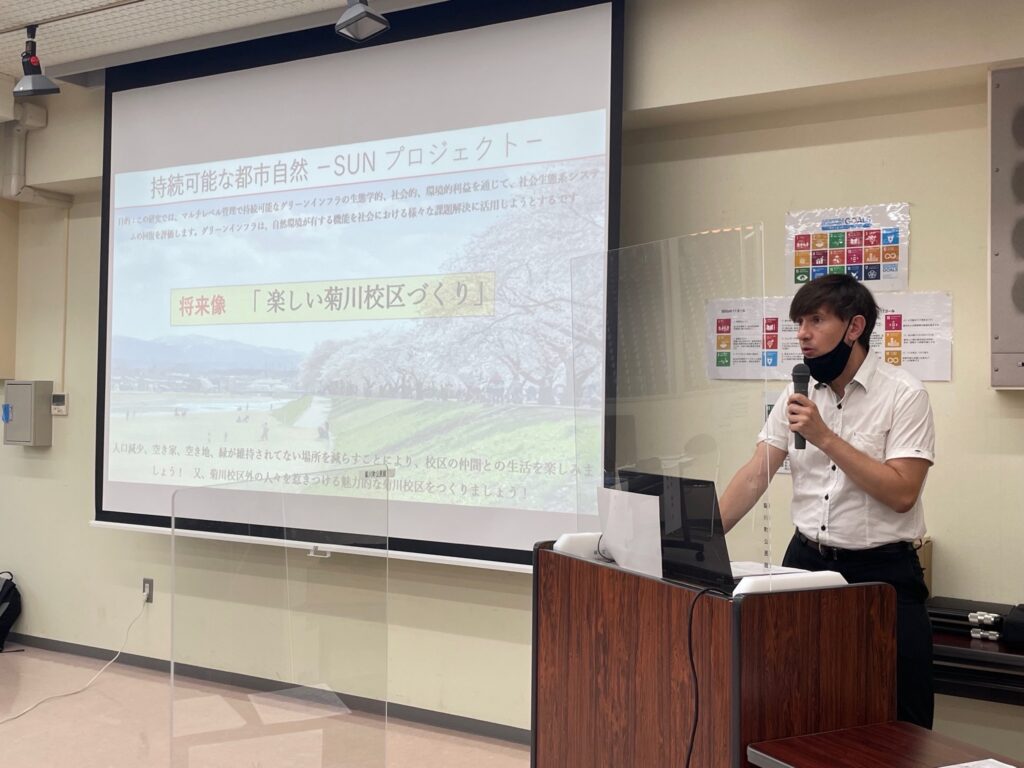
Initially, participants gathered at the Kikugawa Community Center, where they received explanations from Dr. Juan and Dr. Tsuda regarding urban nature in Kanazawa and efforts related to sustainable tourism utilizing it. Dr. Juan highlighted the presence of many green infrastructure systems in Kanazawa that leverage nature. He emphasized the necessity to conserve irrigation canals and gardens as part of urban nature and culture, while also introducing activities aimed at conservation. Dr. Tsuda described the collaborative models for maintaining and managing these unique resources of Kanazawa while ensuring sustainable conservation involving various stakeholders and the tourism industry.
Afterward, Mr. Mitsuhide Shinmura (President, Kanazawa Municipal Firefly Association and Secretary General, Ishikawa Prefectural Firefly Association), gave a lecture titled “The Mysteries of Fireflies.” Mr. Shinmura has been involved in activities related to fireflies for nearly 40 years while working at the Kanazawa City Hall on revitalizing satoyama (village forests) and agriculture and forestry. He started the “Firefly Survey” in cooperation with a children’s association in 1957, and this activity has continued to this day. It is said that the case of Kanazawa, where this type of survey has been conducted for over thirty years, is quite rare.
See below the key points discussed in the lecture:
– Origin of the Name “Firefly”: One theory suggests it was named based on the imagery of sparks from torches or will-o’-the-wisps. There was a time when kanji “fire” (火) was read as “ho,” which evolved into “hotaru.” Another theory links the name to “shooting stars.”
– Types of Fireflies: There are about 2,000 species of fireflies globally; Japan has around 50 species mainly in warmer areas, with 7 species found in Ishikawa Prefecture. In Japan, fireflies are typically associated with water’s edge, but most of them are terrestrial in their larval stage. However, the commonly known Genji firefly (Nipponoluciola cruciata) and Heike firefly (Aquatica lateralis) are unique as their larvae live in water.
– Do All Fireflies Glow? Among the 50 species of fireflies in Japan, only 4 species have glowing adults, and only the Genji firefly (Nipponoluciola cruciata) and Heike firefly (Aquatica lateralis) glow continuously from the egg stage throughout their lives.
– Differences Between Genji x Heike Fireflies: Genji and Heike fireflies differ in appearance, emergence timing, and flight patterns. Male Genji fireflies measure about 1.5 cm in length, while females can reach around 2 cm; in contrast, Heike fireflies are slightly less than 1 cm. In terms of markings, Genji fireflies have a characteristic cross-shaped pattern on their backs, whereas Heike fireflies display vertical stripes. Genji fireflies typically emerge in early June, while Heike fireflies appear around mid-July. Although emergence times can vary by location, warming temperatures have generally led to earlier sightings of both types. Genji fireflies emit light at intervals of about 2 seconds as they fly, while Heike fireflies produce light at shorter intervals and tend to fly at lower altitudes.
– Differences Between Males and Females: Males fly around while glowing, and females remain stationary. The females emit signals to attract the males, leading to mating.
– Requirements for Firefly Habitat: It is important for their habitat to have darkness at night, vegetation that provides shade during the day, clean water, stones, sand, and soil, as well as a food source (such as radicine).
– Changes in Firefly Populations: Genji fireflies have experienced a slight increase in habitat due to improved water quality resulting from sewer construction. In contrast, Heike fireflies, which inhabit different areas, have decreased nationally due to abandoned farmland and increased herbicide use. The stone-piled irrigation canals from the Edo period in Kanazawa provide gaps between stones where grass grows, creating a suitable environment for organisms to hide. Therefore, fireflies can be observed within the city.
The presence of a suitable habitat for fireflies indicates that urban nature is rich. Therefore, it is important to collaborate with local communities to carry out activities for firefly conservation.
Observation of Fireflies
After the lecture, participants took firefly maps and walked around the neighborhood.
Many participants expressed surprise that despite walking regularly in the area, they had never seen fireflies so close before. Additionally, fireflies were found not only near the irrigation canals but also in ponds within gardens that draw water from the irrigation system.
Participants recorded and submitted how many fireflies they observed at various firefly observation points.
Through this activity, participants enjoyed the gentle sounds of summer nights while learning about Kanazawa’s urban nature via fireflies. We hope that more people can come to understand the importance of urban nature and biodiversity through such initiatives.
Practicing the SDGs can take many forms: individual actions, collaborative efforts with peers, community engagement, broader city-wide initiatives, and connecting with people around the world online. When considering this in Kanazawa, the role of community centers as hubs for local learning stands out.
The community center system in Kanazawa is somewhat unique. These centers are established according to the catchment areas of elementary schools, with officials and staff elected from the community, and operation costs partially borne by local areas. For residents of Kanazawa, this may seem normal, but it is distinctly “Kanazawa-style.”
Having staff who are knowledgeable about local circumstances allows these centers to serve as bases for activities that support residents. However, there have been significant changes in demographics affecting the functionality of community centers, such as the aging population, urban sprawl, and decreasing membership in neighborhood associations.
As community centers are crucial players for the community, there is a hope that a diverse range of age groups and backgrounds will actively utilize them. This café event has been organized with community centers as the theme, exploring the potential for the 60 community centers in Kanazawa to become a network of learning for the SDGs.
IIMAGINE KANAZAWA 2030 Takes the Next Step!
First, Secretary General Nagai from the United Nations University Institute for the Advanced Study of Sustainability Ishikawa-Kanazawa Operating Unit (UNU-IAS OUIK) introduced the previous 14 SDGs cafés and the recent developments related to “IMAGINE KANAZAWA 2030.”
The Kanazawa SDGs initiative began in April 2019. By March 2020, many participants helped complete the “Kanazawa Future Scenario.” In July, Kanazawa was recognized as an SDGs Future City, and a project promoting “sustainable tourism” was selected as a model project, marking 2020 as a year for concrete steps forward.
“Now, IMAGINE KANAZAWA 2030 has reached the next ‘learning stage.’ Last year, we conducted a study tour for partners, which facilitated various learnings, and we hope to continue creating learning opportunities as we develop different projects,” said Secretary General Nagai.
★The Kanazawa Future Scenario is the result of everyone’s imagination for the year 2030. We encourage you to take a look.
★ IMAGINE KANAZAWA 2030 is seeking partners to help implement the Kanazawa Future Scenario. Participation is open to individuals, organizations, and businesses, with over 100 partners currently involved as of January 2021.
As for the importance of mutual learning, Nagai expressed that ‘the presence of community centers in Kanazawa holds great potential as spaces for learning.’ To explore this potential, we invited Keiko Hara, the head of the Kikukawa Community Center, to IMAGINE what Kanazawa could look like in 2030. Additionally, we received input from Professor Hidetaka Asano, an emeritus professor at Kanazawa University with extensive experience in community development focused on social education
Imagining 2030 from Kanazawa’s Community Centers!
At the Kikukawa Community Center, representatives from various neighborhood associations come together in five committees to discuss and establish the annual project plan. One popular initiative they introduced is the “Western-style Shimekazari Workshop,” designed to celebrate the New Year while fostering camaraderie among participants. This workshop is so popular that it often has a waiting list.
Reflecting from the perspective of the SDGs, it was noted that the materials used for the traditional Shimekazari decorations included a mix of combustible and non-combustible waste. This oversight regarding environmental issues, especially when burning them at the Sagichō ceremony, is seen as a point for reflection moving forward.
Keiko Hara expressed her intent to enhance the workshops by integrating SDG principles into the planning and organization process. She emphasized the importance of conveying the need to use environmentally friendly materials to the instructors.
Viewing these hobby-oriented workshops through the lens of the SDGs not only allows us to enrich their significance beyond the initial goals of personal fulfillment and participant interaction but also connects them to the United Nations’ Sustainable Development Goals,’ Hara noted
Building a new initiative requires substantial energy, and the programs offered by community centers must also be sustainable.
“Without overreaching, we should rethink how the courses we have been implementing relate to the SDGs. By incorporating SDGs as a focus, we can develop these courses further. As a result, even if the content of the courses remains the same, adding the intentional learning aspect related to the SDGs creates new value and depth. I believe this has the potential to significantly contribute to raising awareness of the SDGs among local residents”.
Creating a ‘Community Safety Map’ to nurture the next generation of community leaders
At the community center, we engage students in fieldwork to inspect school routes and playgrounds, mapping out areas where crimes are likely to occur through the creation of a ‘Community Safety Map.’ By allowing children and students to create the map themselves, they learn to avoid dangerous places and become aware of the need for vigilance and caution. This process also fosters the development of communication skills through collaborative work. Furthermore, recognizing the presence of hazardous areas promotes a shared understanding not only among children but also between the participating parents and local residents
This map-making initiative, led by the community center, successfully engages not just children and parents but the entire community, yielding significant achievements for creating a safe and secure environment. A safe community contributes to the realization of SDG Goal 11 (Sustainable Cities and Communities).
‘From the perspective of sustainable community development, I believe that the involvement of the next generation of local leaders is essential for building a sustainable region. I hope that the students and children who participate in creating the Community Safety Map will become the next stewards of community development,’ Mr. Hara expresses his hopes for this initiative, emphasizing that it aims not only to equip children with risk avoidance skills but also nurtures a broader sense of responsibility and engagement in community-building.
Towards a New Kanazawa: Inspiring Change from the Community Center
The key to achieving the SDGs is for each individual to see them as personal goals and change their awareness accordingly. Community centers serve as direct venues for engaging local residents in learning. By transforming awareness through education, even small changes in individual actions can lead to a more sustainable community. By fulfilling this role, it is believed that community centers can become partners in advancing the ‘Kanazawa Future Scenario’ through collaborative efforts.
‘With just ten more years until 2030, if even a few community centers in the city take on this perspective and start initiatives, I truly believe that Kanazawa will transform,’ he concluded the discussion with a vision of hope for the future.
Community Centers: Vital Hubs for Social Education
From the perspective of social education focused on adult learning and lifelong learning, Professor Asano provided insights on community center activities related to the SDGs.
He explained that community centers are classified under the Basic Education Act as facilities for social education and highlighted that what’s essential for a community center is “people.” The work of community centers includes “gathering, learning, connecting, and fostering community and human development.” He also shared characteristics specific to Kanazawa’s community centers.
“In 2018, the Central Council for Education called for initiatives that create a virtuous cycle of learning and activities focused on people development, connecting people, and community building.”
Essentially, it is about realizing an ‘open and connected social education,’ which means community centers should develop activities that are ‘open to people and foster connections among them,’ thus guiding the future of social educational activities,” Asano explained.
Empowering Learning Centers for a Sustainable Future
The close connection between the 17 SDGs and community center activities was clear in Hara’s talk. “To ensure community sustainability, having such perspectives in our programs could change how we present and perceive them,” Asano added. “There’s no need to simply propose learning about the SDGs; we can incorporate their perspectives directly into our planning to bring us closer to achieving those goals.”
He emphasized that learning is about nurturing a ‘better self today than yesterday and a better self tomorrow than today,’ indicating a push towards community center activities that contribute to achieving the SDGs.
Discussion Time with Participants’ Questions
Nagai: “It’s insightful to recognize that adding new value to existing programs rather than creating entirely new ones aligns with the SDGs.” With a historical and legally supported network and system, utilizing community centers for SDGs seems imperative.
Asano:“Community centers are educational facilities overseen by the Board of Education. While they are often recognized more as community facilities by locals, there’s room to specialize more in learning.”
Nagai: Kikukawa Community Center is collaborating with university students, but is collaboration with private companies possible?
Hara: “We haven’t done it before, but I am interested. I haven’t heard of anyone doing such things around me, but I am curious about it as a new way of existing in this era.”
Nagai: “What do you see as the major challenges in advancing community center activities?”
Asano: “I think we need time to reflect on our own community center activities. Even if we carry out the C (check) of PDCA, we often find ourselves without time to reflect, leading to the mindset of ‘Is it okay to do the same next year?’ Instead, I would like us to aim for a check that allows us to reach the next phase. For that, we need time to reflect and organize. I hope we can keep the consciousness of ‘What will we do next?'”
Hara: “Our original job is to run programs, but we see an increasing amount of other work over the years, which has left many staff members exhausted. I would like us to do some organized decluttering of our tasks in a good way and, by fiscal year 2021, think together with everyone about projects that carry the added value of SDGs, essentially newly reborn.”
Nagai: “Is there potential for online community center activities?”
Hara: “This year’s community safety map-making was conducted using an app called ‘miro’, where we utilized an online whiteboard service to separate students and local residents.”
Nagai: “If we only do it online, it may be difficult for elderly participants to join. I think we need to mix online and in-person methods, which will require high digital skills. This is why support from universities and companies could be beneficial. I felt a strong expectation for the role of community centers based on the many questions raised by participants. Learning enriches life, so I plan to visit the community center in my area soon. Lastly, how do you think we can engage more diverse people in community center activities?”
Hara: “I am always thinking about how to attract diverse individuals. I feel that it might be a good idea to progress while listening to the opinions of those who have not had opportunities to visit community centers.”
Asano: “You could start by asking those you want to involve, ‘We are thinking about doing this at the community center, what do you think?’ Of course, creating opportunities to engage with such people is essential. While we may have been doing it already to some extent, I feel that we should also consider outreach to those we wish to invite.”
Nagai: “I also want to invigorate my local community center and become more interested in the activities they are doing. I encourage everyone who participated today to pay attention to the activities of their own district’s community center, and if possible, go visit, engage in various ways, and strengthen the community centers, which serve as the vital arteries of Kanazawa.”
※During the webinar, we conducted a survey asking participants, ‘Do you know where the community center in your area is located?’ The results showed that the majority of respondents answered, ‘I know it, but I don’t go very often,’ while the options ‘I don’t know’ and ‘I use it frequently’ were fewer.