

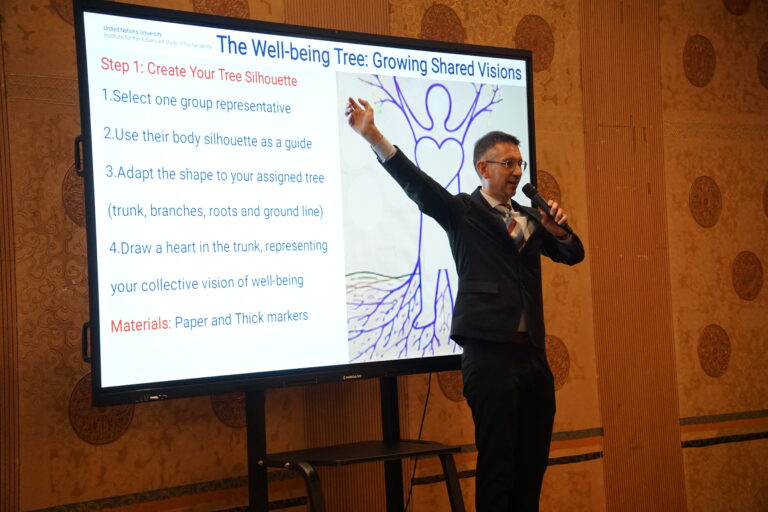
From 20 to 24 July 2026, UNU-IAS OUIK Research Fellow Dr Juan Pastor-Ivars contributed to the organisation and delivery of the Well-being Alliance for Research and Policy workshop in Thimphu, Bhutan. This activity is related to the UNU-IAS’ four-year (2024-2028) international research project, titled “Reconceptualizing Well-being to Foster a Sustainable Society through Youth and Indigenous Perspectives from the Global South.”
The workshop was jointly organised by UNU-EHS, UNU-IAS and UNU-IIGH, together with the Bhutan PEMA Secretariat and brought together around 50 participants, including 20 international experts and Bhutanese representatives from government, academia, civil society and monastic communities.
Dr Pastor-Ivars supported the workshop’s overall logistics and was responsible for the first day session on “Indigenous Knowledge and Well-being”, featuring Prof Michelle Cocks from South Africa and Dr Mandy Yap from Australia. The session shared Indigenous perspectives and disseminated data from field research conducted in South Africa the previous year. https://ouik.unu.edu/en/news/8841. He also facilitated the “Tree of Well-being” working group, which explored diverse understandings of well-being beyond GDP and the role of nature and socio-ecological relationships in human well-being.
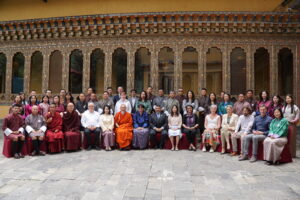
The workshop generated a roadmap for future research, policy innovation and collaboration, including potential cooperation with Bhutan’s PEMA Secretariat to pilot Gross National Happiness (GNH) inspired approaches beyond Bhutan. The workshop strengthened inter-institute collaboration and connected Global South-North knowledge with emerging international discussions on well-being and the post-2030 sustainable development agenda. These reflections also offer an opportunity for Japan, and Kanazawa in particular, to reflect on what well-being means in contemporary society and how long-standing relationships between people, nature and culture can contribute to this discussion.
*All photos provided by Arianna Flores Corral (UNU-EHS)