
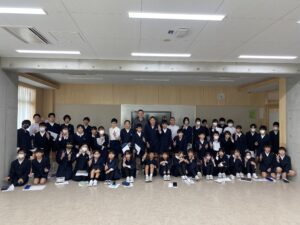
As part of the Sustainable Urban Nature Project implemented by UNU IAS OUIK, two linked educational activities were conducted with students from Municipal Saiou Elementary School in Kanazawa. The aim was to raise awareness of Kanazawa’s biocultural diversity and encourage younger generations to engage with urban nature and local landscapes.
Field visit on 7 November
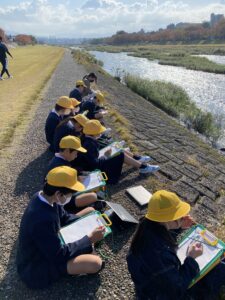
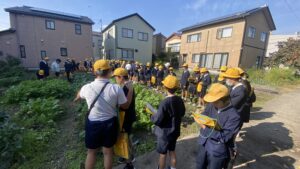
The first activity consisted of a field visit around the Saiou Junior School neighborhood. Students began by observing and sketching the landscape along the Sai River, learning how water systems shape both the natural and cultural fabric of Kanazawa. The group then walked through nearby residential areas, identifying fruit trees visible from outside private gardens, including loquat (biwa), pomegranate (zakuro) and persimmon (kaki). Dr Juan explained how traditional gardens combine aesthetic and productive functions, and how depopulation has led to the abandonment of many fruit trees. OUIK is exploring future community-based initiatives to document and reuse these resources.
The students also visited the exterior of the Hiraki and Sugita family gardens, where Dr Juan introduced the role of the Kuratsuki Canal in supporting garden biodiversity, including annual firefly (hotaru) monitoring. The visit continued at a community garden developed with NPO Tsuzuru Kanazawa, where students learned about urban farming and composting. The activity concluded at the Ikuyama House, an abandoned house rehabilitated for community use, where students expressed interest in learning about traditional housing, materials and lifestyles.
Classroom lecture on 11 December
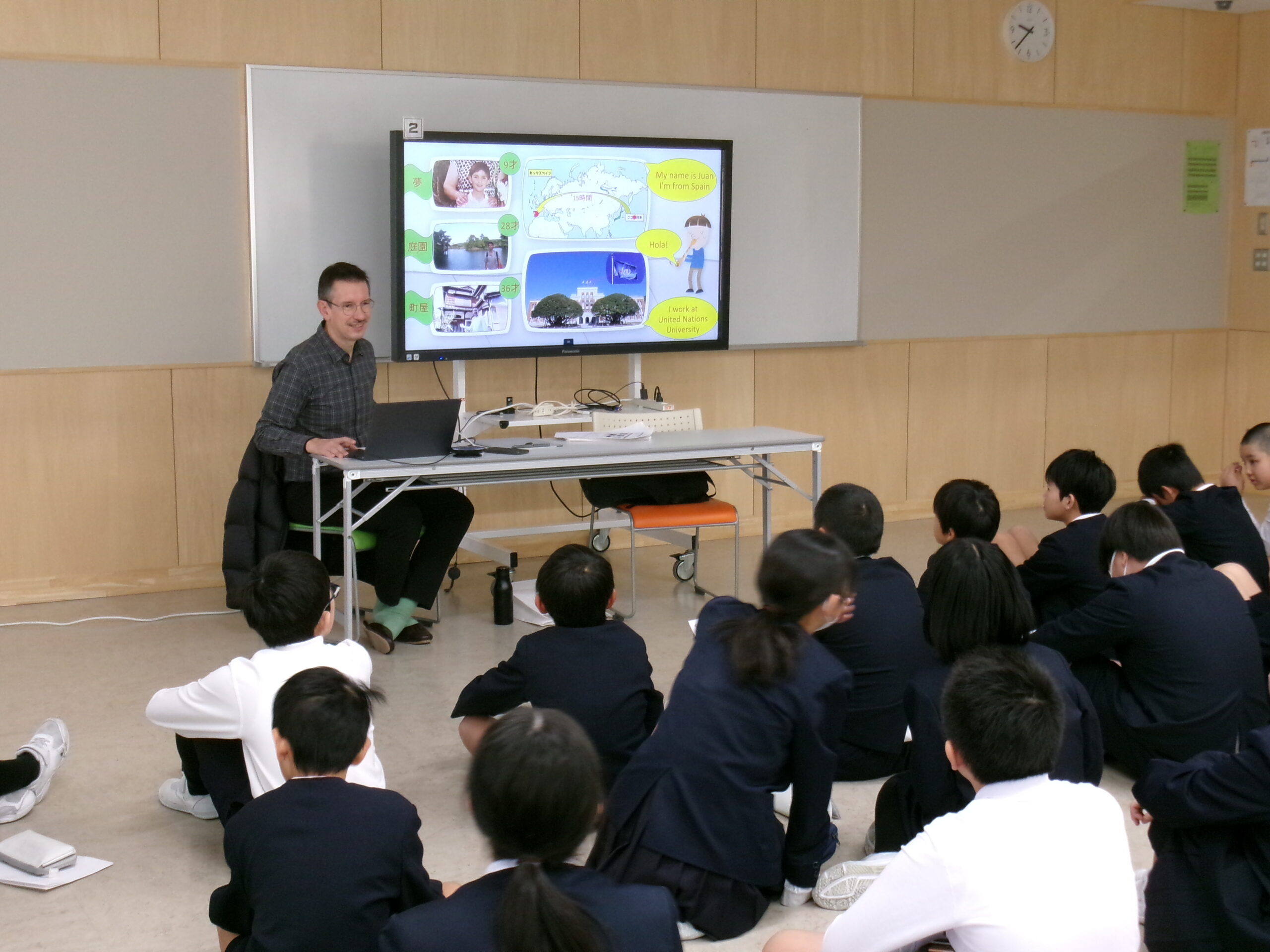
On 11 December, Dr Juan gave a follow-up lecture focusing on biological and cultural diversity and the links between them. Using examples from Kanazawa, including traditional crafts and Japanese gardens, he illustrated how living in harmony with nature has shaped local culture. Videos from the Meguru Niwa Kanazawa project and results from three years of wildlife surveys in local gardens generated strong interest and discussion among students.
Conclusion
By combining field-based learning with classroom teaching, OUIK aims to foster early awareness and appreciation of biocultural diversity. Engaging younger generations is essential for the long-term preservation of Kanazawa’s biological and cultural heritage, and OUIK will continue exploring ways to integrate these themes into educational activities and curricula.