Preparations for releasing the crested ibis on the Noto Peninsula in 2026 have been underway since before the earthquake. Following the earthquake and the heavy rain of 2024, the release of these birds is expected to symbolize the region’s recovery of satoyama and satoumi. However, since the situation in Noto still remains difficult, it is important that the project be carried out as a sustainable initiative that meets the wishes and current conditions of the local communities.
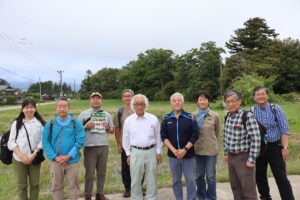
The Noto GIAHS (Global Important Agricultural Heritage Systems) Biodiversity Working Group has been developing a mechanism for citizen-participatory surveys of living creatures and implementing them with local residents. From June 13 to 16, 2025, eight members of the working group visited Sado to learn about citizen-participatory surveys of living creatures and efforts to release ibises that have been conducted on the island for many years.
The release of crested ibises began in Sado in 2008, and the population now exceeds 500. Additionally, the “Toki to kurasu sato” certification program, which promotes rice production friendly to living creatures, as well as surveys of living creatures in rice paddies, conducted in collaboration with farmers and children, are implemented as ongoing community-rooted activities. We visited Sado to learn about its efforts and apply them to future sustainable biodiversity conservation and local revitalization in Noto.
Learning from the Sado Ranger Office, Ministry of the Environment, and Sado Japanese Crested Ibis Conservation Center, Niigata Prefecture
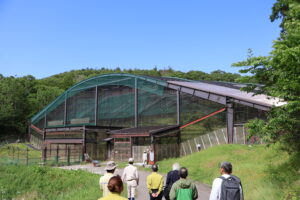
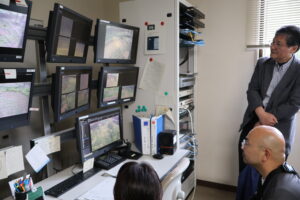
Mr. Takashi Kitahashi and Ms. Kanako Ikikame from the Ministry of the Environment, as well as Mr. Takashi Oya and Ms. Kiyoko Inoue from Niigata Prefecture, shared the story of breeding and training of crested ibises prior to their release. At the pre-release training facility, we learned how to acclimate the birds to people and agricultural machinery, as well as the measures taken against predators. We were also shown the remote monitoring system for the breeding cages. It was impressive to see the Ministry of the Environment and Niigata Prefecture work closely together in the same facility which reaffirmed the importance of collaboration among the national government, local governments, universities, and the private sector.
Discussion with Prof. Mitsuyo Toyoda
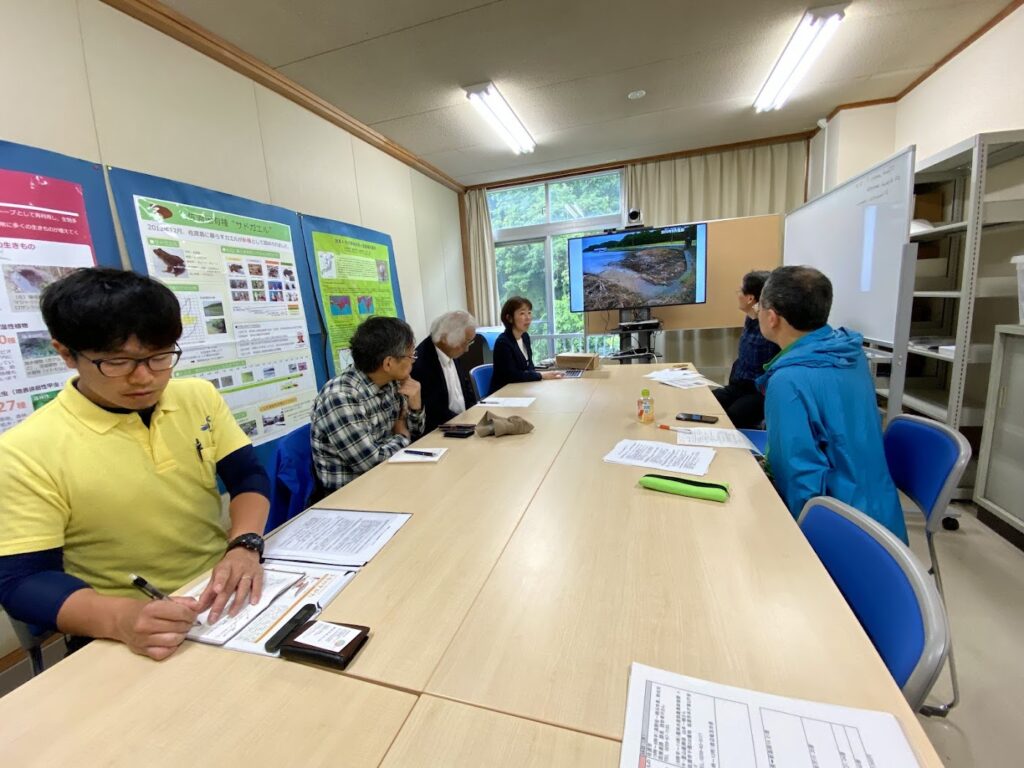
Professor Mitsuyo Toyoda from Sado Island Center for Ecological Sustainability Office for Community Design, Niigata University, introduced the efforts made on Sado to build consensus among residents and support their activities. Although some fishers from Lake Kamo where the Tenno River flows into, expressed their opposition regarding the nature restoration of the river, through neutral facilitation and careful discussions, they have reached a consensus and are now working together to create reed beds at Lake Kamo and provide environmental education for children. Their story of building a good relationship through consensus building was impressive. We realized the importance of taking a sociological approach, like Professor Toyoda’s, to carry out nature restoration efforts, such as returning the crested ibis to the wild. This approach connects various stakeholders, such as the government and citizens, and carefully picks up the voices of local residents.
Visit to the Tenno River Nature Restoration Site
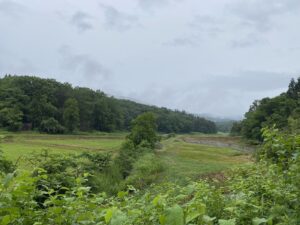
Under the guidance of Mr. Toru Itagaki, Chairman of Council of Wetland for Crested Ibis, we visited the Tenno River nature restoration site. Efforts are underway to widen the river channel, create a more natural river and wetland environment that can be used as a feeding ground for the crested ibis. Construction is currently underway and will be completed in a few years. The installation of a fishway made from an ate tree, which is also found in Noto, demonstrates the ingenuity of utilizing local resources.
However, both Sado and Noto are facing labor shortage. There is an urgent need to establish a long-term system for maintaining and managing these natural environments. In depopulated areas, we felt it was important to consider sustainable methods of nature restoration taking into account the maintenance and management needs.
Institute for Sado Ikimonogatari : Learning from Creature Survey Efforts
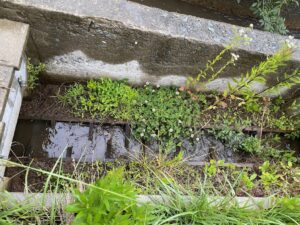
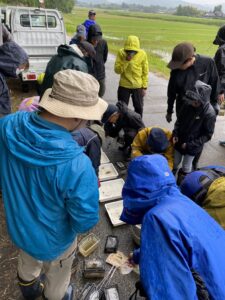
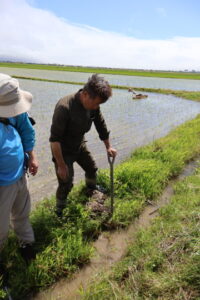
First, the Institute for Sado Ikimonogatari arranged for us to participate in one of the twice-yearly (June and August) surveys of creatures, which is one of the requirements for “Toki to kurasu sato” certified rice. We participated in the June survey by the Nagaune Producer’s Association, Agricultural Cooperative which has produced certified rice since the inception of the certification system. Despite the drizzle, many residents, including children, gathered to search for living creatures. We easily found loaches, tadpoles, frogs, dragonfly larvae, and many other creatures. From a distance, crested ibises searching for food could be seen in the neighboring rice paddy.
The next day, we interviewed Mr. Katsumi Oi and Dr. Asami Oishi from the institute about their work. They showed us their original illustrated field guide “Illustrated field guide of creatures in Sado paddies” and shared with us their challenges and the living creature surveys they have been conducting with farmers and children. Although they have not been able to make full use of the data they collected on the creatures, they mentioned that they are valuing the experience of getting to know the creatures more than the data itself. They also shared that the institute is facing challenges to continue its activities due to budget cuts and other factors. We were reminded of the need for sustainable organizational management and the difficulties involved.
Learning from Saito Farm’s Practices
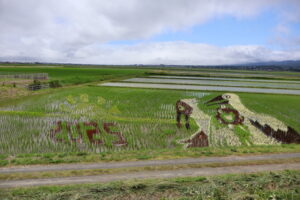
Under the guidance of Mr. Shinichiro Saito, we visited the “Toki to kurasu sato” certified rice paddies. We learned about the various efforts they have made to create rice paddies for the crested ibis. These efforts include paddies where rice paddy art has been created for the past nine years, as well as naturally cultivated rice paddies, farmed without any fertilizer or pesticides, where fishways and ditches have been created, and where weeding is being experimented with using a duck robot.
We learn that the “Fuyumizu tambo” (winter-flooded rice paddies), which originated on the Pacific Ocean side of Japan, are not suited to the environment of Sado on the Japan Seaside, which has high levels of precipitation. He mentioned that it is better to keep the water level low, just enough for it to accumulate in the wheel tracks. This benefits both the quality of the rice and the crested ibis, which has short legs. Mr. Saito’s trial-and-error experience will be very helpful for Noto, which has a similar climate to Sado.
Mr. Saito said, “Efforts will not last long if we only provide economic incentives to farmers.” He emphasized the importance of fostering farmers’ interest in living creatures and crested ibises.
Discussion with Sado City Representative
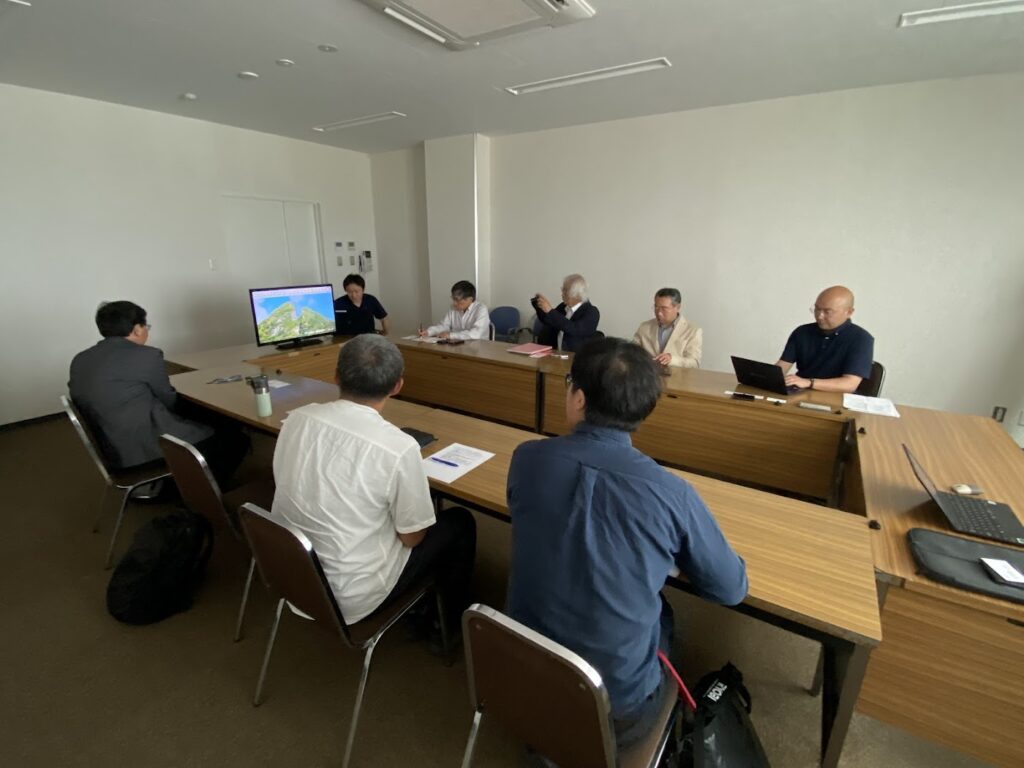
First, we spoke with Mr. Koichiro Takano, former mayor, and Mr. Takayuki Nishimaki, who was in charge of branding and sales channel development for ibis rice at the time. They told us about the background of the decision to release the ibis on Sado and their rice branding efforts. We learnt that the decision to release the crested ibis was made during a time when Sado rice was severely damaged by a heat wave caused by a typhoon. This event also coincided with a significant turning point in the merging of municipalities. It was impressed by what they said about the importance of cooperating with JA (the Japan Agricultural Cooperatives) to realize branded rice in that situation.
Next, Mr. Nagao Nakamura, Mr. Kazuki Yamamoto, and Ms. Mako Igarashi from the Agricultural Policy Division of the Agriculture, Forestry and Fisheries Department introduced the status of certified rice distribution and their collaboration with Coop Deli. They also introduced educational activities for children through the “Sado Kids Living Creatures Survey Team” conducted in cooperation with the Institute for Sado Ikimonogatari. Also, they introduced the efforts being made to provide certified rice in the school lunches.
More than 30 children participate in the “Sado Kids Living Creatures Survey Team” every year. They also introduced a case of a child who participated in this program became a city officer and now actively working in the community. This drew attention to the program as an effort to nurture the next generation and foster a sense of community attachment. Additionally, with regard to securing human resources to serve as instructors for the survey of living creatures, they mentioned about the instructor system implemented more than 10 years ago. Such a system seems effective in developing human resources, as those who participated in it are still active as instructors.
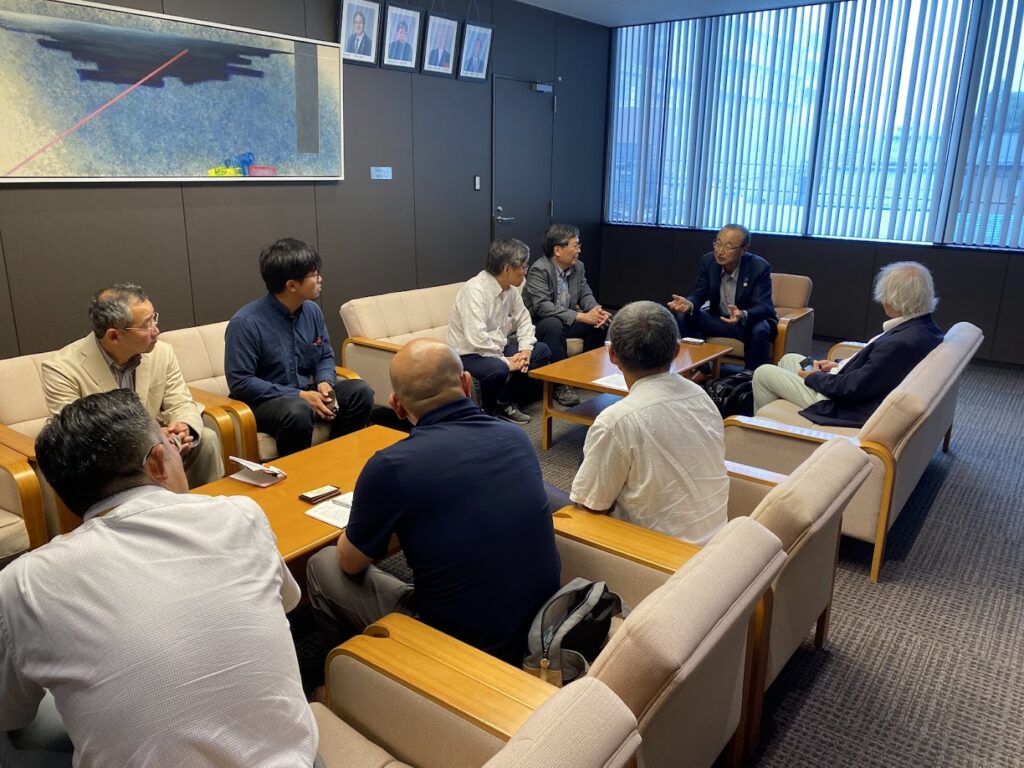
Lastly, we interviewed Mayor Ryugo Watanabe. He introduced the long history of efforts to release the crested ibis and branding of the certified rice. Sado Koshihikari rice is already a popular brand and is in high demand. For this reason, “Toki to kurasu sato” certified rice, which further incorporates farming methods that nurture living creatures, is sometimes sold under the name Sado Koshihikari to meet the demand for the latter. Therefore, in these cases, farmers are not fully compensated for their additional efforts. For this reason, Sado City is now promoting the sale of the certified rice through hometown tax payments. The mayor also emphasized the importance of engaging in careful dialogue and collaborating with a variety of stakeholders, including the JA and farmers.
During this visit to Sado, we experienced the wide range of efforts to return the crested ibis to the wild, as well as the passion of those who support these efforts. We believe that their experience on Sado is very important to us in Noto as we move forward on our journey to release the birds, coexist with nature, and maintain agriculture in the region. As we make progress towards recovery, we hope to work together with local people to think about a better relationship between people and nature.
This study visit was partially supported by the Taisei Corporation Public Trust of Funds for Natural and Historic Environment.
On May 22, 2025, the International Symposium “Nature, Culture, and Community: Rethinking Urban Connections from Kanazawa” took place at the Kanazawa Bunka Hall. As cities around the world continue to grow and evolve, the interconnections between nature, culture, and community are increasingly central to shaping sustainable urban futures. This symposium brought together local and international experts, as well as city representatives, to explore innovative approaches to urban ecosystem regeneration while respecting and celebrating cultural heritage.
The event began with opening remarks from Takashi Murayama (Mayor of Kanazawa City).
Rubleva presented on “Urban Nature for People and Planet: Restoring Ecosystems, Rebuilding Community”, and emphasized the growing recognition of nature’s critical role in building healthy, resilient cities. She stressed the importance of reconnecting cities with nature – not just for aesthetic value, but for their capacity to sustain life, foster culture and strengthen communities in this changing world.
Next, Coetzee presented on “Nature contributing to wellbeing, resilience, and connectivity in cities”, and showcased examples of urban initiatives that reflect strong links between ecological and human wellbeing, understanding the importance of partnerships and active community engagement.
Suzuki discussed “Cities for a society harmony with nature,” highlighting that Kanazawa has historically coexisted with nature. He emphasized that to restore biodiversity, it is necessary to simultaneously promote green conservation and restoration, climate change countermeasures, sustainable production, and consumption reduction. He also offered valuable insights connecting global, national, and local levels – from the implementation of the Post-2020 Global Biodiversity Framework (GBF), to Japan’s new national biodiversity strategy, and concrete applications of Nature-based Solutions at the local level.
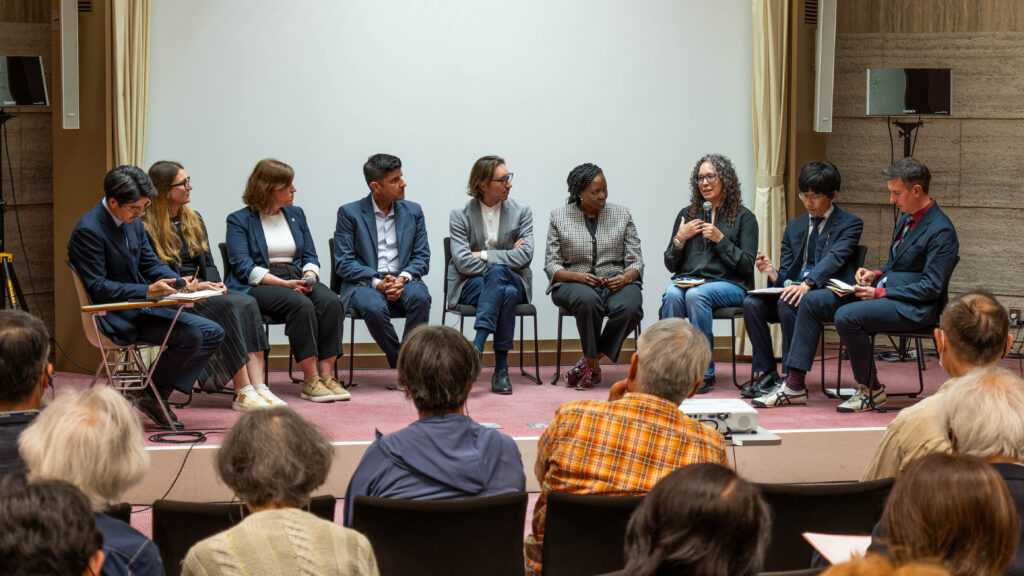
The second half of the symposium featured a panel discussion moderated by Togo Uchida (Executive Director, ICLEI Japan), with contributions from:
Dzheylan Safet Karaulan Sozuer (Architect & Urban Designer and Strategy Development & Program Coordinator, Istanbul, Türkiye)
Anthony Paul Diaz (Superintendent/Director, Seattle Parks and Recreation, Seattle, USA)
Francois Moreau (Head of Urban Ecology Agency, Paris, France)
Kimberley Anne Statham (Director, Urban Forestry, Toronto, Canada)
Laura Hernandez Rosas (Coordinator of Biodiversity Strategies, Mexico City, Mexico)
Judith A. Oluoch (Kisumu County Executive Committee Member-Minister, Water, Environment, Climate Change and Natural Resources, Kisumu, Kenya)
Juan Pastor-Ivars (UNU-IAS OUIK, Researcher, Kanazawa, Japan)
Tetsuhiro Ikeda (Kanazawa City Culture and Sports Bureau, Cultural Property Protection Division, Kanazawa, Japan)
The panel theme was “Community-Led Urban Regeneration: Culture, Nature, and Global Perspectives.” Panelists shared case studies from their cities:
Istanbul is advancing urban rewilding projects.
Seattle is engaging community volunteers in nature restoration.
Paris is ongoing the greening of the city hall square.
Toronto approaches biodiversity restoration through reconciliation with indigenous communities.
Mexico City is promoting the development and protection of urban nature through networks, women’s leadership, and community engagement.
Kisumu community-driven efforts are supporting the recovery of Lake Victoria.
Kanazawa contributes to ecosystem preservation through its water canals and garden systems, while promoting traditional knowledge and community efforts.
In the panel discussion, panelists – having participated in the pre-symposium site visits and workshops in Kanazawa, shared key takeaways and reflections on what they had learned and experienced. They spoke about the insights and inspirations they hoped to bring back to their own cities and contexts. The panelists praised Kanazawa’s unique water system and community lead fireflies conservation activities. The panelists also shared their challenges their cities are facing such as extreme heat, flooding, harmful pesticides, lake pollution and difficulties in securing funds. The panelists emphasized adopting a nature-based solution as well as increasing green and blue infrastructure would be the key to building a sustainable urban city. The discussion concluded that while each city has different challenges, community participation is critical to addressing biodiversity.
To conclude the symposium, Shinobu Yamaguchi, Director of UNU-IAS, emphasized that urban ecosystem restoration is fundamentally about people’s involvement – nature thrives when people are engaged. Referring to the examples shared by panelists, she remarked that restoring ecosystems also means restoring relationships – between people and place, between past and future, and among the diverse communities who share the same urban space.
The symposium was co-hosted by UNU-IAS OUIK, the Ministry of the Environment, Japan (MOEJ), Kanazawa city. It was supported by United Nations Environment Programme (UNEP), Local Governments for Sustainability (ICLEI) Japan, Ishikawa Prefecture, The Hokkoku Shimbun.
For more information, please watch the following video (recording of the symposium).
On June 27, 2025, the United Nations University Institute for the Advanced Study of Sustainability (UNU-IAS OUIK) conducted a citizen-participatory firefly survey in the Kikugawa area of Kanazawa City. This activity was part of OUIK’s SUN Project (Sustainable Urban Nature Project) and was co-hosted with the Kikugawa Community Center.
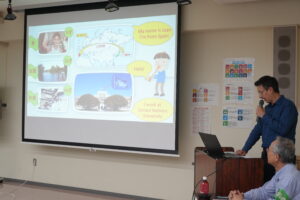
Prior to the survey, Mr. Mitsuhide Shinmura (Chairman of the Kanazawa Firefly Society, Secretary-General of the Ishikawa Firefly Society), gave a lecture. Drawing on his many years of experience in firefly conservation in Kanazawa, he explained in detail about the ecology of fireflies, the conditions of their habitats, and the importance of community-based conservation activities. He mentioned, “Fireflies symbolize the richness of urban nature. Water channels and gardens remaining in the community support the habitats of fireflies.”
Following his talk, Researcher Juan from OUIK explained the significance of “biodiversity” and “biocultural diversity” in urban environments. He introduced how familiar natural settings like water channels and gardens in Kanazawa are deeply connected to cultural practices, emphasizing that protecting and nurturing such urban nature contributes to regional sustainability.
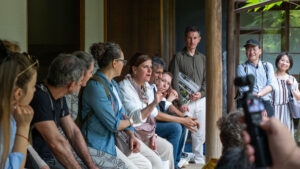
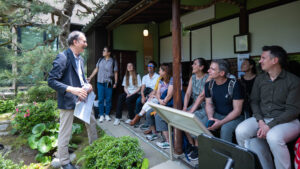
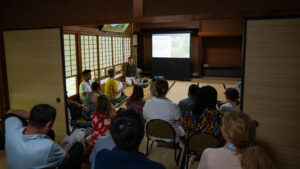
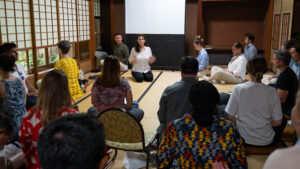
A lecture on Fireflies and Biodiversity was held prior to the Firefly survey
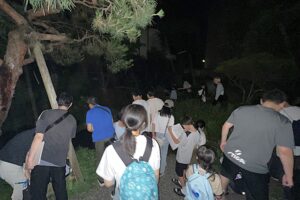
Participants during the Firefly survey
After sunset, participants observed fireflies while walking along the Kuratsuki water canal and around garden ponds, with a map in hand. Fireflies were spotted near water channels and in private gardens, revealing that natural life persists even within the city. Participants recorded the number of fireflies observed at each point on survey sheets and submitted their results.
Notably, this year, fewer fireflies were observed compared to last year, likely due to climate and environmental conditions. Continued monitoring and record-keeping are necessary to track changes in the urban natural environment over time.
Through these activities, we aim to deepen understanding of biodiversity in urban areas and foster community efforts to coexist with nature.
In the first half of the lecture, Dr. Akio Takemoto (Head of Programme and Administration, UNU-IAS), delivered a talk titled “Climate Change Policy and SDGs: What Are the Current Global Status and Challenges?” Dr. Takemoto outlined the Paris Agreement and the SDGs frameworks. He also explained how international treaties shape domestic policies, discussed the risks associated with renewable energy, and addressed challenges in Japan’s energy and food self-sufficiency. Throughout his lecture, Dr. Takemoto emphasized the importance of youth participation in building a sustainable future in an aging society.
In the second half, Dr. Juan Pastor-Ivars (Researcher, UNU-IAS OUIK) gave a lecture in English titled “Addressing the Biodiversity-Climate Nexus through Nature-based Solutions — Kanazawa Model.” Starting from the close connection between climate change and biodiversity (the biodiversity-climate nexus), he presented practical examples of nature-positive urban development in Kanazawa. These included initiatives utilizing natural resources such as traditional gardens and shrine forests as green infrastructure, repurposing vacant land, and collaborating with local residents to conserve the environment. The lecture introduced approaches to applying international concepts like Nature-based Solutions, Just Urban Transition, and Climate Justice to local initiatives.
One of the most thought-provoking moments for the participants came with the question: “What does justice mean?” The students came to understand that climate change is not only about the environment—it is also a social issue, connected to population changes, gender equality, poverty, and international politics.
The next lecture is scheduled for July 9, where participants will explore regional issues and resilience using case studies of the Noto Peninsula earthquakes and heavy rain disasters
On May 21, 2025, as part of the International Symposium on Urban Ecosystem Restoration, an on-site excursion exploring the natural and cultural resources within Kanazawa City was held organized by the United Nations University Institute for the Advanced Study of Sustainability Operating Unit Ishikawa Kanazawa (UNU-IAS OUIK) and Kanazawa City.
Approximately 20 participants, including city representatives and experts from both Japan and abroad, visited and observed Kanazawa’s waterfront environment, cultural and historical landscapes, and conservation and revitalization activities, deepening their understanding of efforts to create a harmonious coexistence of urban nature and culture.
Experiencing Kanazawa’s Water Culture
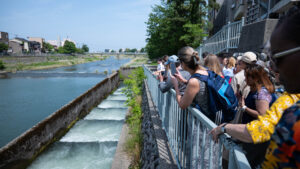
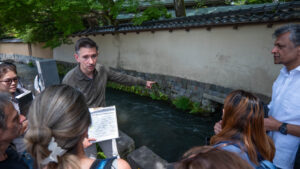
In the morning, the excursion began with a walk along the Sai River. This river, flowing through the city center, is a beloved recreational spot for residents, and the group visited the Sai River Bridge, which has a history of 100 years. Next, participants observed the Kuratsuki Water canal, developed as an urban water supply, and the revitalized “Seseragi Street,” which was transformed through a project that unsealed a formerly covered water canal. This effort was introduced as a collaboration between citizens and local government to restore the water canal as a natural urban landscape.
Historic Gardens and Urban Biodiversity
At Senda Family Garden, participants experienced the coexistence of samurai culture and urban nature through a tea ceremony. They also learned about the garden architecture that incorporates water features at the Nishi Family Garden, the cultural significance of these sites, and conservation efforts through public-private partnerships. The “Historic Gardens Promotion Plan” for Kanazawa was introduced, fostering hopes for new mechanisms involving citizens and tourists in preservation efforts.
Balancing Tourism and Sustainability
In the afternoon, the group visited Higashi Chaya District, a popular tourist destination in Kanazawa. There, efforts to balance increasing tourist flow with the preservation of local cultural resources were explained. After that, at Shinrensha Temple, participants learned about the roles of Zen and urban nature, especially in a society facing population decline, and discussed the potential for such places to contribute to sustainable urban development.
Participants Feedback
Participants shared positive impressions, including, “I was amazed by how lively and rich the cultural life centered around water is within the city,” and “The involvement of the community in urban renewal efforts was truly inspiring.”
This excursion provided an experiential opportunity to learn about the role of culture and citizen involvement in urban natural restoration, serving as a valuable learning experience ahead of the symposium scheduled for the following day.
In Kanazawa City, many historical heritage sites, such as buildings, irrigation canals, gardens, and sacred forests, reflect a deep connection between culture, nature, and history. The City of Kanazawa actively conducts research and preservation efforts to pass these heritage treasures to future generations.
During these months, multiple events are underway to experience the city’s historical heritage, including the event that was held on October 12th at the Nishi Family Garden, which was recently inscribed in the process to be designated as a national scenic spot.
Invited by Kanazawa Cultural Department, OUIK’s Research Fellow Dr. Juan provided a lecture and garden tour for 43 attendees.
The event was attended by the Mayor of Kanazawa City, Takashi Murayama, who opened with an introduction, highlighting the importance of Kanazawa’s garden culture and its growing international recognition. He acknowledged the city’s designation as a UNEP Model City for the Generation Restoration project and expressed gratitude to OUIK for its vital role in promoting Kanazawa’s environmental, economic, and cultural values through the Sustainable Nature Project.
In the presentation, Dr. Juan began by describing the natural features surrounding Kanazawa, including its mountains and abundant water resources. He highlighted the unique qualities of Kanazawa’s gardens, shaped by the Hokuriku region’s climate and a supportive social structure established by the Maeda clan in the 16th century. This system allowed a middle class of artisans to flourish, many of whom sought to recreate a miniature Kenrokuen in their homes, nourished by the local canal network.
Dr. Juan then detailed the network of canals and gardens that still exist in the city today. He addressed the challenges these gardens face due to depopulation and lack of maintenance. In the second part of the presentation, he emphasized how this connectivity between canals and gardens is essential for maintaining ecological functions and supporting biodiversity.
To prove this point, Dr. Juan shared findings (2021.9, 2021.11) from the wildlife survey conducted in thirty city gardens, using Mr. Nishi’s garden as an example.
This survey, which used different methods like in situ observation, sensor cameras, IC recorders, and DNA analysis across various seasons, identified valuable species such as the Ayu fish (Plecoglossus altivelis), Peregrine falcon (Falco peregrinus), Euphaedusa tau snail, and fireflies (Lampyridae).
All these results reinforce the idea of the strong connection between cultural preservation and natural conservation since many of these animals have established their habitat in the gardens because they found an environment protected from rapid urbanization, and today, they represent true natural reservoirs.
Through Dr. Juan’s presentation, participants gained a deeper appreciation for the aesthetic, cultural, and ecological values of the Kanazawa Gardens. The discussion emphasized establishing monitoring systems to track animal life in the coming years to ensure ecological continuity. After the presentation, the attendees freely walked around the garden, enjoying a sunny pre-autumn day.
*About Nishi Family Garden: It was created in 1916, Taisho period, in a residential area of the old city, Nagamachi, and has retained its original appearance since then. The adjacent Onosho water canal irrigates the central garden pond, which is surrounded by impressive and large landscape stones, providing from various places of Japan; they are beautifully displayed together with arched bridges and water basins, balanced with high artificial hills located at the rare part of the garden, planted by native vegetation such as pine trees, azaleas, mapples etc, providing to the viewer a deep sense of space and secluded atmosphere reverberating the features of Kanazawa nature.
The final presentation session for the which was newly launched by OUIK this fiscal year, took place on September 16, 2024. The aim of this program is to cultivate global leaders from the local community to tackle global challenges such as sustainable development and climate change. Thirteen high school students from Kanazawa City participated and presented the results of their six-month study on local environmental issues and climate change.
During the presentation, the 13 participating high school students shared the outcomes of their inquiry projects on local environmental issues, which they worked on during their summer vacation. Each student presented solutions and proposals they developed addressing the impacts of climate change and specific environmental problems in their region, actively responding to questions from the audience.
The themes presented included:
– Utilization of abandoned farmland
– Moving away from a car-dependant society
– Proposals for improving ports and surrounding environments
– Reducing emissions of alternative fluorocarbons
– The relationship between Ishikawa/Kanazawa and water
– Green infrastructure in Kanazawa
– Circular economy
The students’ presentations were based on specific data and often suggested realistic solutions. Notably, proposals that included collaboration with local residents and cooperation with government authorities garnered significant interest from participants.
Next Step: Delegation to the 2024 UN Climate Change Conference (UNFCCC COP 29)
Following the presentation, the participating students underwent individual interviews, and Kanazawa Izumigaoka High School student Nanako Kaji and Kanazawa University High School student Mari Honda were selected. These two will represent the UN University delegation and Kanazawa’s youth at the 29th Conference of the Parties (COP29) to the United Nations Framework Convention on Climate Change, scheduled to be held in Azerbaijan this November. They are expected to actively voice the perspectives of Kanazawa’s youth on an international stage and contribute to global climate change initiatives.
This presentation event served as a highly meaningful opportunity to showcase how local youth engage with global issues and propose solutions from their own perspectives. Participants, inspired by the students’ passion and initiative, hold great expectations for their growth as leaders who will support not only their local communities but also the future of the world.
Updates on the activities of the members selected for COP29 will be communicated through the official website and social media of the United Nations University OUIK, so please stay tuned!
Click on the link below to know more about OUIK’s Youth Empowerment Program:
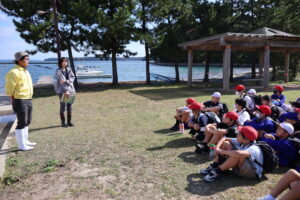
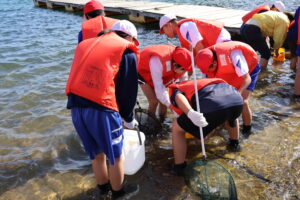
Following the recent earthquake, there were concerns about the feasibility of this year’s survey. However, on October 25, 2024, sixth-grade students from Nakajima Elementary School in Nanao City successfully completed the Survey of living creatures in satoumi. The event was organized by Nanao City, with support from specialists in the field, including Mr. Arakawa (Noto Marine Center) and Ms. Koyama (Researcher, UNU-IAS OUIK).
Ms. Odake from the Nanao City’s Agriculture, Forestry, and Fisheries Division began the event by welcoming everyone. Afterward, Mr. Arakawa, provided an overview of the survey methods and explained about safety precautions. The students were split into five groups, and equipped with the necessary tools, they began their survey. Using box goggles and nets, they set out in search of various creatures. Some children crawled on all fours, striving to catch crabs hiding between the stone steps, while others became so absorbed in their exploration that they waded waist-deep into the water. When the time was announced to wrap up their collecting, some students voiced their disappointment saying, “Wait, do we have to stop?”, indicating they were eager to continue their search for more creatures.
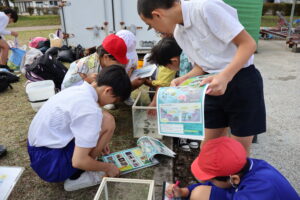
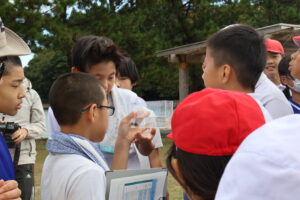
Next, it was time for species identification. The species collected were observed separately from seaweed. The students documented the organisms they found on the worksheets and newly created complemented materials by the Noto GIAHS Biodiversity Working Group. Mr. Arakawa explained about the species found and that creatures from the same family of Shitadami shells are edible. He also explained that there is a type of shellfish called Sugai (Lunella correensis), which looks similar to Shitadami but has a different shell lid shape. Crabs found by each group were gathered and placed in a single container for comparison. Two different types of crabs, Isogani (Hemigrapsus sanguineus) and Gazami (Portunus trituberculatus), were observed, revealing that the shape of the fifth leg on the Gazami crab is flattened, making it well-suited for swimming.
At first glance, an artificial coastal shore seemed empty, but when we took a closer look, students were able to find a variety of marine life there. Due to the effects of the earthquake, children may have fewer opportunities to go outside and connect with nature. However, OUIK hopes that this survey has helped the students appreciate the richness and charm of their local coastal environment. We also hope that they will continue deepening their understanding of how their daily lives are connected to the sea. Under the clear autumn sky, the shining smiles of the children were truly the most memorable sight of all.
OUIK’s Researcher, Dr Juan, has initiated Participatory Action Research (PAR) as part of the Sustainable Urban Nature Project in the Kikugawa district, Kanazawa City. This year, emphasis is placed on citizen participation, environmental conservation, and revitalization of neglected spaces in the region through comprehensive research.
This Participatory Action Research (PAR) activity includes collaborative problem-solving, raising awareness, and empowering citizens to adapt effectively to economic and environmental changes.
The PAR initiative in Kikugawa aims to cultivate a nature-rich community through the following five key actions:
Promoting green (urban nature) growth
Monitoring biodiversity
Maintaining green spaces
Co-creating community gardens
Encouraging eco-tourism
To kick off the PAR activities, the first session titled ” Let’s increase the Greenery of Cities by Planting Flowers” was held on May 14. Fifteen predominantly female participants engaged in discussions.
Dr Juan introduced PAR in the Kikugawa district and discussed the benefits and challenges of local greening efforts. Subsequently, participants, under the guidance of a local gardener, engaged in planting activities, sharing insights on land preparation, planting techniques, and maintenance.
Following the planting session, Juan evaluated participants’ awareness of nature’s benefits, challenges in expanding nature-rich communities, and indicators of strengthened community cohesion through discussions and surveys.
The next PAR session is scheduled for June 28. This session will primarily focus on biodiversity monitoring, with citizen scientists conducting firefly surveys along the Kuratsuki water canal and in two designated gardens within Kikugawa.
This project continues to drive positive change in the Kikugawa district, leveraging community participation and sustainable practices to create a more nature-rich and resilient urban landscape.
At UNU-IAS OUIK, we are working towards the swift restoration of daily life and activities in the communities alongside the satoyama and satoumi of the Noto Peninsula, as well as aiming for a creative reconstruction that leverages the unique characteristics of the Noto region. Under close coordination with local governments and stakeholders, we are striving to grasp the needs of the region while advancing collaborative efforts with the local community.
JFUNU is a public interest corporation established in 1985 by individuals, companies, and organizations in Japan to support the activities of the United Nations University. It operates an office within the United Nations University headquarters facility in Shibuya, Tokyo, supporting the activities of the university and its students.
Donations received through this program will be fully allocated to organizations working on sustainable regional restoration and reconstruction in this area, focusing on leveraging the satoyama and satoumi, for the benefit of those affected by the earthquake.
We sincerely appreciate your cooperation and support.
How to donate?
1. Please fill in the donation application form at the URL below.
Donation Application Form URL:https://forms.office.com/r/ucR1p6GghH
2. Please transfer the funds to the account below.
From Japan:
MUFG Bank Ltd. (Financial Institution Code: 0005)
Shibuya Branch (Branch Number: 135)
Account #: 2872951 (Ordinary Account)
Account Name: “Zai Kokurendaigaku Kyoryokukai Saigai Fukko Shien Bokin”
* Please note that you will be responsible for the bank transfer fee.
From Overseas:
Beneficiary Bank: MUFG BANK, LTD.
SWIFT Code: BOTKJPJT(BOTKJPJTXXX)
Beneficiary Account Number: 135- 2872951
Beneficiary Name: JFUNU
Payee’s Address: 5-53-70 Jingumae, Shibuya-ku, Tokyo 150-8925, JAPAN
TEL: 81-3-5467-1369*This account is only for JPY Denomination. Donation in other currencies will be automatically converted to yen in Japan side.
*Please note that you will be responsible for the bank transfer fee.