Kanazawa City has been recognized this year as a model city for urban ecosystem restoration in the “Generation Restoration Project,” which is part of the UN Decade on Ecosystem Restoration resolved at the UN General Assembly in March 2019. This project aims to implement a package of measures to address the political, technical, and financial challenges to promote ecosystem restoration in urban areas within the framework of the “UN Decade on Ecosystem Restoration and the Global Biodiversity Framework” (in particular, Target 12).
At the core of the project will be 8 pilot cities and 11 model cities selected through a September 2023 selection process. These cities will support each other, particularly the pilot cities, in scaling up the implementation of Nature-Based Solutions (NbS).
From December 13 to 15, 2023, representatives, sponsors, and experts from the pilot and model cities gathered in Paris, France, for a three-day kick-off meeting and workshop. They shared successful examples and project plans from their respective cities, engaging in discussions that included expert input. Yoko Tomita (Programme Coordinator, UNU-IAS OUIK), represented Kanazawa City and shared examples of urban nature conservation and restoration efforts in the city. She particularly focused on biodiversity initiatives that leverage historical and cultural landscapes, such as irrigation systems and Japanese gardens, as well as responsible tourism strategies implemented as part of the SDG Future Cities initiative. Participants provided feedback emphasizing that “the protection of the landscape through the preservation or restoration of cultural heritage, along with the concurrent protection of urban nature and biodiversity, is unique and reflects the cultural identity of the region.”
Toronto and Seattle, also model cities, introduced their conservation efforts regarding urban and suburban forests, alongside volunteer initiatives.
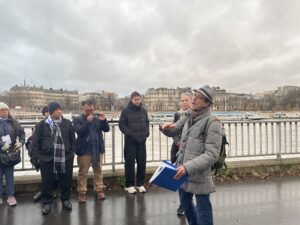
The workshop included a guided tour of Paris led by a city official. The tour featured the Jardins de l’Archipel des Berges de Seine Niki de Saint-Phalle, a small park created by connecting five moored barges along the Seine River, as well as community gardens, pedestrianized streets near schools, and areas adorned with flowerbeds and trees. The official noted, “Until a few years ago, there were only three types of fish in the Seine River, but now there are dozens of species. Along with this, the number of bird species living in Paris has also increased. One of the reasons for the success of the project was the subsidies provided to farmers in the upstream areas to promote organic farming without the use of pesticides, ultimately improving the river’s environment.”
Ishikawa Prefecture is home to an abundance of ingredients nurtured by its rich natural resources from both the sea and land. The Kaga region has developed a unique culinary culture that evolved during the Edo period, influenced by both samurai and commoners, while the Noto region has its own distinctive food culture shaped by its harsh natural environment and vibrant festival traditions. Many domestic and international travelers visit Ishikawa specifically to enjoy this delightful “food.”
However, alongside this appealing culinary heritage, there are numerous challenges such as the preservation of these traditions, a lack of successors among producers, and food waste. In the third installment of this seminar, we learned about efforts and challenges to achieve more sustainable tourism through discussions with chefs and culinary researchers, all centered around the theme of food.
An everyday food issue that impacts the entire planet
To begin, Yuya Tsuda, a researcher at OUIK, introduced the topic ” Food Tourism and the SDGs”. He presented examples of domestic and international tourism related to food. It was noted that “Japanese cuisine” is registered as a UNESCO Intangible Cultural Heritage and that it is said to contribute to the UN’s Sustainable Development Goals, specifically Goals 2, 4, and 12.
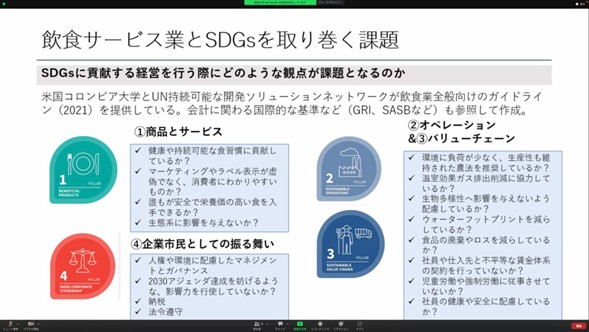
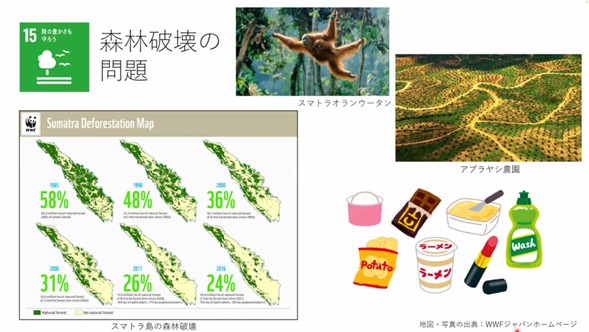
Next, Sayako Koyama, a researcher at OUIK, gave a lecture titled “The Connection Between Food and the SDGs & Introduction to OUIK’s Initiatives.” She presented several critical issues: more than 60% of food in Japan is dependent on imports, 6.46 million tons of food are wasted annually, the sustainable fish stock is continuously decreasing due to overfishing, and the increasing deforestation of tropical rainforests to produce palm oil—an ingredient used in many food products—is leading to a loss of rich biodiversity in other countries. These points emphasized the close connection between food issues and our daily lives.
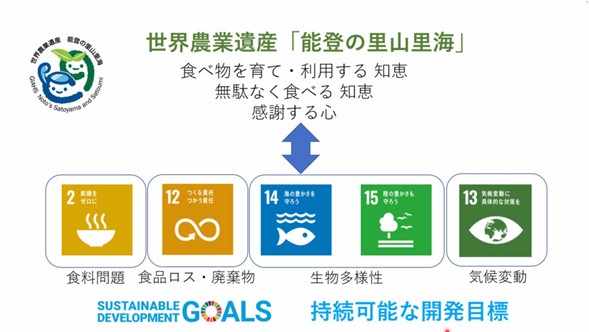
On the other hand, it was mentioned that Ishikawa Prefecture has many positive aspects that can contribute to the SDGs. An example of this is the world agricultural heritage known as “Noto’s Satoyama Satoumi.” In Noto, there is a tradition of producing food locally and effectively utilizing that food, which is closely related to the SDGs. The richness of both land and sea not only helps to reduce carbon dioxide emissions by minimizing the transportation of ingredients from far away but also contributes to climate change mitigation. We must also not forget the existence of traditional wisdom that allows for the long-term preservation of harvested goods, such as through fermentation, without the use of electricity, thereby reducing waste.
The wisdom of growing and utilizing food, eating without waste, and having a heart of gratitude is essential knowledge for addressing various global challenges. Koyama emphasized that it is very important to pass these teachings on to the next generation of children and to share them with the world.
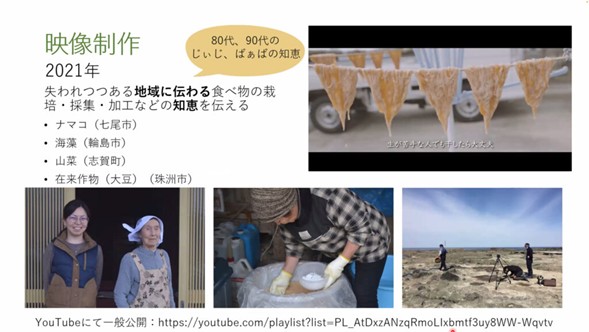
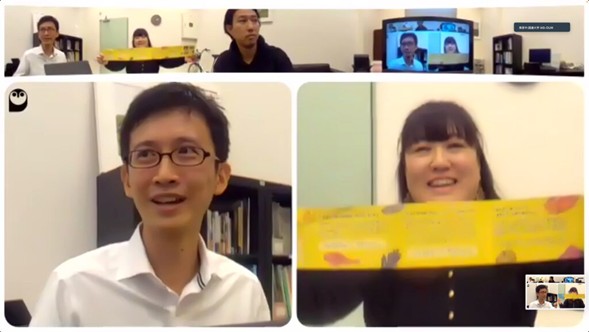
As part of the initiatives by the UNU-IAS OUIK, we have created a video and a picture book titled “Let’s Make a Harvest Feast!” to convey the richness of agriculture, nature, and culture in Noto to children. Additionally, many individuals who know the traditional knowledge are the elderly, so we believe we can contribute to the preservation of local knowledge by documenting it in videos and sharing them on YouTube. Please here to watch them.
Guest speakers presented their individual case studies
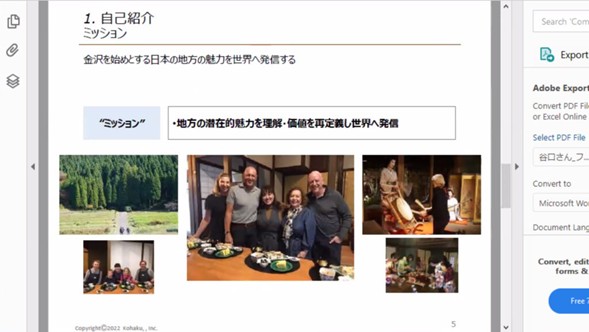
Naoko Taniguchi, a director at Kohaku Co., Ltd., is a culinary researcher and food coordinator who is actively engaged in sharing Kanazawa’s culture and regional food heritage through experiential cooking programs for inbound visitors. She collaborates with university students on initiatives to preserve and promote local culinary traditions. Additionally, she has a close relationship with Omicho Market, where she implements food education programs like the “Parent-Child Omicho Experience.” She also manages the gourmet e-commerce site “Ichiba no Hako,” which features local delicacies, working alongside market vendors to encourage more people to visit Kanazawa.
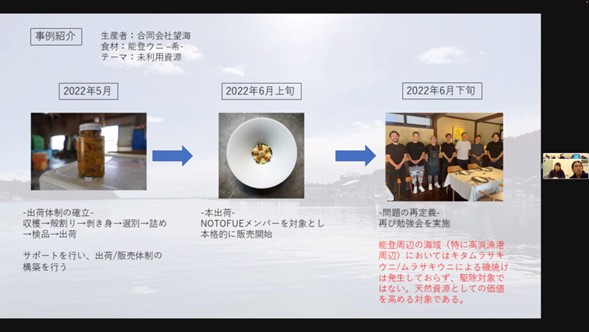
In the 2021 Michelin Guide for Hokuriku, Chef Umetaro from “respiración” in Kanazawa received two stars and a Green Star, highlighting the richness of regional ingredients. He shared some pressing issues, such as overfishing, the aging of local farmers, and a lack of successors, which has led to a decline in the care for the satoyama and its ecosystems. He pointed out that without successors, not only does food production diminish, but the traditional skills passed down through generations are also lost, along with the culture of the area. Reflecting on the question, “What can chefs do?” he partnered with like-minded chefs in Ishikawa Prefecture to establish the general incorporated association NOTOFUE. Their initiatives include utilizing underused fish, such as types of sea urchin previously targeted for culling, and working to connect the environment and resources of Noto’s satoyama and satoumi to future generations.
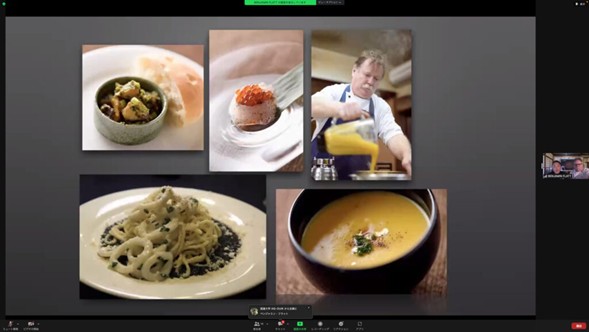
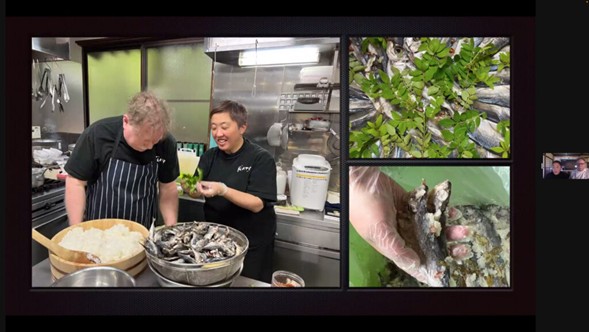
Benjamin Flatt, the owner-chef of “Noto Italian and Fermented Food Inn Furatto,” and his wife, Tomoko Funashita, shared some insights into the food culture of Noto. They explained that the practice of fermenting fish has existed for over a thousand years, with fermentation and aging occurring naturally without any temperature or humidity control. They described it as “fermentation being an incredible bundle of wisdom,” noting that the food often tastes even better than when it was initially marinated.
They also highlighted the unique use of rice bran, a byproduct of rice, which is rare in other parts of the world. This method not only enhances the flavor but also increases the nutritional value, making it an all-around beneficial practice. They believe that by incorporating such fermented foods into the next generation’s diet, they can contribute to the sustainability of Noto.
Additionally, he mentioned the reasons why fermented foods are still prevalent in Noto. First, the region boasts an abundance of seafood. Second, due to limited transportation development, Noto had to rely on local production and consumption. Third, the climate, with its hot summers and cold winters, allows for the repetition of fermentation and aging processes. Fourth, the local food culture is closely intertwined with traditions and festivals, resulting in the preservation of culinary practices alongside the culture. He stated that in order to pass on the food culture to the next generation, it is essential to promote sustainable tourism that is aligned with the current conditions of the region. However, a significant challenge lies in how to enhance the recognition of the value of the culture and traditions held by the local residents who welcome visitors.
The challenges related to food and tourism were discussed In the panel session
Next, the four guest speakers and Researcher Tsuda began a discussion that explored further the earlier examples.
Ms. Taniguchi focused on Omicho Market, which has seen an increase in both domestic and international visitors, analyzing it from the perspective of the SDGs. This market, with a history of 300 years, provides a clear insight into food culture. Visitors can engage with knowledgeable vendors and experience the changing seasons through fresh seasonal ingredients, making it a unique place where both locals and tourists can purchase the same items as professional chefs. However, Mr. Taniguchi noted some challenges facing Omicho Market, particularly the lack of successors to continue the tradition. Additionally, many fresh fish shops close on Wednesdays, leading to an increase in items that need to be discarded on Tuesdays. To tackle this issue, Ms. Taniguchi is working to sell these products through e-commerce platforms to reduce waste.
She also mentioned a lesser-known initiative in Kanazawa City that collects leftover fish from Omicho Market and processes it into fertilizer. This fertilizer is then used to grow vegetables, creating a sustainable cycle that she hopes more people will learn about. To raise awareness of how this market operates in a circular manner, she has launched the “Ichiba Basket Project.”
Mr. Flatt talked about the differences in values between Noto and his home country, Australia. Ms. Funashita discussed why it’s important to pass down Noto’s traditional skills to the next generation and mentioned some challenges, giving more specific examples.
Mr. Ume rovided an explanation about how local food ingredients are offered due to the management of Satoyama and Satoumi by human hands.
After that, participants discussed effective ways to pass down knowledge to future generations. They split into two groups for a workshop to share more ideas before wrapping up the seminar.
The speakers at this event all do unique work related to SDGs (Sustainable Development Goals) and tourism, especially in the food area. We hope that by using local shops and accommodations, participants will learn how to combine food and SDGs in their activities.
At present, over 180 companies, organisations and individuals are registered as partners of IMAGINE KANAZAWA 2030, and are studying each other’s activities through workshops and exchange meetings.
The theme of the 19th SDGs Café was “how are partnerships developing in Kanazawa?”. The participants revisited the meaning of partnerships, going beyond their own framework, from the perspective of “collective impact”, which refers to joint initiatives with shared visions.
Examining the change in people’s awareness toward the ideal partnerships realised in 2030
Our guest this time was Hiroki Uda, a pharmacist working for Kanazawa City Hospital and the president of Yaku-yaku Renkei SDGs Kanazawa (pharmacist partnership). He became interested in the SDGs when he attended a lecture by OUIK office manager Ms. Nagai, and he started to explore partnerships aimed at solving the problem of unused medicine.
Yaku-yaku Renkei SDGs KANAZAWA is intended for all people involved in medicine who are working to secure health and welfare, including pharmacists working for pharmacies and hospitals. In the field of medication, a cross-sector partnership such as this is truly groundbreaking.
The preamble of their bylaw declares that “all the activities aim to solve social problems in order to attain SDGs”. At present, the two projects of “saving children from COVID19” and “eliminating unused medicine” are underway. Unused medicine refers to medicine that is left unused in homes. It is estimated that 10 billion ~ 874.4 billion yen worth of medicine is left unused annually. Most of the cost for such unused medicine is borne by social insurance expenses (taxation); therefore, this is a serious problem for the whole country. We are now developing an app in collaboration with Code for Kanazawa to solve this problem.
How has people’s awareness of the SDGs changed? First, I would like to talk about the change in my awareness. I did not know anything about the SDGs one year ago. I realised the SDGs are issues of relevance to me when I attended a lecture by the OUIK office manager Ms. Nagai in the Sightseeing Course of Kanazawa Volunteer College. A period of uncertainty began for me, and I was asking myself what I could do toward the SDGs in my life and work.
Then, I listened to Mr. Hiroishi’s keynote speech titled “Linking SDGs to local innovation” at the Hokuriku SDGs Future City Forum (click here for the report) held online in January 2021. I recognized that I could create business and jobs by applying the SDGs concept to local innovation, and started to think with excitement about trying it. Two months later, I organised an online workshop, inviting my friends. 11 participants agreed with my proposal and became facilitators of the initiative. In this way, I recognised the SDGs as my own issues and changed my awareness, and then I started to take action.
Partnerships can resolve not only pharmaceutical problems but also regional challenges
Next, Takuji Hiroishi, President of Empublic and an advisor to the Kanazawa SDGs, gave a speech on partnerships from a professional point of view:
In talks about partnerships, we often hear the concept of health promotion by local public health nurses (a way of seeking possibilities to improve people’s health through management, advocated by WHO). The idea that medical professionals such as pharmacists and doctors should care for local people (patients as clients) is called “community as a client”. However, this concept has already been recognised as ineffective for health promotion through past experiences. Thus, the new concept “community as a partner” appeared. Although it shares the same purpose of making communities healthy, this concept aims to increase the number of healthy people as partners. When this concept is applied as a solution to regional problems, all the processes such as information collection, assessment and planning are implemented through collaboration between local people and professionals, instead of a one-way approach by professionals.
He also referred to the problem of unused medicine, which Mr. Uda’s partnership initiative focuses on. When the British Royal Pharmacist Association examined the reasons why patients did not take medicine as directed, they found that patients had not been complying with directions in the first place. The patients lied to their doctors that they were taking medicine. The doctors and patients did not have sufficient communication. As a solution to this problem, they adopted the idea of concordance, which means to find appropriate treatment methods through partnerships and discussions on an equal footing. In other words, professionals should respect and listen to patients’ opinions including objections; i.e. professionals should accept patients’ right to not take medicine.
This kind of joint decision making regarding medicine can be applied to approaches in regional revitalisation and the SDGs. Bilateral, continuous dialogue between professionals and local people will produce harmony and mutual understanding, thus leading to effective, viable decisions and a better life for the community.
The will of each individual advances partnerships
In the latter period of the meeting, Mr. Uda, Mr. Hiroishi, OUIK office manager Ms. Nagai and the audience of the meeting held a discussion to deepen their understanding of partnerships.
Mr. Uda introduced his experience, saying “patients became motivated when their right to not take medicine or not undergo treatment for their disease is accepted, i.e. when they were sympathised with”. Mr. Hiroishi said, “medical professionals do not know as much about patients as they think. The same thing can be said for businesses”. He proposed that in order to improve sustainability, business people should start by realising that perhaps they do not know their clients at all. In response, Ms. Nagai talked about her experience when giving a speech about the SDGs at companies, saying “they sympathised with my opinion if I performed thorough research in advance and talked from their point of view”.
The Kanazawa SDGs will create partnerships with various companies and organisations. Lastly, Ms. Nagai asked Mr. Hiroishi for advice regarding an effective way to advance partnerships. He advised her to continue to create places for exchange, such as the SDGs Café, in order to facilitate learning through teaching other people and thereby revisiting our own understandings.
50 years have passed since the forestation project began, and many of the trees have grown enough to be cut down. In the meanwhile, the Wooden Culture City project began as a result of city planning in order to promote the use of timber and local wood in the construction of new buildings, while maintaining traditional buildings such as Kanazawa machiya.
Potential of wooden buildings in the Kanazawa downtown area to realise the Wooden Culture City Kanazawa
Tomohiro Miyashita from Kanazawa Institute of Technology, a member of the Wooden Culture City Kanazawa Committee, presented his vision for the future Wooden Culture City Kanazawa.
Although it is a large city, Kanazawa also contains woods on its outskirts. Mountains, villages and farms are located along the rivers flowing into the sea. Kanazawa was not damaged during the war and many beautiful buildings still remain in its central area. How local people and the government should cooperate to preserve this environment and hand it down to future generations is an important issue.
After the war, Japan aimed to construct non-burnable cities, and proceeded with the construction of non-burnable buildings. Constructing new wooden buildings along the main roads in central areas is prohibited, in order to create fireproof building zones.
Among the large cities in Japan, Kanazawa is a rare case where areas with many wooden buildings, such as Owari-cho, still remain along the main roads. More than 70 percent of the buildings are three-storied or lower structures built on small plots, with human-scale landscapes that match the wooden structures. In addition to wooden buildings, modernist architecture built in the Meiji, Taisho and early Showa periods remains in the area. The attraction of this area is produced through the mixture of these different types of structures. More interestingly, this area contains shops of rare goods such as traditional medicine, candles and flags. I am attracted to the fact that traditional buildings are maintained along with cultures. Many cities in Japan are attempting to eliminate wooden buildings from their downtown areas. However, Kanazawa endeavors to maintain wooden buildings in the designated Preservation District for Groups of Traditional Buildings and Komachinami areas. I hope that refined, attractive townscapes will appear in Kanazawa in the future.
The present condition of woods in Kanazawa and how to use the forest environment transfer tax
The tree doctor Hirofumi Ueda from the Forest Revitalization Department of the Agriculture, Forestry and Fisheries Bureau of Kanazawa City spoke about the present condition of forests in Kanazawa and the plan for the forest environment transfer tax.
Forests are indispensable in preserving land and life, since they prevent global warming and disasters. However, due to a shortage of workers, forests’ conditions have not been improved yet. Thus, the Law Concerning Forest Environment Tax and Forest Environment Transfer Tax was established in 2019 in order to secure funding for local governments’ forest management and for municipalities to implement a new “business management system”.
About 60% of the area of Kanazawa City (approx. 28,000ha) is occupied by forest. 75% of the forest is occupied by natural woods of broad-leaf trees and 19% is covered with artificial woods of Japanese cedar and cypress trees that were planted to produce timber. Kanazawa City manages about 2,000ha of woods, which contain many trees that have grown enough to be cut down. However, felling has been postponed by 40 years. Normally, forests have a cycle comprised of planting, growing, felling and using trees; however, this cycle has been disrupted in Kanazawa, since no trees are being planted or felled at present.
The city’s review committee has proposed that the forest environment transfer tax apply not only to artificial woods but also to the natural woods that exist in abundance in the city. They have proposed a different cycle for natural woods; the arrow in the cycle does not return to the starting point but rises gradually in a spiral according to the growth of the woods and the changes in society. Thus, we can hand down various types of forests to future generations.
In order to realise this vision, we should continue to take actions to activate the cycle of protecting, using, enjoying and learning about woods.
Growing forests for constructing a future city: what is needed for the present wooden culture city
Kanazawa has an extraordinary plan regarding the use of the forest environment transfer tax. The plan takes various factors such as people’s spirit and culture into consideration. However, it is really difficult to implement the two projects of forestation and city planning simultaneously. Tetsuya Yasuda of NPO Sound Woods, who has been engaged in many architectural and city planning projects, gave us his thoughts about it.
Based in Hyogo and Osaka, we are working to coordinate the balance of forestation and city planning to maximise the results.
By the way, why do you think timber is attracting attention now? I suppose there are three reasons: compared to fossil resources, wood materials are at hand and obtained more easily in Japan; they need less energy to be processed for use; and they can be recycled in a shorter period. Wood can be reused in cycles of 50 or 60 years, and it absorbs greenhouse gases. Therefore, wood is a resource that can help realise SDGs and support future society.
In artificial forests, wood’s advantages can be retained by using it while maintaining its circulation cycle; however, artificial forests in Japan have two big problems at present. Firstly, although 70 years have passed since the war and the number of trees in artificial forests that need to be cut down are increasing, they are left untouched. Therefore, wood is not used, and new forests cannot be produced. Secondly, although the timber’s self-supply ratio has increased from 20 percent during the worst period in 2002 to 40 percent now, the forest owners cannot earn enough income due to the low price of cedar and cypress timbers. As a result, they cannot invest in new forests or maintain the forests after cutting down trees. Securing forest owners’ income is an important task that is required in order for subsequent generations to inherit the forestry industry.
Furthermore, unfortunately no one buys thick timber, since there is no practice of using it in the current manufacturing and distribution processes. Thick timber can be used for the construction of buildings larger than ordinary houses and for public architecture constructed as a result of city planning.
The central area of Kanazawa City, Ishikawa, still retains firefly habitats. In Kanazawa, the number of fireflies had once decreased due to urbanisation and the increase of housing land since the Showa period; however, fireflies are returning to the city due to improvements in canal water quality thanks to sewerage development. Citizen organisations in Kanazawa have conducted surveys on firefly inhabitation for over 30 years. They are working actively to preserve the local nature and its living things, to hand them down to future generations.
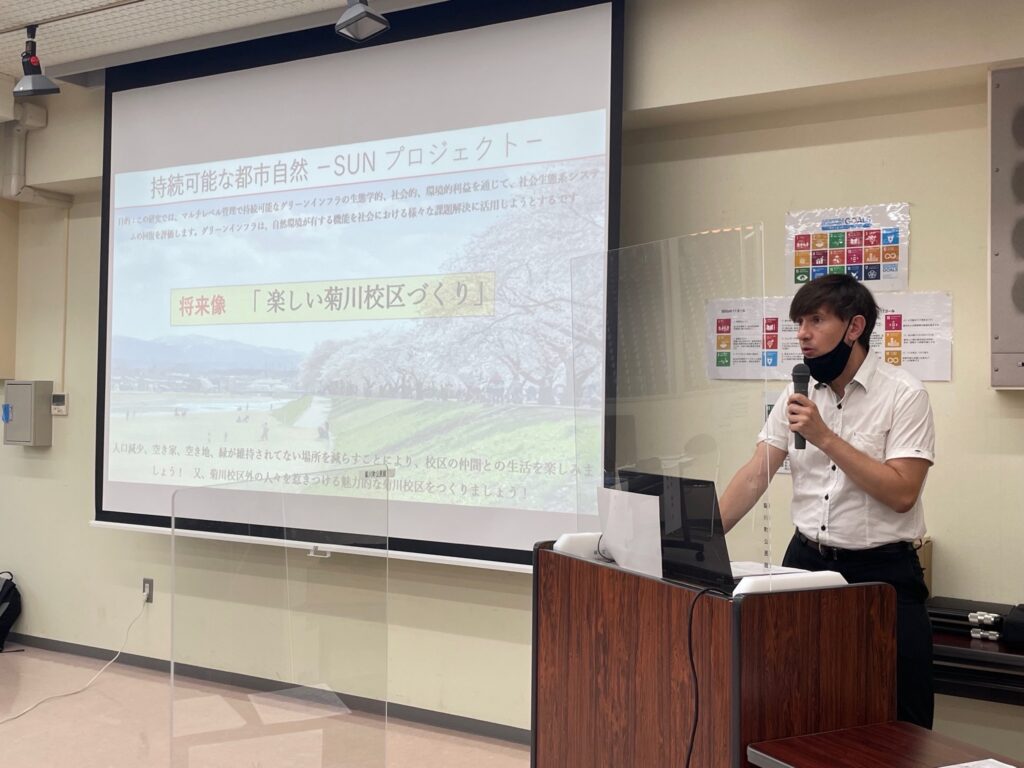
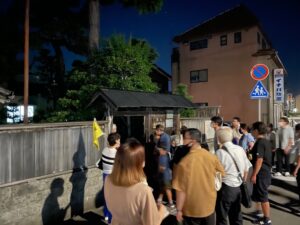
On July 2 (Fri), as part of the Sustainable Urban Nature Project (SUN Project) of the United Nations University’s Institute for the Advanced Study of Sustainability, Ishikawa Kanazawa Operating Unit (UNU-IAS OUIK), research associate Juan Pastor Ivars implemented a study tour for citizens to participate in the survey of firefly habitats in Saiwai-cho and Kikugawa. They walked around the areas and examined the banks along the Kuratsuki canal (constructed in the Edo period) and nearby gardens. The tour was aimed at examining firefly biology, while letting participants enjoy the sound of the stream at night and urban nature.
About 15 people, including residents of Saiwai-cho and Kikugawa, participated. During the tour, they were taught about the biology of fireflies by Mitsuhide Shinmura, Vice President of the Kanazawa Firefly Society and Chief of the Ishikawa Firefly Society Secretariat, and Koji Nakamura, Director of Ishikawa Prefectural Museum of Natural History.
Although there are about 2,000 species of fireflies living in the world, we often hear of the Genji firefly and Heike firefly in Japan. These two species have been found in Kanazawa City as well. The participants examined the number of each species living along the canal, based on their size and flashing pattern, which are different for each species.
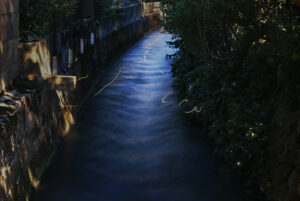
It is difficult to find flying fireflies on rainy days, since they hide behind the leaves of waterside plants. It was raining a little on the day and the participants could not find fireflies at first. However, by carefully checking over 10 observation points, they were able to find dozens of Genji and Heike fireflies. Also, thanks to the kindness of a participant, they were able to examine the Japanese-style garden of a machiya house in the area. The participants learnt how Japanese-style gardens contribute to the biodiversity and ecosystems of cities, while enjoying the fantastic view of fireflies flying in the garden.
Fireflies have different preferences for food and habitats according to the species. We need to consider various elements in their waterfront living environments: the food such as freshwater snails and river snails, the dirt for making cocoons, and the moss for laying eggs on. Many Kanazawa citizens participate continuously in grass-roots firefly surveys such as this study tour. We hope to continue considering fireflies’ living environments together with citizens while enjoying urban nature next year.
Please read the 30-year Kanazawa Firefly Survey for details on firefly biology and the history of firefly surveys in Kanazawa City.
The theme of the first SDGs café in 2021 was “green bonds”, a cashflow mechanism based on a new concept. Money is an important factor in the realisation of a sustainable society. This mechanism can not only solve environmental problems but also promote economic growth, and it might also contribute to the resolving of other issues.
Most large-scale green projects are implemented by large enterprises; therefore, money and jobs created by the projects often flow out of the relevant regions. However, a revolutionary project was born through collaboration between Kanazawa City, local financial institutions and other local companies. Bonds were issued to invest in the switching of city gymnasium lights to LED lights, in order to create monetary circulation in the regional economy. In this seminar, we learnt about the mechanism and possibilities of green bonds through this project.
Overview of green bonds and the project
We would like to explain the relevant technical terms first.
◆What are green bonds?
Green bonds are bonds issued to fund green projects (global warming countermeasures, recyclable energy projects, etc.) by companies or local governments. They are also called social bonds or SDGs bonds. The proceeds from their issuance are to be used for the specified types of projects.
◆What is the project to switch city gymnasiums’ lights to LED lights?
At present, about 3,000 mercury lights, which are controlled by the Minamata Convention on Mercury of the United Nations, are used in the 81 gymnasiums of elementary and junior high schools in Kanazawa City. This project intends to switch all the mercury lights to LED lights, thus reducing electricity usage, CO2 emissions and electricity expenses by two-thirds.
◆What are ESCO projects?
In these projects, energy service companies (ESCO) help reduce utility costs paid by clients (a local government in this case) and receive rewards for surpluses due to the reduced costs.
How can public-private partnerships based on private funds change Kanazawa by 2030?
President Hiroshi Sawada of Hokuriku Green Bond Co., Ltd. (the name changed to LGP Lab) talked about the establishment processes of his company and its tasks, and gave his thoughts about a society where public-private partnerships based on private funds prosper. (The following is a summary of his presentation.)
Despite the energy saving trend in companies, promoted by the Ministry of Economy, Trade and Industry, energy saving in local governments has not progressed well. Therefore, in June 2017, the ministry began to discuss PPP (public-private partnership) project models aiming for the improvement of the environments in local governments. However, local small and medium-sized companies were not proficient at comprehensive environmental management in spite of their advantages in specialised fields, which worked in the favor of large companies, causing money to flow out of regional communities. As a matter of fact, this has been one of the major reasons for the weakening of regional bodies following the period of Japan’s economic growth.
We visited the Ministry of the Environment to ask for advice regarding measures to make the most use of regional resources (people, products and funds). They recommended we construct a project scheme (a plan with a framework) and apply to become a green bond issuance model project. Thus, we established Hokuriku Green Bond Co., Ltd. in March 2018. In our system, a special purpose corporation (SPC), which connects local companies, governments and financial institutions, has been established for each project in order to issue bonds, obtain funds and implement the project.
For the first project, we decided on the task of switching lights in public buildings to LED lights, since the public sector was behind the private sector in this regard. This project was adopted as a green bond issuance model project by the Ministry of the Environment.
Then, we held a seminar for municipalities of the three prefectures in Hokuriku, and many of them attended the seminar. We found that the project had a market worth dozens of billions of yen. However, when it came to the point of negotiations with the municipalities, they would start saying “we don’t have enough money to do that” or “we don’t have to do that in a hurry”. In the end they always said “it is unprecedented”, and our negotiations ended.
However, in fiscal 2020, Kanazawa City advertised publicly for an ESCO project to switch gymnasium lights to LED lights. We applied for the project in consultation with local construction companies and a financial institution (Hokkoku Bank) and entered into a contract in September. Since all the parties involved are related to Kanazawa, this project was highly evaluated as an excellent example of a Regional Recreation SDGs Public-Private Partnership Platform by the Cabinet Office.
Local governments have many projects to implement, such as countermeasures for deteriorated facilities and natural disasters, as well as earthquake-resistance reinforcement, even though these public projects produce no profits. I think green bonds can be a solution to funding these projects.
Support for a regional PPP project from a financial institution
Yuki Bessho from the Solution Group of Hokkoku Bank talked about how they could realise this scheme.
Local governments are faced with difficulties in implementing countermeasures for deteriorating facilities constructed during the bubble economy period. Due to a decreasing number of employees, municipalities are unable to construct sustainable cities alone. We participated in the project of switching gymnasium lights to LED lights in response to consultation for funding from Hokuriku Green Bond. The reasons why we accepted their application were, firstly, the project was implemented through firm collaboration between public and private sectors, and secondly, it was led by local companies. The project cost was borne by the city, and the money became revenue for the participating local companies, providing stimulus. If the local economy is activated, it will result in an increase in taxation and a gain for local governments. This project is an excellent model for monetary circulation in communities and sustainable economic activation. I think local financial institutions should be actively involved in this kind of project.
Municipalities in the Hokuriku Region have their individual challenges. I hope that municipalities will share their troubles with local people and that local companies will speak out about what they can do to help. Then, this kind of partnership will increase, leading to sustainable city planning.
According to the principle of “realising a city where people can enjoy working and living”, we need to “construct a city that is friendly for the visually-disabled” and “support people who want to work in adequate jobs”. To what extent have these objectives been satisfied? Yumiko Hayashi, President of “AUWA for Visually Disabled People’s Working” and who also has a vision disability, talked about her experience.
She had been working for an IT company as a system engineer for 20 years. She became partially sighted 14 years ago; when she consulted her boss, she was advised to leave the company for personal reasons. She was a single parent at the time, so she could not resign. She refused to leave and acquired a physical disability certificate. She was transferred to a different section. Having difficulties in doing an unfamiliar job without any support, her health and eye condition became worse, and she took a leave of absence.
She consulted Ishikawa Polytechnic School for the Disabled to find an appropriate job, but she could not find any jobs for visually disabled people. Therefore, she decided to enter Ishikawa Prefectural School for the Blind to obtain a national license as a masseur (for acupuncture, moxibustion and massage). She worried about life during her three years of school attendance, but she could not find any options other than going to the school. When she attended a school meeting for parents of blind people, she was shocked to know that system engineer is one of the jobs recommended for blind people. She felt very regretful, thinking that she would not have left her job if she had known the fact. This feeling has become the driving force for her current activities.
Although she graduated from the school and acquired the license, she could not find employment. Therefore, she studied as a clinical trainee in order to open a clinic. In 2012, she opened Ladies’ Acupuncture and Moxibustion Clinic OLIVE. After that, it took three years to become able to live and work independently. Nine years passed from the time she lost partial vision to finally becoming independent.
While working at the clinic, she established “AUWA for Visually Disabled People’s Working” in 2017 in order to help build a society where all people, including disabled people, can enjoy working actively.
What are visually disabled people? What kind of jobs can they do?
The Law on Welfare for People with Physical Disabilities prescribes that visually impaired people are divided into two categories: people with visual strength defects and people with visual field defects. There are about 300,000 visually impaired people in Japan. The number of people with acquired visual impairment grows larger in accordance with age. The number of people with low vision who are not provided with a physical disability certificate is said to be three times those with a certificate. These people are not receiving sufficient welfare service, which is a serious problem.
Jobs recommended for visually impaired people other than acupuncture, moxibustion and massage therapists include health workers for companies, teachers, civil servants, musicians and IT workers; however, there are few visually impaired people who are engaged in these jobs in Ishikawa.
Working conditions of visually impaired people in Japan
We would like to focus on the problems specific to Kanazawa City and Ishikawa Prefecture among the many problems in working conditions of visually impaired people.
A lack of supporters who understand appropriate jobs for visually impaired people
A lack of places for vocational training other than schools for the blind, resulting in difficulties in making contact with companies
A lack of support for people with low vision, including visual rehabilitation
A significant shortage in ophthalmic clinics for people with low vision
There are large regional differences in approaches to these problems. We need to create an environment that supports the employment of visually impaired people in our region.
There was a great change in the circumstances in January 2021. The Vocational Development Center for the Blind and Low Vision in Japan Inc. in Yotsuya, Tokyo, commenced online vocation training for visually impaired people in Japan. I immediately applied for the training and became the first student of the OA basic course (PC training using audio reading software). Being able to receive different types of vocational training such as this, which is not possible in Ishikawa, represented great progress.
I hope that all people become able to live comfortably in society whether they have disabilities or not. The number of people who start to suffer from visual impairment increases with age; therefore, it is said that there will be more people with serious short-sighted visual disabilities in the future. I hope that all of you will regard the problem as your own and endeavor to build a society where visually impaired people can live comfortably.
Supporting people who cannot work even though they want to
Next, Junichi Okuyama talked about his experience starting a business, and the present condition of the employment of disabled people.
I joined a recruitment company and started working for the Kanazawa branch. Then, I realised that there were very few offers of employment and recruiting agencies for disabled people. Thus, in 2012, I established Visst Inc. to help realise the wish of disabled people to work. We started providing employment support in Ishikawa, and then expanded the service into Toyama and Kanagawa. We are now expanding our business into various fields, such as after-school care involving early career education for elementary, junior high and high school students, and development support projects for preschool children. In our group, we also have companies for supporting the employment of people who experience difficulties working.
Working might become easier if you make some changes in your environment or ways of thinking, and if you come to feel comfortable in working, there will be no barrier. Barriers for working are divided into “individual models”, which should be overcome by individuals, and “social models”, which need to be solved by society. For instance, people in wheelchairs become able to move easily if steps and gaps are eliminated. There are many things in our environment that society can change to eliminate barriers.
Solving accumulated problems
Next, UNU-IAS OUIK office manager Ms. Nagai participated and the three people had a talk session, answering questions from the audience and Ms. Nagai. Many concrete ideas were presented to solve problems, such as a project for matching social welfare offices and companies in the Kanazawa SDGs platform in order to raise the employment rate of disabled people.
The seminar recording is available on OUIK’s Youtube channel:
Practicing the SDGs can take many forms: individual actions, collaborative efforts with peers, community engagement, broader city-wide initiatives, and connecting with people around the world online. When considering this in Kanazawa, the role of community centers as hubs for local learning stands out.
The community center system in Kanazawa is somewhat unique. These centers are established according to the catchment areas of elementary schools, with officials and staff elected from the community, and operation costs partially borne by local areas. For residents of Kanazawa, this may seem normal, but it is distinctly “Kanazawa-style.”
Having staff who are knowledgeable about local circumstances allows these centers to serve as bases for activities that support residents. However, there have been significant changes in demographics affecting the functionality of community centers, such as the aging population, urban sprawl, and decreasing membership in neighborhood associations.
As community centers are crucial players for the community, there is a hope that a diverse range of age groups and backgrounds will actively utilize them. This café event has been organized with community centers as the theme, exploring the potential for the 60 community centers in Kanazawa to become a network of learning for the SDGs.
IIMAGINE KANAZAWA 2030 Takes the Next Step!
First, Secretary General Nagai from the United Nations University Institute for the Advanced Study of Sustainability Ishikawa-Kanazawa Operating Unit (UNU-IAS OUIK) introduced the previous 14 SDGs cafés and the recent developments related to “IMAGINE KANAZAWA 2030.”
The Kanazawa SDGs initiative began in April 2019. By March 2020, many participants helped complete the “Kanazawa Future Scenario.” In July, Kanazawa was recognized as an SDGs Future City, and a project promoting “sustainable tourism” was selected as a model project, marking 2020 as a year for concrete steps forward.
“Now, IMAGINE KANAZAWA 2030 has reached the next ‘learning stage.’ Last year, we conducted a study tour for partners, which facilitated various learnings, and we hope to continue creating learning opportunities as we develop different projects,” said Secretary General Nagai.
★The Kanazawa Future Scenario is the result of everyone’s imagination for the year 2030. We encourage you to take a look.
★ IMAGINE KANAZAWA 2030 is seeking partners to help implement the Kanazawa Future Scenario. Participation is open to individuals, organizations, and businesses, with over 100 partners currently involved as of January 2021.
As for the importance of mutual learning, Nagai expressed that ‘the presence of community centers in Kanazawa holds great potential as spaces for learning.’ To explore this potential, we invited Keiko Hara, the head of the Kikukawa Community Center, to IMAGINE what Kanazawa could look like in 2030. Additionally, we received input from Professor Hidetaka Asano, an emeritus professor at Kanazawa University with extensive experience in community development focused on social education
Imagining 2030 from Kanazawa’s Community Centers!
At the Kikukawa Community Center, representatives from various neighborhood associations come together in five committees to discuss and establish the annual project plan. One popular initiative they introduced is the “Western-style Shimekazari Workshop,” designed to celebrate the New Year while fostering camaraderie among participants. This workshop is so popular that it often has a waiting list.
Reflecting from the perspective of the SDGs, it was noted that the materials used for the traditional Shimekazari decorations included a mix of combustible and non-combustible waste. This oversight regarding environmental issues, especially when burning them at the Sagichō ceremony, is seen as a point for reflection moving forward.
Keiko Hara expressed her intent to enhance the workshops by integrating SDG principles into the planning and organization process. She emphasized the importance of conveying the need to use environmentally friendly materials to the instructors.
Viewing these hobby-oriented workshops through the lens of the SDGs not only allows us to enrich their significance beyond the initial goals of personal fulfillment and participant interaction but also connects them to the United Nations’ Sustainable Development Goals,’ Hara noted
Building a new initiative requires substantial energy, and the programs offered by community centers must also be sustainable.
“Without overreaching, we should rethink how the courses we have been implementing relate to the SDGs. By incorporating SDGs as a focus, we can develop these courses further. As a result, even if the content of the courses remains the same, adding the intentional learning aspect related to the SDGs creates new value and depth. I believe this has the potential to significantly contribute to raising awareness of the SDGs among local residents”.
Creating a ‘Community Safety Map’ to nurture the next generation of community leaders
At the community center, we engage students in fieldwork to inspect school routes and playgrounds, mapping out areas where crimes are likely to occur through the creation of a ‘Community Safety Map.’ By allowing children and students to create the map themselves, they learn to avoid dangerous places and become aware of the need for vigilance and caution. This process also fosters the development of communication skills through collaborative work. Furthermore, recognizing the presence of hazardous areas promotes a shared understanding not only among children but also between the participating parents and local residents
This map-making initiative, led by the community center, successfully engages not just children and parents but the entire community, yielding significant achievements for creating a safe and secure environment. A safe community contributes to the realization of SDG Goal 11 (Sustainable Cities and Communities).
‘From the perspective of sustainable community development, I believe that the involvement of the next generation of local leaders is essential for building a sustainable region. I hope that the students and children who participate in creating the Community Safety Map will become the next stewards of community development,’ Mr. Hara expresses his hopes for this initiative, emphasizing that it aims not only to equip children with risk avoidance skills but also nurtures a broader sense of responsibility and engagement in community-building.
Towards a New Kanazawa: Inspiring Change from the Community Center
The key to achieving the SDGs is for each individual to see them as personal goals and change their awareness accordingly. Community centers serve as direct venues for engaging local residents in learning. By transforming awareness through education, even small changes in individual actions can lead to a more sustainable community. By fulfilling this role, it is believed that community centers can become partners in advancing the ‘Kanazawa Future Scenario’ through collaborative efforts.
‘With just ten more years until 2030, if even a few community centers in the city take on this perspective and start initiatives, I truly believe that Kanazawa will transform,’ he concluded the discussion with a vision of hope for the future.
Community Centers: Vital Hubs for Social Education
From the perspective of social education focused on adult learning and lifelong learning, Professor Asano provided insights on community center activities related to the SDGs.
He explained that community centers are classified under the Basic Education Act as facilities for social education and highlighted that what’s essential for a community center is “people.” The work of community centers includes “gathering, learning, connecting, and fostering community and human development.” He also shared characteristics specific to Kanazawa’s community centers.
“In 2018, the Central Council for Education called for initiatives that create a virtuous cycle of learning and activities focused on people development, connecting people, and community building.”
Essentially, it is about realizing an ‘open and connected social education,’ which means community centers should develop activities that are ‘open to people and foster connections among them,’ thus guiding the future of social educational activities,” Asano explained.
Empowering Learning Centers for a Sustainable Future
The close connection between the 17 SDGs and community center activities was clear in Hara’s talk. “To ensure community sustainability, having such perspectives in our programs could change how we present and perceive them,” Asano added. “There’s no need to simply propose learning about the SDGs; we can incorporate their perspectives directly into our planning to bring us closer to achieving those goals.”
He emphasized that learning is about nurturing a ‘better self today than yesterday and a better self tomorrow than today,’ indicating a push towards community center activities that contribute to achieving the SDGs.
Discussion Time with Participants’ Questions
Nagai: “It’s insightful to recognize that adding new value to existing programs rather than creating entirely new ones aligns with the SDGs.” With a historical and legally supported network and system, utilizing community centers for SDGs seems imperative.
Asano:“Community centers are educational facilities overseen by the Board of Education. While they are often recognized more as community facilities by locals, there’s room to specialize more in learning.”
Nagai: Kikukawa Community Center is collaborating with university students, but is collaboration with private companies possible?
Hara: “We haven’t done it before, but I am interested. I haven’t heard of anyone doing such things around me, but I am curious about it as a new way of existing in this era.”
Nagai: “What do you see as the major challenges in advancing community center activities?”
Asano: “I think we need time to reflect on our own community center activities. Even if we carry out the C (check) of PDCA, we often find ourselves without time to reflect, leading to the mindset of ‘Is it okay to do the same next year?’ Instead, I would like us to aim for a check that allows us to reach the next phase. For that, we need time to reflect and organize. I hope we can keep the consciousness of ‘What will we do next?'”
Hara: “Our original job is to run programs, but we see an increasing amount of other work over the years, which has left many staff members exhausted. I would like us to do some organized decluttering of our tasks in a good way and, by fiscal year 2021, think together with everyone about projects that carry the added value of SDGs, essentially newly reborn.”
Nagai: “Is there potential for online community center activities?”
Hara: “This year’s community safety map-making was conducted using an app called ‘miro’, where we utilized an online whiteboard service to separate students and local residents.”
Nagai: “If we only do it online, it may be difficult for elderly participants to join. I think we need to mix online and in-person methods, which will require high digital skills. This is why support from universities and companies could be beneficial. I felt a strong expectation for the role of community centers based on the many questions raised by participants. Learning enriches life, so I plan to visit the community center in my area soon. Lastly, how do you think we can engage more diverse people in community center activities?”
Hara: “I am always thinking about how to attract diverse individuals. I feel that it might be a good idea to progress while listening to the opinions of those who have not had opportunities to visit community centers.”
Asano: “You could start by asking those you want to involve, ‘We are thinking about doing this at the community center, what do you think?’ Of course, creating opportunities to engage with such people is essential. While we may have been doing it already to some extent, I feel that we should also consider outreach to those we wish to invite.”
Nagai: “I also want to invigorate my local community center and become more interested in the activities they are doing. I encourage everyone who participated today to pay attention to the activities of their own district’s community center, and if possible, go visit, engage in various ways, and strengthen the community centers, which serve as the vital arteries of Kanazawa.”
※During the webinar, we conducted a survey asking participants, ‘Do you know where the community center in your area is located?’ The results showed that the majority of respondents answered, ‘I know it, but I don’t go very often,’ while the options ‘I don’t know’ and ‘I use it frequently’ were fewer.
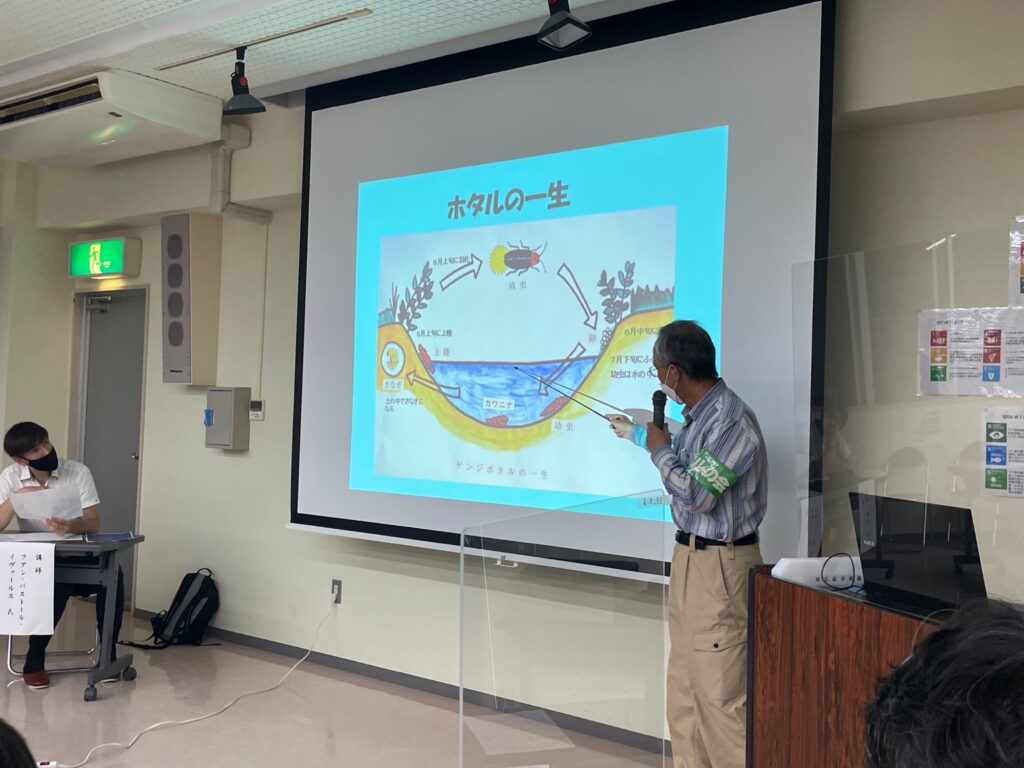
On Friday, July 1, the United Nations University Institute for Advanced Studies (UNU-IAS) collaborated with the Kikugawa Community Center to conduct a citizen participation firefly habitat survey tour in Saiwai and Kikugawa district, Kanazawa City. This event, which was also held last year, is part of the SUN Project (Sustainable Urban Nature Project) led by Dr. Juan, a research fellow at UNU-IAS. The participants visited gardens along the Kuratsuki irrigation canal, enjoying urban nature while studying the ecology of fireflies.
Initially, participants gathered at the Kikugawa Community Center, where they received explanations from Dr. Juan and Dr. Tsuda regarding urban nature in Kanazawa and efforts related to sustainable tourism utilizing it. Dr. Juan highlighted the presence of many green infrastructure systems in Kanazawa that leverage nature. He emphasized the necessity to conserve irrigation canals and gardens as part of urban nature and culture, while also introducing activities aimed at conservation. Dr. Tsuda described the collaborative models for maintaining and managing these unique resources of Kanazawa while ensuring sustainable conservation involving various stakeholders and the tourism industry.
Afterward, Mr. Mitsuhide Shinmura (President, Kanazawa Municipal Firefly Association and Secretary General, Ishikawa Prefectural Firefly Association), gave a lecture titled “The Mysteries of Fireflies.” Mr. Shinmura has been involved in activities related to fireflies for nearly 40 years while working at the Kanazawa City Hall on revitalizing satoyama (village forests) and agriculture and forestry. He started the “Firefly Survey” in cooperation with a children’s association in 1957, and this activity has continued to this day. It is said that the case of Kanazawa, where this type of survey has been conducted for over thirty years, is quite rare.
See below the key points discussed in the lecture:
– Origin of the Name “Firefly”: One theory suggests it was named based on the imagery of sparks from torches or will-o’-the-wisps. There was a time when kanji “fire” (火) was read as “ho,” which evolved into “hotaru.” Another theory links the name to “shooting stars.”
– Types of Fireflies: There are about 2,000 species of fireflies globally; Japan has around 50 species mainly in warmer areas, with 7 species found in Ishikawa Prefecture. In Japan, fireflies are typically associated with water’s edge, but most of them are terrestrial in their larval stage. However, the commonly known Genji firefly (Nipponoluciola cruciata) and Heike firefly (Aquatica lateralis) are unique as their larvae live in water.
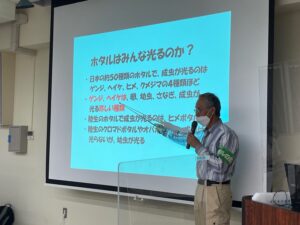
– Do All Fireflies Glow? Among the 50 species of fireflies in Japan, only 4 species have glowing adults, and only the Genji firefly (Nipponoluciola cruciata) and Heike firefly (Aquatica lateralis) glow continuously from the egg stage throughout their lives.
– Differences Between Genji x Heike Fireflies: Genji and Heike fireflies differ in appearance, emergence timing, and flight patterns. Male Genji fireflies measure about 1.5 cm in length, while females can reach around 2 cm; in contrast, Heike fireflies are slightly less than 1 cm. In terms of markings, Genji fireflies have a characteristic cross-shaped pattern on their backs, whereas Heike fireflies display vertical stripes. Genji fireflies typically emerge in early June, while Heike fireflies appear around mid-July. Although emergence times can vary by location, warming temperatures have generally led to earlier sightings of both types. Genji fireflies emit light at intervals of about 2 seconds as they fly, while Heike fireflies produce light at shorter intervals and tend to fly at lower altitudes.
– Differences Between Males and Females: Males fly around while glowing, and females remain stationary. The females emit signals to attract the males, leading to mating.
– Requirements for Firefly Habitat: It is important for their habitat to have darkness at night, vegetation that provides shade during the day, clean water, stones, sand, and soil, as well as a food source (such as radicine).
– Changes in Firefly Populations: Genji fireflies have experienced a slight increase in habitat due to improved water quality resulting from sewer construction. In contrast, Heike fireflies, which inhabit different areas, have decreased nationally due to abandoned farmland and increased herbicide use. The stone-piled irrigation canals from the Edo period in Kanazawa provide gaps between stones where grass grows, creating a suitable environment for organisms to hide. Therefore, fireflies can be observed within the city.
The presence of a suitable habitat for fireflies indicates that urban nature is rich. Therefore, it is important to collaborate with local communities to carry out activities for firefly conservation.
Observation of Fireflies
After the lecture, participants took firefly maps and walked around the neighborhood.
Many participants expressed surprise that despite walking regularly in the area, they had never seen fireflies so close before. Additionally, fireflies were found not only near the irrigation canals but also in ponds within gardens that draw water from the irrigation system.
Participants recorded and submitted how many fireflies they observed at various firefly observation points.
Through this activity, participants enjoyed the gentle sounds of summer nights while learning about Kanazawa’s urban nature via fireflies. We hope that more people can come to understand the importance of urban nature and biodiversity through such initiatives.
The 10th networking event for IMAGINE KANAZAWA 2030 Partners was held on March 25, 2022. The final networking event of the 2022 fiscal year was held at a venue for the first time in a while, as COVID-19 had calmed down. During this event, the following organizations gave pitch presentations:
Cominguru Co., Ltd.
The role of the hospitality industry in contributing to sustainable community development
Kao Group Customer Marketing Co., Ltd. presented for the second time at this event. The Kao Group continues to produce a variety of products, including consumer products for everyday life and a chemical business aimed at the industrial sector. They have positioned the Kirei Lifestyle Plan as part of their ENvironmental, Social and Governance (ESG) strategy and have established a Social Communication Division. The company actively engages in communication with diverse communities and conducts social contribution activities focused on environmental issues, health, hygiene, and diversity. They aim to contribute from the perspectives of consumers and are committed to responding to the desire for and actions toward a sustainable lifestyle through awareness workshops.
Cominguru Co., Ltd. operates 24 lodging facilities in the Kanazawa city’s old town area under the “Tabine” project, aiming to create a Kanazawa where families want to live even 100 years into the future. They view “Tabine” as a project to create opportunities for travelers and the city of Kanazawa, with the goal of fostering Kanazawa fans around the world. Utilizing historical wooden structures known as “machiya” as lodging facilities, they also contribute to the preservation of the landscape of Kanazawa City, with plans to increase the number of machiya properties they operate.
Furthermore, they are considering initiatives that do not burden the natural environment, especially in terms of amenity materials, equipment, and waste handling, while maintaining a high-quality experience for guests and ensuring their satisfaction.
In the 2021 fiscal year, IMAGINE KANAZAWA 2030 Partners held a total of 8 networking events, with 22 organizations presenting and 243 participants attending. Through dialogue among participants at these events, connections are forged, challenges are addressed, and open innovation contributes to the achievement of the SDGs. Organizations that participated in the networking events have connected with each other, leading to the initiation of several projects.
The Partners Networking Events are set to power up further in the 2022 fiscal year. Organizations facing challenges, those working on social issues in the community, and those looking to expand their business and form networks are warmly encouraged to participate.